
When I started secondary school in 1994, we were supplied with a copy of the rules for our uniform, haircuts and footwear. These ran to more than a page of closely typed A4 – and they were strictly enforced, too. ‘Tuck that shirt in, boy!’ was a regular refrain in the corridors.
Generally, committing time to being well-dressed and well put-together signals that someone is taking your time seriously
At the time, we regarded these regulations as a source of annoyance and ridicule. I dare say even some of the parents might have thought them rather excessive. Nowadays they might run afoul of equalities law. But looking back, it is not difficult to see their merit. They taught us, perhaps unwillingly, to take pride in our appearance; to think about the messages conveyed by the way we dress, not just about ourselves but about the institutions and communities we represent. As many teachers reminded us, making sure we were neatly attired was a form of respect for the school itself, and the staff. It also connected us to those who had come before, and to those who would come after, a timeless brotherhood of mild discomfort.
Naturally, not everyone thinks this way. Britain is becoming more careless in its sartorial habits, even in professional contexts, and the advocates for not really bothering have acquired a powerful new ally in the shape of freshly-minted prime minister Andy Burnham. The casual style established during his reign as mayor of Greater Manchester will apparently continue in Downing Street. He has suggested that while he will respect the dress code of the House of Commons, he will not normally wear a suit and tie in other contexts.
Conceivably there is a calculating political element to such announcements. Burnham’s well-worn I’m A Plainspoken Northerner, From The North routine depends for its rhetorical effect on the implied contrast with an allegedly superficial and snobbish southern England. Criticism of Burnham’s clothing choices from the right could be construed as out of touch Tory poshos getting hung up on trivia. He may find, however, that the role of PM requires some compromise with the supposedly oppressive conventions of smartness. Foreign leaders who don’t understand the semiotics of British class discourse might not be very impressed with a polo shirt and casual shoes. A school that insists, correctly, on high uniform standards might not want the most powerful man in the country to undermine their own rules.
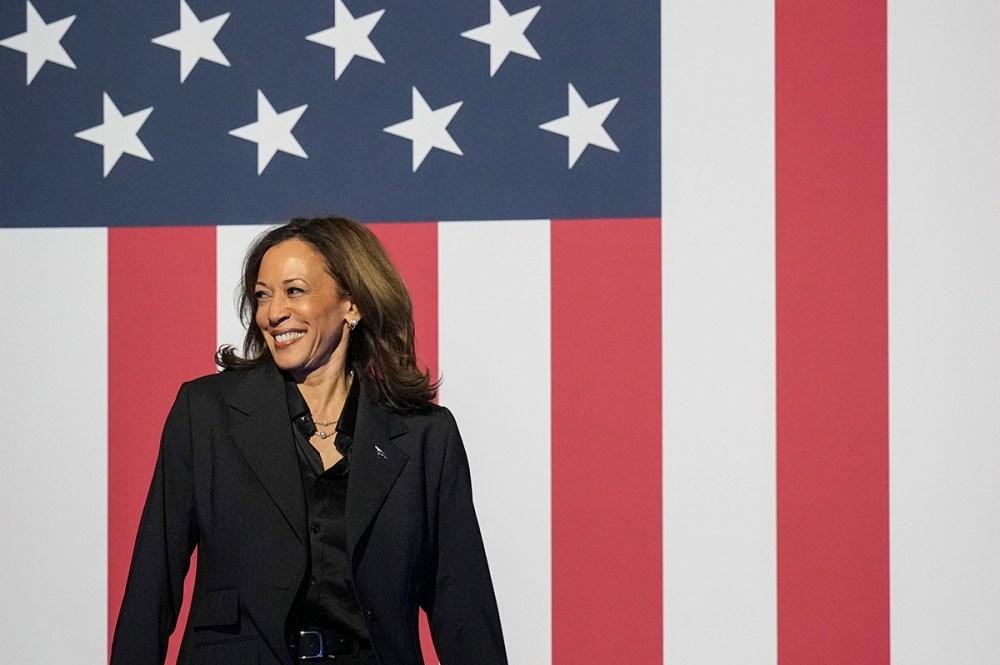
Either way, it is worth putting in a good word for smart dress, especially in the post-Covid world, where the rise of remote working has accelerated the existing trend away from formality. As someone on X pointed out over the weekend, clothes are a form of communication. The way we present ourselves gives information about how we see ourselves and others around us. Admittedly, this communication can get garbled in the modern context, where we lack clear conventions and norms. Someone who puts on a suit and tie for a virtual meeting might be aiming to convey seriousness and respect, but if everyone else is in some variation on a Burnham-style polo shirt risks, he might appear elitist, or distant, or lacking in social skills.
But generally, committing time to being well-dressed and well put-together signals that someone is taking your time seriously. We instinctively understand this in other contexts. It would be interesting to ask those who believe that MPs should wear whatever they like ‘as long as they get the job done’, whether they would mind if people turned up to, say, their wedding, in T-shirts and flip flops. ‘Don’t judge a book by its cover’ is a well-worn proverb but needs to be handled with care. Appearances can be deceptive, but equally they are very often extremely revealing.
The argument that externals don’t really matter, compared with our hearts or minds, has a certain pedigree in western culture. It is found in various forms in the Gospels. Obviously it is not without merit. But if taken too far it would lead to a kind of unintelligible free-for-all where speech and action and appearance were concerned. Even the words of Christ, if read properly, don’t condemn outward observance and ornament. Rather, they insist that there should be an alignment between the outer and the inner man.
None of this necessarily settles the separate debate about what precisely constitutes smart dress. There have of course been many changes and evolutions over the years. Wigs and hats and stocks and cravats have all had their day, and are now either extinct, or the preserve of a few eccentrics and dandies. The tie might end up that way before too long. What we can say is that having certain forms of dress for certain situations and circumstances is indispensable. The prime minister should not show up at press conferences looking as if he has just come from the pub or the football ground. Not only is it aesthetically jarring, but we need to distinguish between different parts of life, between different roles. We need ways to signal when an occasion is special, or important. And far from being an imposition on the individual, public formality can in fact help to preserve private life, because it reinforces the boundary between the two spheres. So let’s hope our new head of government can learn a thing or two from his Sovereign, the best-dressed man in British public life.





Comments