Isolationism

The politicization of everything

“A number of observers of the political, moral and spiritual life in recent years have taken up the famous theme of the decline of the West,” the French journalist Luc Ferry wrote in Le Figaro at the end of January. “They recall that civilizations are mortal, like human beings, and that our own, far gone in decadence, is dying. Nevertheless, I fail to see how one can include the United States in this pessimistic reading of history. Not only does it remain the most powerful economic and military power in the world… politically speaking, whatever one thinks of [Donald] Trump, of his antics and his perverse narcissism, it is difficult to deny that he has given new life to the idea that politics can change the world, that action taken by a leader can have an impact on the real world.
We need to hear from Tulsi Gabbard

Where is Tulsi Gabbard? The country’s Director of National Intelligence has been glaringly absent as the biggest national security story in years continues to develop. In both the lead-up to and the aftermath of President Trump’s decision to strike Iran’s nuclear sites, Gabbard has barely been seen, or heard. It’s a strange time for the chief of the US intelligence community to go silent, leading to a growing number of questions that Americans – particularly MAGA Americans – would like answered.It’s Gabbard’s now-infamous testimony to Congress in March – and a video posted to social media earlier this month – that are thought to have sidelined her from the Trump administration in recent weeks.

‘Trumpists and Communists’ on Ukrainian NGO list fight back

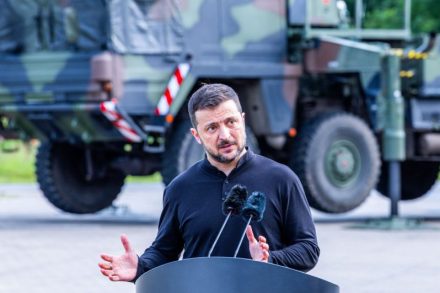
A US government-affiliated Ukrainian NGO, texty.org.ua, published a list last week of all the Americans “impeding aid to Ukraine.” There are 388 individuals and seventy-six organizations on the list, including members of the conservative media Alex Jones, Tucker Carlson, members of Congress and a few Spectator writers. The piece is titled “Rollercoaster: From Trumpists to Communists. The forces in the US impeding aid to Ukraine and how they do it.” “The title of this article oversells the product: it is a substantively thin piece, largely an excuse to smear a large group of Americans who have been skeptical of aid to Ukraine in one form or another,” Senator J.D. Vance and Representative Matt Gaetz wrote in a letter to secretary of state Antony Blinken on Tuesday.

ukraine ngo

What would Trump’s second-term foreign policy look like?

Former president Donald Trump is in a world of legal trouble. Not only is he the first president in history to be impeached twice, he holds the unenviable distinction of being the first president to be indicted. He doesn’t do things by half-measures — he’s been indicted twice. So far he faces a total of seventy-one criminal charges of various severity in two separate investigations, from falsifying business records and retention of national defense information to obstruction of justice. And as this magazine goes to press, we still haven’t heard from Fani Willis in Georgia, or from the second Jack Smith investigation. Yet despite his legal woes, Trump remains a top contender for the highest office in the land.

donald trump foreign policy

RFK Jr. is as mad on foreign policy as he is on vaccines

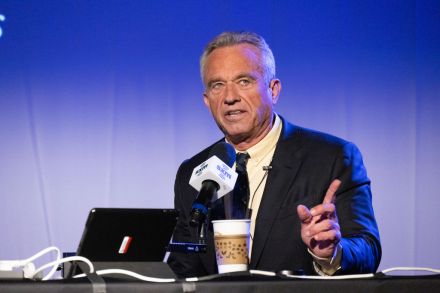
Did you know that the Biden’s State Department is run by neocons? Or that Biden’s foreign policy is “bellicose, pugnacious and aggressive”? Ask the people of Afghanistan suffering under the Taliban or the millions of Ukrainians trying to fend off an imperialist Russia. They would tell you that that is news to them. Those assessments come not from the soft-isolationist right, but rather from Democratic presidential candidate Robert F. Kennedy Jr., who joined Elon Musk, David Sacks, Tulsi Gabbard, Michael Shellenberger and others for a Twitter Spaces chat on Monday.

rfk jr kennedy

The right’s dangerous embrace of soft isolationism

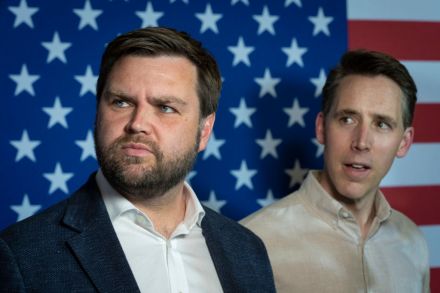
Traditionally, the GOP has been the favorite of those concerned with safety and national security. The party of Ronald Reagan emphasized the need for strong engagement abroad, a willingness to project power when necessary, and a commitment to the free world. Yet the contours of the conservative movement have begun to change in recent years, calling into question the GOP’s credibility on the issue of security. The growing support for a sort of soft isolationism is a problem. It is also fundamentally not conservative. Prominent voices from the American right have been carrying the banner of soft isolationism for years, from Tucker Carlson and J.D. Vance to Senator Josh Hawley and former president Donald Trump.

The next chapter in American foreign policy

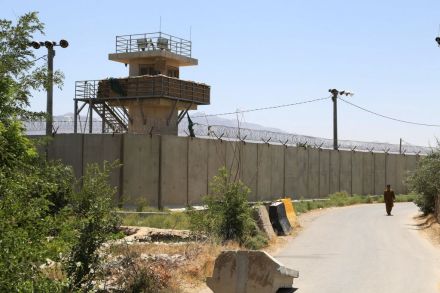
The new year begins a new chapter in American foreign policy. For the first time since 2001, we are not at war in Afghanistan. More than that, we no longer have an architectonic strategy for our role in world affairs. We had one during the Cold War: to win it. And we had one afterward, too: a decade before 9/11, our policy elite had already committed to the idea that we must police the world for the good of the liberal international order. The lead-up to the first Gulf War was the opening paragraph of that chapter, the ignominious retreat from Afghanistan its last line. Our policy mandarins have not changed their minds, but the world has changed too much for their grand design to have any meaning in 2022.

foreign policy

The fight for liberalism

The world has many island nations, and sometimes the United States counts itself among them. We have water on either side of us, and though we share our big island with Canada and Mexico, neither poses any threat. America is immune to invasion, a castle surrounded by the safest of moats. This wasn’t always so, and it isn’t really true today, unless we forget about Hawaii and our Pacific and Caribbean territories, most of which would be easy prey for other states if they weren’t under our sovereignty. In the earliest days of the republic, we shared the North American continent with outposts of Europe’s leading powers: France, Russia, Spain and Britain.

liberalism