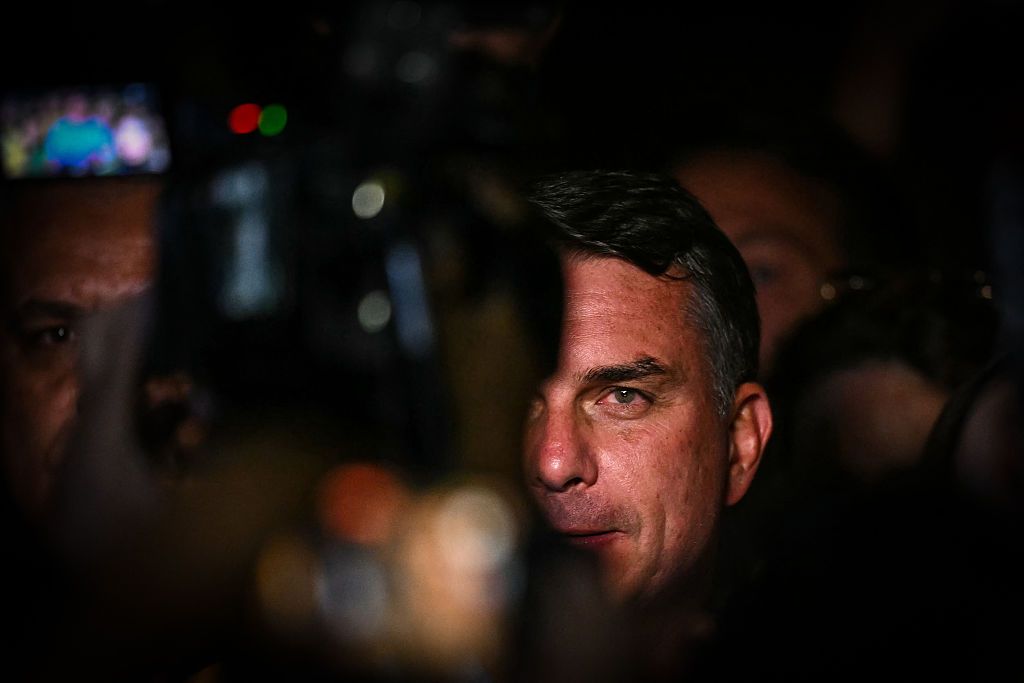
In May, Flávio Bolsonaro sat down with Donald Trump at the White House. He made a pledge: if he were elected president, Brazil would join the Shield of the Americas, Trump’s hemispheric alliance against the cartels. That pledge is now three weeks from coming due. On Sunday Flávio finished ahead in the first round of Brazil’s elections, 47 percent to Luiz Inácio Lula da Silva’s 45, short of an outright win but in pole position for the runoff on October 25.
Much of this is down to the dismantling of USAID. American tax dollars underpinned Brazil’s left-wing establishment, with funding for progressive media, universities, Supreme Court staffers and pro-LGBT activists. Now that money is gone, and Bolsonaro Jr., who had trailed in the polls for much of the campaign, is on the brink of winning. The candidate who leads the first round has won every Brazilian presidential election since the end of military rule in 1985.
American tax dollars underpinned Brazil’s left-wing establishment. Now that money is gone
For Washington, a Flávio Bolsonaro presidency would be the biggest prize yet in its campaign to remake the hemisphere, a campaign in which the past seven South American elections have seen a right-wing, Trump-aligned candidate win. The Shield of the Americas, launched at Trump’s Doral summit in March, is the political umbrella. Beneath it is a military agreement, the Americas Counter Cartel Coalition, or A3C, formed the same month. The Shield now counts around 15 members, mostly right-leaning governments such as Argentina, El Salvador and, since August, Colombia. The A3C has 19, including the Bahamas, Jamaica, Belize and Guatemala, which sit in the military coalition but not the Shield.
Adding Latin America’s largest country would turn a club of allies into something closer to a hemispheric bloc. Lula has opposed this American-led, anti-cartel agreement. In September he told the UN that Brazil needed cooperation against organized crime, not foreign intervention. That is a curious line from a government that has opposed designating the PCC cartel and the Comando Vermelho as terrorist organizations.
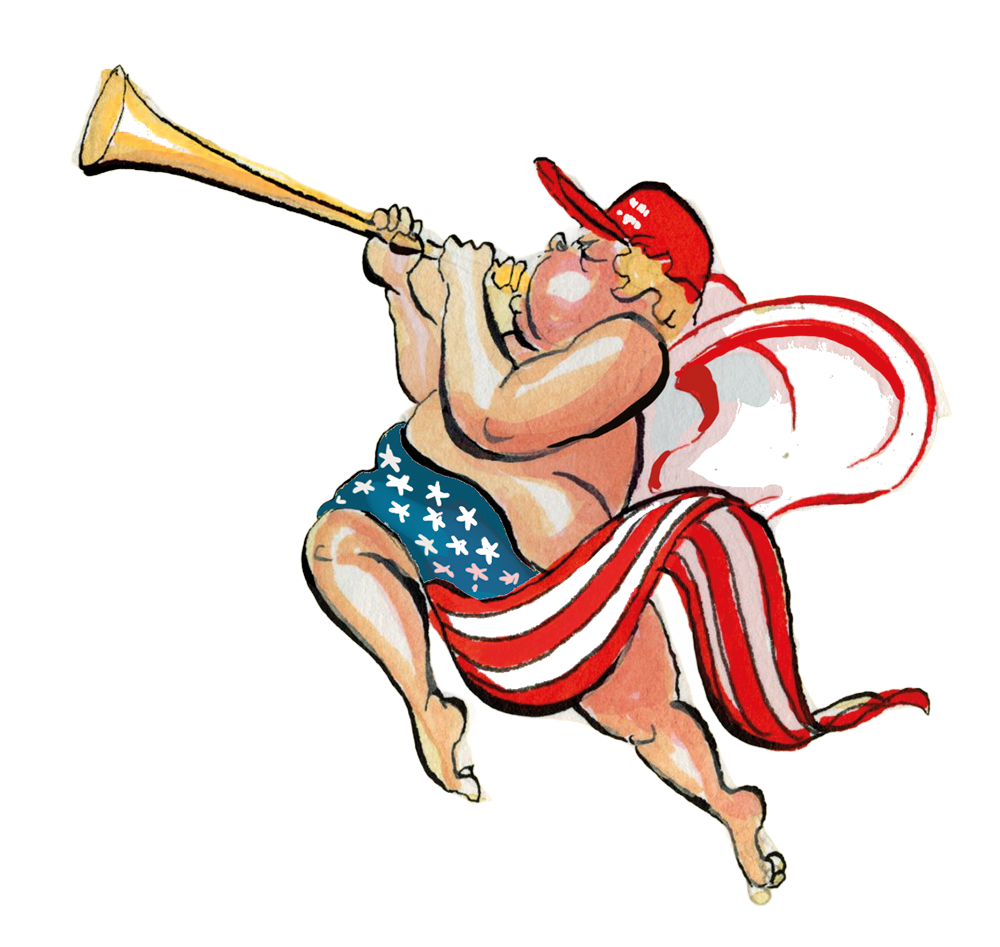
Flávio Bolsonaro could join the Shield by presidential decision alone. Signing up to the A3C, the military coalition with operational commitments, would be just as consequential, and Washington is not shy about what the A3C is for. Testifying before the House Armed Services Committee in March, Joseph Humire, now the US Deputy Assistant Secretary of War for Americas Security Affairs, said the department was, for the first time, “going on the offense against designated terrorist organizations” in the hemisphere. He described the A3C as built for deterrence-focused operations against narco-terrorism, and claimed fentanyl flows have fallen by 56 percent and cocaine flows by 20 percent.
Washington has already designated Brazil’s cartels as terrorist organizations. It will be harder for Flávio to do the same: designating the PCC and the Comando Vermelho would require Congress to amend Brazil’s anti-terrorism law. Bolsonaro’s confusingly named Liberal party has surged in both chambers and the votes may finally be within reach. I spoke to Paulo Bilynskyj, a Liberal party federal deputy and former São Paulo police chief in August. He argued that the designations could bring American technology and training to police forces that spend around 80 percent of their budgets on salaries.
Lula plans to make his last stand by arguing the Shield and A3C violate Brazilian sovereignty. Meanwhile, Brazil’s federal police have opened an investigation into possible foreign interference in the election, at the request of the federal advocate-general, a Lula protégé. Brazil’s electoral authority says it has found no evidence of foreign interference. Expect Lula to spend three weeks casting the runoff as a vote on keeping the Yankees out. Even Bilynskyj admits that Lula had played the sovereignty card cleverly. Sunday suggests it was not enough to keep Lula ahead, but three weeks is a long time in politics.
Flávio has also promised a free trade deal with the United States and partnerships on rare earths. It is the same pitch Colombia’s new president, Abelardo de la Espriella, made on his way to office, and like de la Espriella, Flávio has put narco-terrorism at the center of his campaign, promising to treat the factions as the terrorists Washington already says they are.
Washington has already designated Brazil’s cartels as terrorist organizations. It will be harder for Flávio to do the same
The real tension is China. Beijing accounts for nearly one in three Brazilian export dollars, and Flávio’s 76-page government plan still promises pragmatic negotiations with Beijing. He is pro-Trump in rhetoric and pro-soybean in practice. Joseph M. Humire has cast Washington’s hemispheric push as a contest over who Latin America’s “partner of preference” will be: the United States, or China, Russia and Iran. A country that sends a third of its exports to Beijing is the hardest test of that pitch.
Then there is BRICS. After Sunday, some American conservatives joked that the bloc was about to become RICS. In truth, BRICS was never a serious organization, but it is not a treaty alliance with a formal exit either, so leaving would be a political act rather than a legal one: a president could simply stop showing up. Brazil’s stake in the BRICS development bank, which does rest on a treaty, would be messier. Beijing would take it badly. Trump would surely enjoy the optics.
The stakes are regional as well as global. The state of São Paulo alone generates more GDP than all of Argentina. Flávio’s economic plan is co-led by Adolfo Sachsida, his father’s former energy minister, and most of the team are veterans of Bolsonaro Sr.’s economy ministry. Flávio promises lower inflation, spending cuts, a public debt ceiling and a push on critical minerals. Economists say it identifies the right problems but offers only generic solutions. Think Milei without the chainsaw.
Nevertheless, Milei campaigned with Flávio in São Paulo in July, despite the fact Argentina and Brazil have been rivals for centuries (Uruguay exists largely as a buffer created after the wars of the 1820s). Now a shared politics may achieve what diplomacy never could. A Brasília-Buenos Aires axis could remake the South American common market project Mercosur, which for decades has behaved more like a protectionist club than a free-trade zone.
At home, meanwhile, the Bolsonaros have become a dynasty. Michelle’s Senate win has drawn the headlines, but she is not alone. Carlos, the son who ran his father’s social media machine, was elected senator for Santa Catarina. Jair Renan, the youngest son, won a seat in the Chamber of Deputies, and so did Jair’s brother Renato. Then there is Eduardo, who lives in exile in the United States because he would face charges if he returned. He has used his time there to build ties with the American right.
Flávio has proven himself his own political force rather than a son running errands for his father. Where Jair was combative and happy to attack institutions, Flávio is polished and calm. His campaign sold him through action-hero and fighter-pilot images rather than rage. But the real test comes after the runoff: will he pardon his father? Much of the Liberal base sees Jair’s imprisonment as political persecution, a view Trump shares. But a pardon would confirm Lula’s warning that this is Jair by another name, and set the new president against the Supreme Court on day one.
There are other scandals for Flàvio to deal with. The Banco Master affair, a Ponzi scheme that affected 1.6 million investors and led to the largest bailout in Brazil’s history, has shaken the country. The scandal has been linked to figures around Lula, including his son and Justice Alexandre de Moraes, all of whom deny wrongdoing. But Flávio is caught up in it too. In July, at the federal police’s request, one of his father’s own appointees to the Supreme Court opened an investigation. The case involves some 61 million reais, about $12 million, that Banco Master’s jailed former owner, Daniel Vorcaro, put toward Dark Horse, a flattering film about Jair starring Jim Caviezel. Investigators are examining possible corruption, money laundering and tax evasion, and police say the money went to a US-based fund linked to Eduardo. The Bolsonaros deny wrongdoing and call it private sponsorship of a private film.
Brazil is more polarized than at any point in recent memory
Flávio’s success also depends on São Paulo’s governor, Tarcísio de Freitas, whom much of the business establishment would have preferred as the candidate. His loyalists are not natural Bolsonaro supporters. In August, Bilynskyj insisted to me that Tarcísio had been “very loyal” and was fully committed to the campaign. A Flávio presidency will test how long that loyalty lasts, especially if Tarcísio has ambitions of his own. How Flávio treats him will show whether he means to govern as a party leader or a family heir.
Brazil is more polarized than at any point in recent memory, and the Supreme Court that convicted his father will not welcome a Bolsonaro back in the presidential palace. Most of its justices were appointed by Lula or his protégé Dilma Rousseff, and critics on the right argue the Supreme Court has come to run the country as much as any elected body. In August, Flávio said he does not believe climate change is real, which guarantees a fresh fight over the Amazon, and a fresh reason for Europe to keep its distance.
Flávio is not his father. He is calmer, he has surrounded himself with technocrats, and he has spent the campaign trying to look like a man who could run a country rather than burn down its capital. With the cartels, Beijing and a deep financial scandal all threatening his presidency, someone else might burn it down for him.


Comments