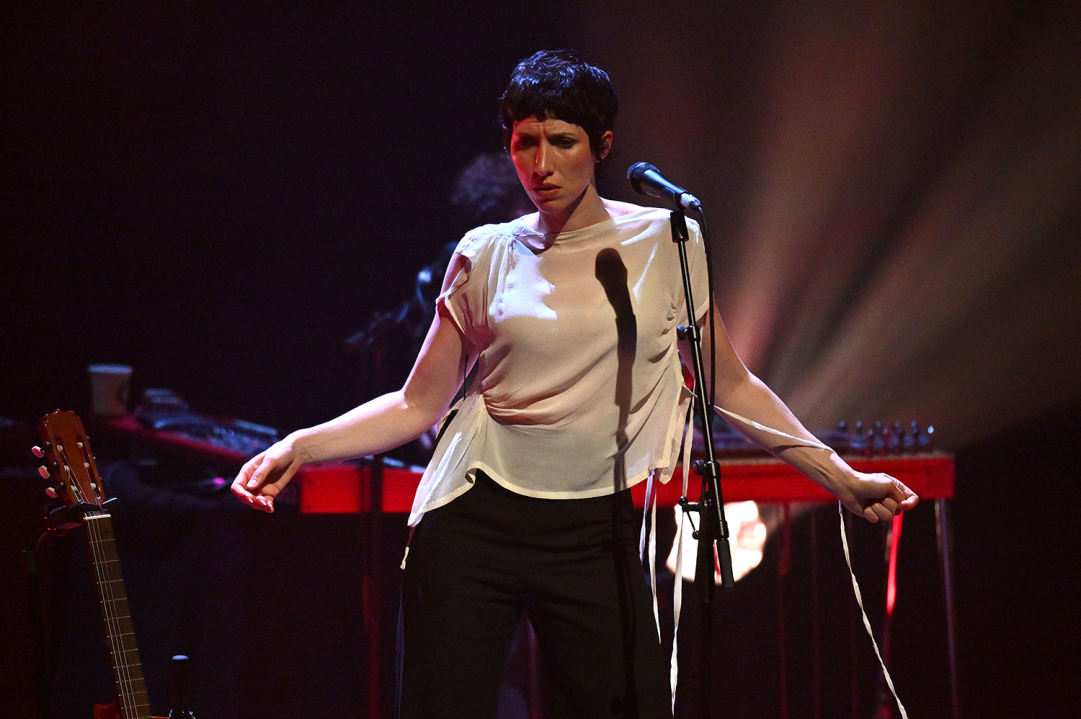
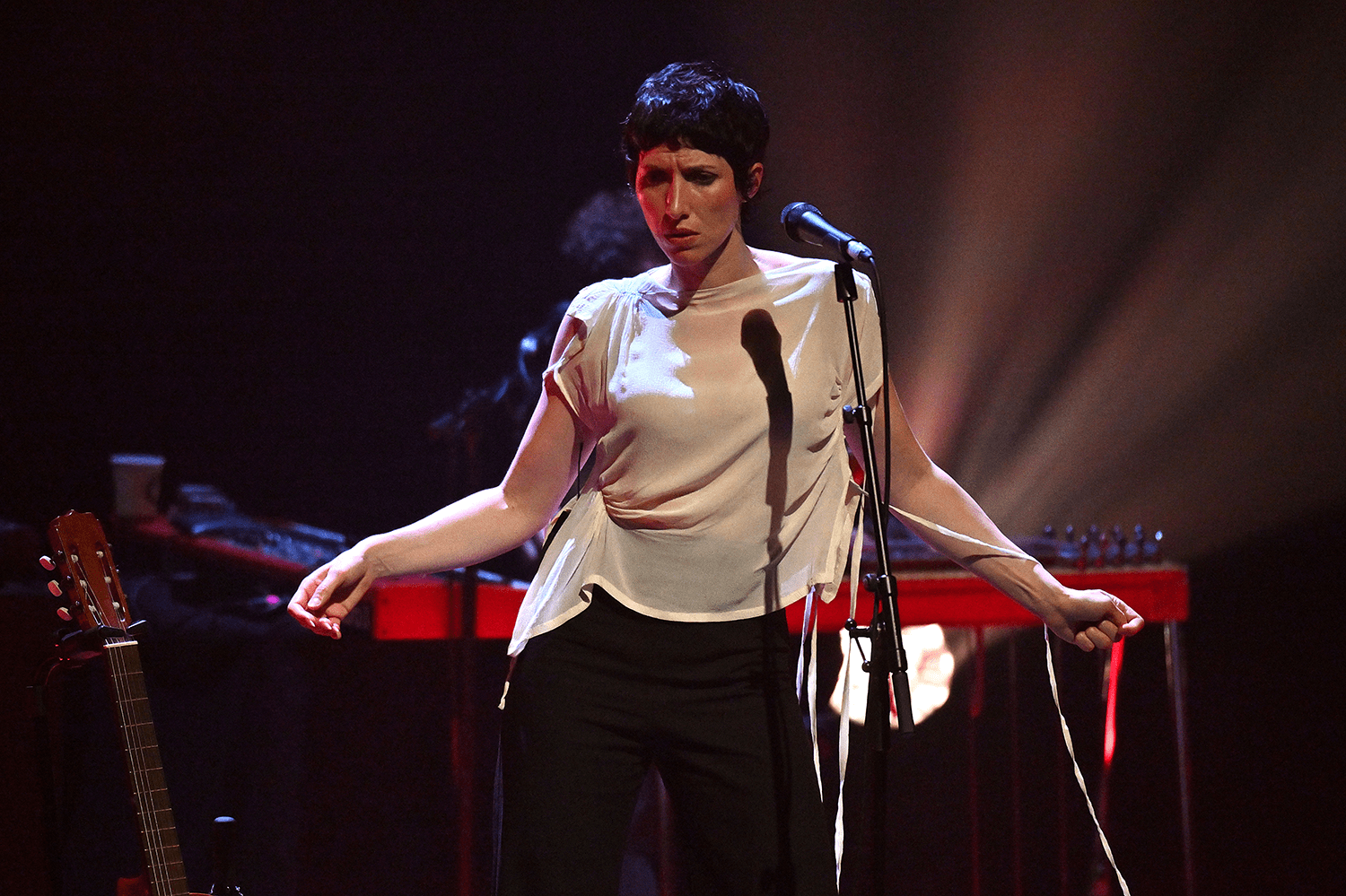
The first thing I did after getting home from the Barbican the other week was google ‘Aldous Harding neurodivergent’. It seems I’m not the only one: messageboard threads debate it; fans speculate. Once you’ve see her perform, you would know why: she twisted and contorted herself not like a dancer, but like someone trying to work out the kinks in her own physicality. She also barely spoke to the audience.
Spot this kind of behaviour on the street and you’d walk on, pretending not to see. On stage, one had to look, and it was wholly compelling. Liberating even – especially if, like me, you are neurodivergent (look, I know everyone is now, but I do have an actual diagnosis). We were being forced to confront our own embarrassment. Forced to see someone being exactly who she was.
Harding is not some case study in affirmative action. First and foremost she is a great artist, and this was the last of three sold-out nights at the Barbican. Her band – guitar, bass, drums, keys and a bit of harp – were delicate and subtle, supplementing but never overwhelming her vocals. Harding’s voice itself was a strange thing, sometimes strangulated, sometimes squeaky, sometimes true: it did what suited the song, not what one might expect, even when the lyrics made very little apparent sense, as on ‘Leathery Whip’.
We were being forced to confront our own embarrassment. Forced to see someone being exactly who she was
If that all sounds a little eat-your-greens, it really wasn’t. The melodies were indelible, and the forms of the music familiar, even when distorted and chopped up – ‘One Stop’ was, at heart, an old-style 12-bar boogie, but with its elements stripped back and reconfigured to sound like 2026 rather than 1956. Music criticism often obsesses over the eat-your-greens side of things – the worthy stories and narratives behind records – and forgets to tell you whether there are any tunes.
Rilo Kiley were one of those American bands who were sort of big in the first decade of this century and they have returned after more than a decade away to a level of excitement that rather surprised me. I suspect that’s because I discovered the subsequent solo career of their singer Jenny Lewis before I ever bothered listening to them, and since Lewis’s solo albums have been so good I just thought of Rilo Kiley as her old band.
For the millennials at the Roundhouse (and the following night at the Shepherd’s Bush Empire), this was a very much bigger event than her solo shows have been. It’s easy enough to tell that Rilo Kiley were writing their songs 20 years ago: an awful lot of them had that alt-rock four-to-the-floor thud to them. I am certain that if they were writing them now, they would be arranged less like gleaming missiles. Their big hit, ‘Portions For Foxes’, is a tremendous song, but it’s very much the sound of 2005.
‘Portions For Foxes’ (a great title) was a hit as a result of a bizarre interlude in pop history when American TV dramas were the main medium for getting lightly alternative music to the masses; it featured in the opening episode of Grey’s Anatomy and won its audience there. (Alexandra Patsavas, the music supervisor for both Grey’s and The O.C., was one of the most influential people in American music for a few years).
Rilo Kiley were perhaps a little ahead of their time. When they played ‘Dreamworld’, it was a reminder that they’d been exploring that lush Fleetwood Mac soft-rock sound years before it became super hip (it’s the sound that much of Lewis’s solo career has been built around), and a far cry from the spindly indie pop of their earliest recordings.
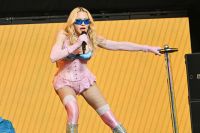
Rilo Kiley are a true band, but Lewis is the focus. It’s no wonder she went solo. What’s more surprising is that she didn’t became a superstar. She has a great voice, bags of charisma, brilliant songs and total command of the stage. I don’t really care whether Rilo Kiley stay together or whether she heads off on her own again: I just want more.



Comments