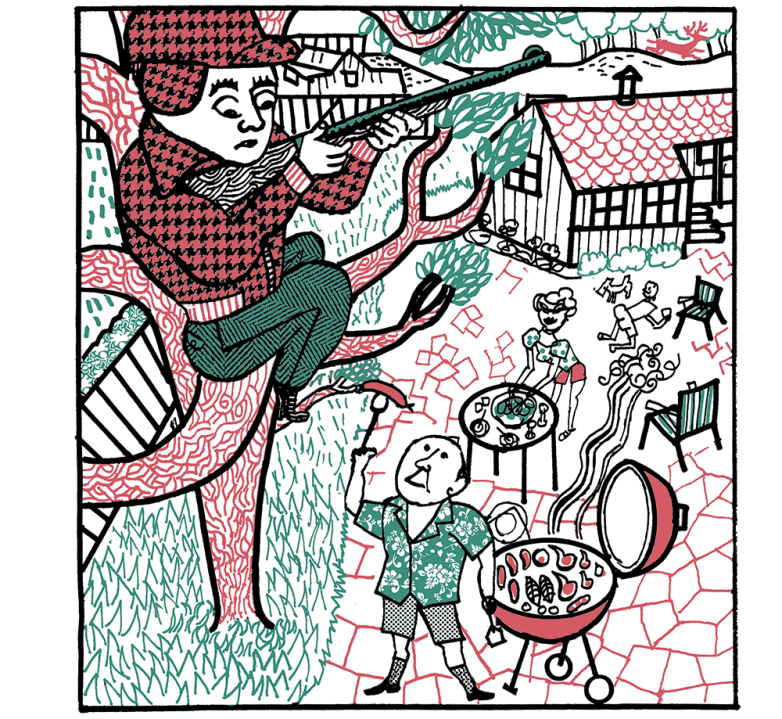

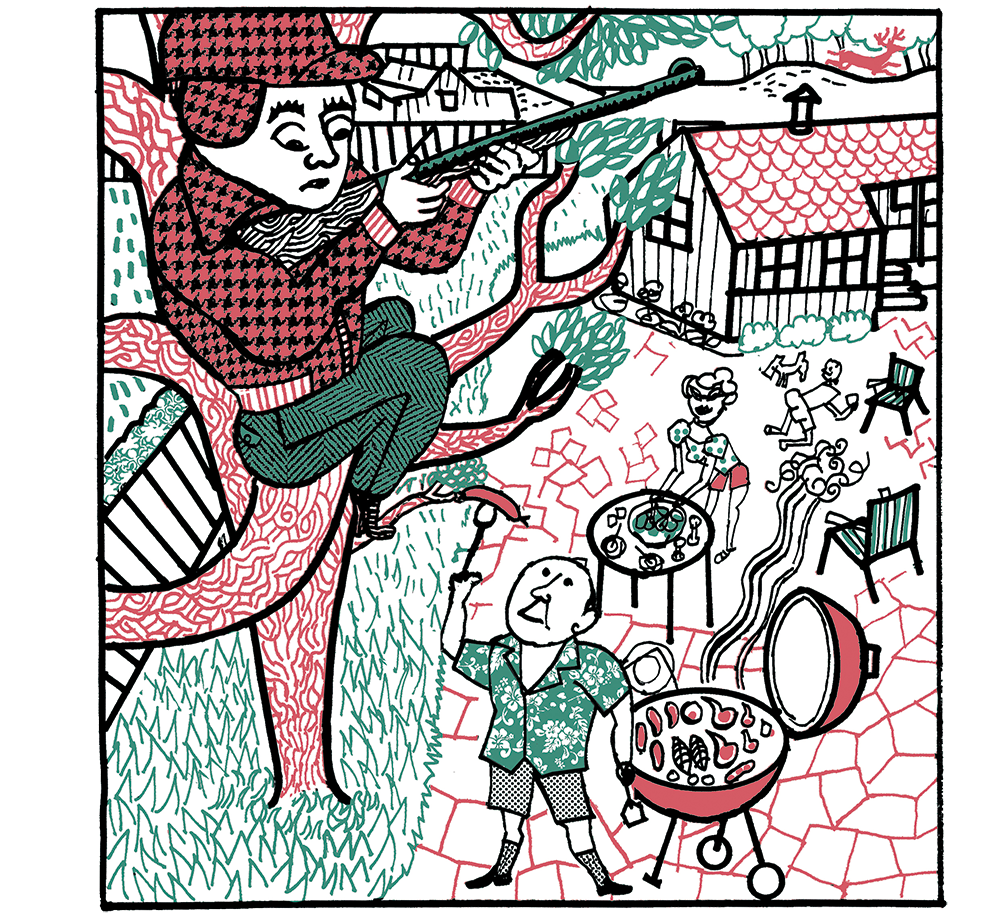
A perch some 20 feet up a backyard tree offers a peek into every manner of activity in the neighborhood. One guy in a uniform sets down his running leaf-blower, backs into a bush, squats and relieves himself. Another guy wearing pastel and khaki rides tight circles on his mower; his facial contortions suggest he’s singing his ass off. A woman washes dishes at her kitchen sink. A man grills on his deck and searches for me in the treeline.
This is urban hunting. And it sucks. All the way around. But here’s the truth: it’s necessary – for hunters, for homeowners, for the community and our economy.
New York City infamously invested $6 million in taxpayer funds to give bucks vasectomies
As a hunter, the suck starts when you pull into a stranger’s driveway. “Hi, I’d like to stab an animal to death in your backyard. That cool?” Obviously that’s not what you say, but that’s the nub of it. You usually get a “no.” Sometimes it’s a nice “no.” But if their dad or grandmother ever took them hunting, you have a real chance.
As a homeowner myself, I don’t want armed strangers on my property. I imagine this instinct fuels many of the “nos” and most of the “hell-nos.” The “nos” often come from those against “trophy hunting.” But, when you explain you’re not a baby-eating felon, you carry insurance, you hunt for meat, you donate to food charities such as Hunters for the Hungry, sometimes the walls come down. Sometimes.
The rare “yes” is just the start. You pick your spot and climb your tree within an arrow fling of half a dozen homes. Folks watch you. Some harass you.
And then there’s the shooting. Urban lots are tiny. And Hollywood lies. Bow-shot deer don’t crumple like Jenga towers. Bow, arrows and broadheads kill by exsanguination (blood loss) or by causing collapsed lungs. That means a well-hit deer can run 20 yards, maybe 100, before it dies. Once, a buck I’d shot crossed a property line and the owners denied my access and dragged it off themselves. Every yard is another chance to traumatize a kid in a swimming pool.
So why bother? Well, urban hunting seasons provide opportunity. Some 14 million Americans hunt; fewer than half of them live in rural areas. Across the country, traditional hunting seasons run from around October to January. But urban hunting seasons can offer year-round chances. In the mountains on public land where deer densities are often lower than 20 per square mile, a hunter may have one or two shot opportunities a year. In urban areas, where populations are generally far higher, it is not uncommon to get that many shots in a morning sitting. In Virginia, where I live, more than 50 localities have urban hunting seasons.

In the early 1900s, there were as few as 500,000 white-tailed deer nationwide. Today, estimates show there are more than 24 million – and that number is growing. In northern Virginia, where biologists say 20 deer per square mile is healthy, densities have been estimated at as much as 419 deer per square mile. And they just keep coming.
A deer eats between five and 15 pounds of vegetation each day. They eat household and commercial landscaping. They eat from ground level to six feet high, killing trees, destroying habitat. One survey by Arlington County, Virginia, found that 88 percent of all stems showed deer browse damage. While there’s no single accounting of the damage done by deer, estimates reach $2 billion nationwide. Beyond the inconvenience and ecological damage, deer host ticks and disease and are vectors for public health costs. What’s more, deer and humans collide every day.
Every year, more than a million Americans hit big-bodied wildlife with their cars – mostly white-tailed deer. These collisions cause roughly 200 human fatalities, 26,000 injuries and $10 billion in damages.
To be fair, the deer are just trying to make a living. And the conflict is of our making, but eventually some municipalities reach their limit. So, they acknowledge that they have a deer problem and look at solutions: Fencing, outreach and education, improved signage and wildlife crossing corridors. Repellents. Contracted sharp-shooters. Costly deer sterilization programs are absurdly common.
New York City infamously invested more than $6 million in taxpayer funds to give bucks vasectomies. When practicality rules, states and municipalities look to urban hunting seasons as an effective deer population management tool. Done well, urban hunting programs reduce deer populations and generate revenue for wildlife conservation.
Urban deer hunting sucks. It’s messy. It’s uncomfortable. It’s the place where urban and rural culture collide. But managed correctly, it protects the environment, the public, the economy and the traditions that helped build our country.





Comments