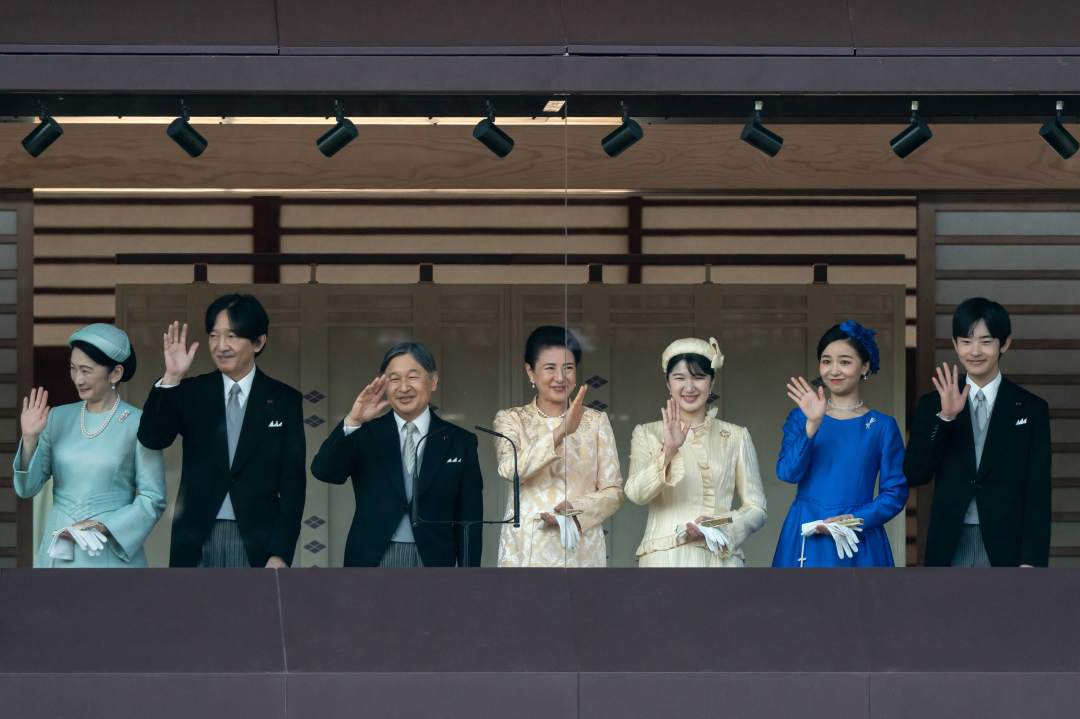
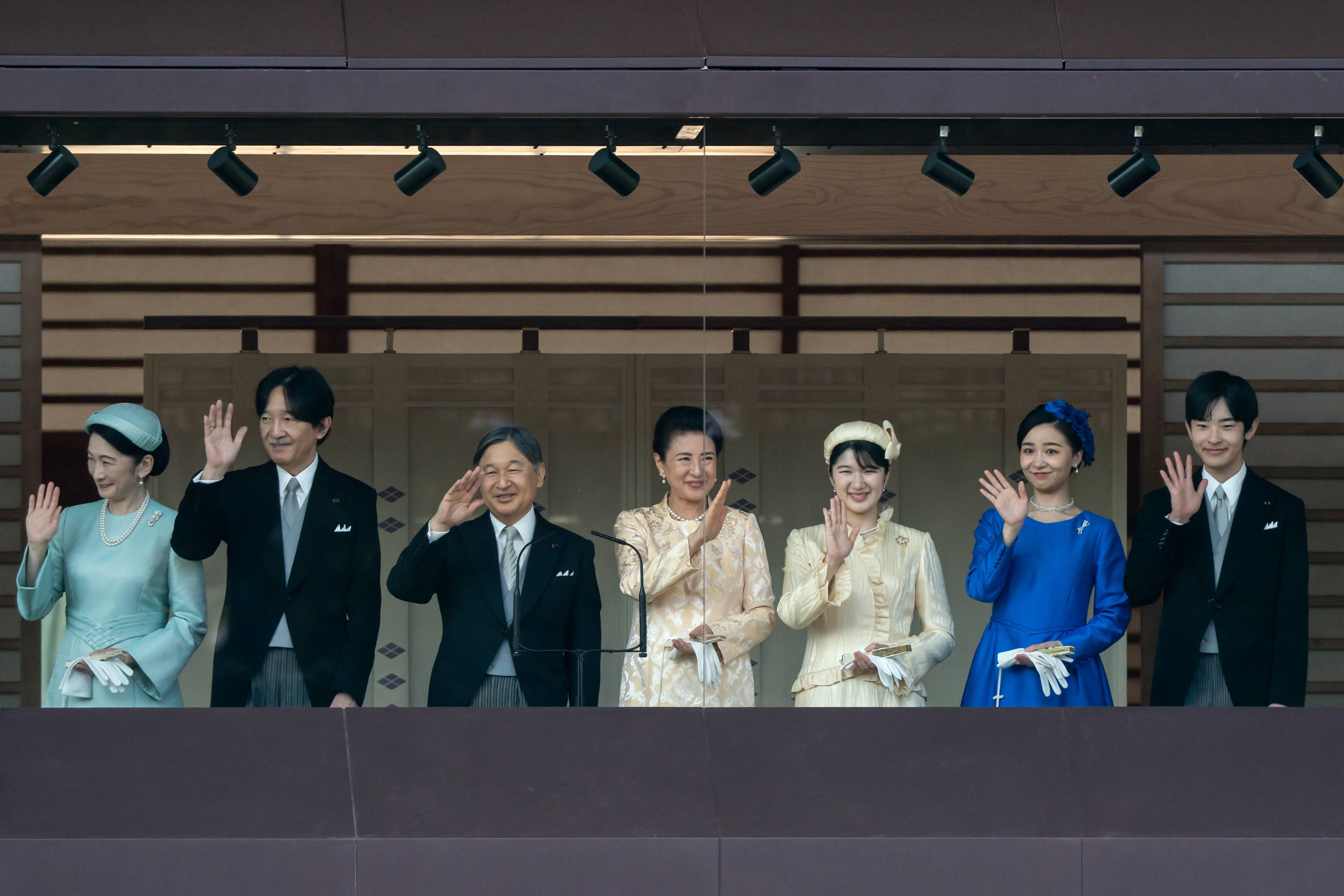
The Japanese are fascinated by the scandal concerning the aristocrat formerly known as Prince Andrew. The main themes resonate powerfully. The concepts of duty, shame and being a burden to one’s family are deeply woven into Japanese culture and so embedded in the language that it is hard to express yourself without touching on them. There are at least four expressions for ‘black sheep of the family’ in Japanese and one of the very first kanji I learned was for the word ‘muru-hachibu’ (eight against one) which means ‘sent to Coventry’ (shouldn’t that be Norfolk now?).
There might also be a sense of ‘there but for the grace of god’ relief for the Japanese in watching a fellow constitutional monarchy floundering. It reminds them how unlikely a scandal of that nature and magnitude would be in their 2,000-year-old monarchy. For 80 years on from a point when the arguable zenith of the British monarchy coincided with the arguable nadir of the Japanese – the end of the second world war, the two royal houses have bifurcated in their style and popularity to the point where one is fairly secure (republicanism hardly exists here) and the other appears to be in serious trouble.
How did this happen? Having been allowed to survive (the occupying Americans felt the Emperor was useful and without him the country might descend into anarchy), the Japanese monarchy spent time on the naughty step of history. It was downsized, with 51 royals purged/downgraded to commoners. Assets were seized and their status of divines was revised to mere symbols of the nation. They became entirely benign and almost liminal figures. They are ‘like ghosts’ was the writer Donald Ritchie’s assessment of former Emperor Akihito and Empress Michiko.
They have been well-managed and kept – or been kept – well, well away from politics the military, preferring serious, worthy, if rather dull, pastimes. Emperor Hirohito focused on marine biology and had a laboratory in the grounds of the Imperial Palace where he kept collections of hydroids and slime molds. His son Akihito took on his father’s research, becoming a world expert on goby fish publishing 30 academic papers on the topic. The current emperor Naruhito plays the viola and is ‘passionate’ about the history of transportation and ‘water issues’. It keeps them occupied.
Meanwhile, over in the UK, the Windsors have surrendered to – and in some cases embraced – modern celebrity culture. Comparatively unaccomplished, they have had lots of time on their hands to develop bad habits and make inappropriate acquaintances. They have allowed themselves to become globally recognisable, marketable commodities. Predatory operators like Jeffrey Epstein would hardly have been interested in the globally unknown Prince Akishino or Princess Tsuguko but an English prince known as ‘Randy Andy’?
There is a sense of relief for the Japanese in watching a fellow constitutional monarchy floundering
The Japanese have also been tenacious in protecting their monarchy. A friend who occasionally mixes in royal circles tells me the radius of the innermost circle, that surrounding the royal personage is wide indeed and ringed with a forcefield. ‘You can’t get anywhere near even the most minor royal,’ she tells me.
The protection is provided by the formidable Royal Household Agency, a 1,000-strong Praetorian Guard that monitors every move the Japanese royals make and approves their every utterance. The idea seems to be not just to protect the royal personages from unwanted attention and keep them on a righteous path but to ensure that they never develop a personal profile to rival or outshine their public, symbolic one. They are almost exquisitely boring.
This sounds excruciating and it is. Several members have left including most famously Princess Mako, the closest the Japanese have had to their own celebrity royal. Mako quit to marry a commoner and escape the stultifying royal rigmarole. It was a huge story in Japan and has been likened to that of Harry and Meghan. But it really isn’t that similar. Mako now lives an ordinary, anonymous life in New York. The Japanese royal family’s formerly most famous member, their star, now takes the subway, shops alone in supermarkets and is hardly ever recognised. Would you recognise her?
Then there is the media. Having decided to enter the arena of celebrity and enjoy its dubious privileges, the Windsors could no longer expect any mercy from the third estate. In Japan, such a Devil’s bargain was never struck and save for the fringe ‘weekly magazines’ which leak out the occasionally mildly juicy tidbits, there is virtually no negative royal coverage at all. The media don’t want to report it and the public, conscious perhaps of how close they came in the not-too-distant past to losing their monarchy, don’t especially want to hear it.
A friend of mine tells an anecdote of a confrontation with a senior executive of NHK (Japan’s version of the BBC). My friend took him to task for not covering a story of a man who set himself on fire outside Shinjuku station to protest against the Japanese government deployment of troops overseas. The media man became increasingly irate and finally blew up. ‘It’s not my job to report negative things about Japan!’ he snapped, before storming off. Compare that with the BBC’s glee at every detail, even the trivial ones, of Andrew’s story. And therein lies the difference.
What would the Japanese do with Andrew Windsor? Nothing, the problem would never have arisen in the first place.


Comments