
China’s largest trade show is now under way in the southern city of Guangzhou. The Canton Fair is a colossal month-long affair with around 32,000 exhibitors and is often described as a shop window for Chinese manufacturers – a barometer of the China trade – where just about anything and everything can be bought. This year the mood is subdued. “The specter of the Iran war hung heavy like the banners inside the gigantic exhibition halls,” as Bloomberg described it.
Exhibitors reportedly complained of soaring costs and falling orders, most notably from the Middle East. China’s economy is highly dependent on exports, and the show’s opening coincided with President Xi Jinping’s first public remarks about the war, complaining to visiting Spanish Prime Minister Pedro Sánchez that the international order is “crumbling into disarray.”
Yet Xi has been preparing for a moment like this ever since he came to power in 2012. In many ways China is in a better position than most to weather the storm – at least in the short term. The country is estimated to hold the world’s largest reserves of oil – around 1.3 billion barrels, roughly equivalent to three months of imports – prompting Treasury Secretary Scott Bessent last week to accuse China of hoarding oil supplies. At the same time it is investing heavily to extract oil from what remains of its own fields, as well as in fracking and nuclear capacity. It continues to dig coal and build coal-fired power stations at a faster rate than the rest of the world combined.
Chinese analysts think that China’s best strategy is to let Trump dig himself into an ever-deeper hole
China is also a world leader in the installation of renewables such as wind and solar. This is mistakenly described by more starry-eyed Western environmentalists as a “green” policy. Beijing has never had any desire to be a good global citizen. It is a hard-nosed industrial policy, part of a bid for energy security, designed to insulate China from the sort of shocks the world is now experiencing.
“Fortress China,” as it has been dubbed, is also part of a wider economic plan for self-sufficiency: to make China less reliant on the world while making the world more dependent on China. “De-risking” or “de-coupling” as a policy was alive and well in Beijing well before it became fashionable in the West. And as the world inevitably seeks to lessen its reliance on hydrocarbons in the wake of the Iran war, China is calculating that it is in an ideal position to utilize its vast overcapacity in renewable technologies and dump its heavily subsidized surplus on global markets – thereby deepening dependence on China for key technologies of the future.
All that said, the fortress is not entirely impregnable. China remains the world’s largest energy importer, buying roughly 70 percent of its oil and 40 percent of its gas from abroad. A little over half its oil imports originate in the Middle East, and it ships more oil through the Strait of Hormuz than any other nation. Beijing was the biggest importer of Iranian oil, buying more than 80 percent of Tehran’s output and utilizing a fleet of shadow tankers to bypass restrictions.
Until the United States launched its blockade of all shipping coming from Iran, the Iranian government was allowing selective passage through the Strait to “friendly” Chinese ships. The Iranian-flagged cargo ship intercepted by US forces on Monday was reportedly traveling from China and carrying what were described as “dual-use” items.
Beijing will also be calculating that it can gain politically from the Iran war – notably from the tension it is creating between the US and its allies and the diversion of attention (and weapons systems) away from Asia and the Pacific. Hawks in Beijing may also be calculating as to whether this creates a window of opportunity to step up pressure against Taiwan. The Iran war is, however, another example of the power of asymmetric warfare – the ability of a smaller and far less powerful nation to thwart a bigger rival – and Taipei will be taking note.
Chinese analysts have argued that the economic risks and benefits are mixed. They think that China’s best strategy is to let Trump dig himself into an ever-deeper hole, draining US resources and global standing, from which Beijing can capitalize later.
Yet the war has also demonstrated how little diplomatic clout Beijing really has on the global stage, and its unreliability as a friend. As with Venezuela before it, Chinese military kit has proved to be largely ineffective against American firepower and cyber capabilities. Much investment was promised under what China called its “comprehensive strategic partnership” with Tehran, along with pronouncements of ever-lasting friendship. Yet Beijing’s most tangible contribution appears to have been the surveillance kit that enabled the suppression of January protests and left an estimated 30,000 people dead. That is unlikely to be forgotten if the Iranian people are ever able to affect a meaningful regime change.
Although China has built some energy resilience, there are multiple other supply disruptions on the minds of the traders at the Canton Fair this month. For example, the price of some polyethylenes, used in the manufacture of toys, clothing and bottles, has soared. As have some foodstocks, as well as carbon fibers used for consumer goods and cars. The cost of commodities such as copper and aluminum have also been surging. Exports from China rose just 2.5 percent in March, a fall from 22 percent in January and February, according to China’s Customs Bureau. And if the world is plunged into recession, that will hit China’s export-led economy hard.
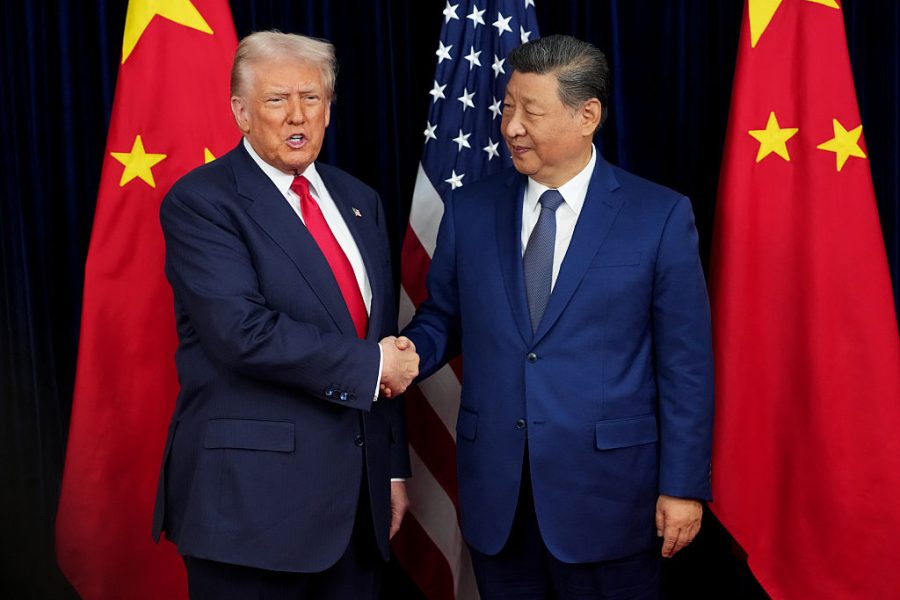
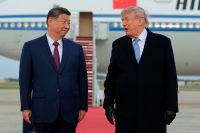
When the war in Iran began, there was some speculation that Washington’s real target was China, that it was all part of a cunning geopolitical plan to neutralize a key Beijing ally (following on from Venezuela) and inflict pain on its export-led economy. That was always fanciful, since it assumed Trump had any sort of strategy – which has grown more doubtful as the conflict has progressed. It’s also clear that more pain is being inflicted on US allies in Europe and Asia than on China. While “Fortress China” has yet to be fully tested, it will give Xi more confidence that he has the upper hand as he prepares to sit down with the President at their summit in Beijing next month.


Comments