
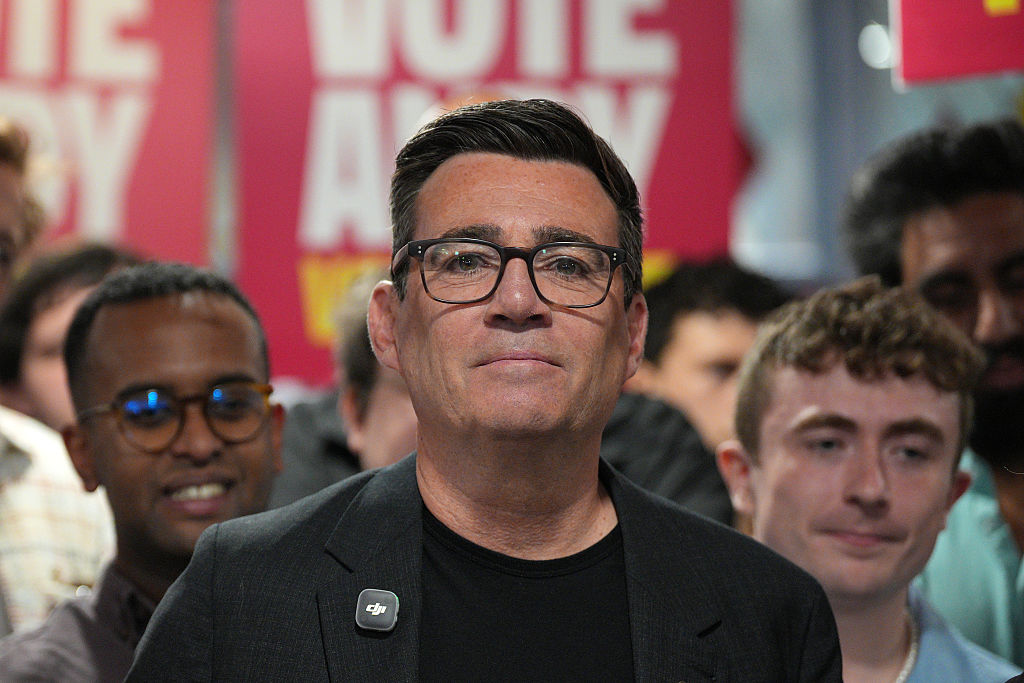
For his Labour critics, Andy Burnham is just Keir Starmer in a black T-shirt. They mutter that the new MP for Makerfield lacks substance and would be quickly found out as PM.
Burnham can enjoy the glow of victory. But the closer he gets to the tough choices of real power, the more the shine will start to fade
That critique overlooks at least one major difference between Burnham and Starmer, which is about policy. Starmer’s problems arise in part from his failure to develop a proper policy agenda before taking office. His 2024 manifesto was very deliberately sparse, to avoid giving opponents targets to aim at during the campaign. Despite the hopes of many colleagues, there was no secret plan locked away in Sue Gray’s safe. The result was a government drifting from day one.
If anything, Burnham has the opposite problem. He is awash with policies, or more accurately, ideas, hints and signals for policies. Over nearly a decade in the comfortable and spacious office of Mayor of Greater Manchester, he has had the time and opportunity to talk about policy a lot.
Whether or not all that talk constitutes a coherent agenda strikes me as a slightly silly question. Is there such a thing as Burnhamism? The only people who could care about that question are politicos with too much time on their hands.
What matters, to voters and the country, is individual policy choices. As Chairman Mao didn’t quite say, I don’t care if the cat is black or white, Manchesterist or business-friendly socialist. I care about whether it puts up tax on mice.
Bluntly, now that Burnham is over the by-election hurdle, he’s going to have start explaining how his fine-sounding policy ideas would actually work if and when he ends up in No 10. Almost every area where Burnham has hinted at change comes with some sharp political edges.
This is the difference between being a candidate, when you can legitimately attempt to make everyone happy, and governing, when pretty much every choice you make involves making someone unhappy.
On big-picture macroeconomics, Burnham has indicated that he wouldn’t, in fact, change very much. He’s promised to stick to the (quite malleable, not very effective) fiscal rules and to maintain the Labour manifesto promises not to touch income tax, VAT or corporation tax. That should avoid bond market dramas, but it doesn’t mean his proto-agenda is uncontroversial. Far from it – living within those confines means that pretty much everything he wants to do that costs money will mean raising cash elsewhere, either in higher taxes or spending cuts.
Overhauling a raft of taxes? Burnham has talked about cutting business rates for pubs and raising the threshold. Sounds nice, but where’s the money coming from? Meanwhile, several of his allies have talked about raising more revenue from Capital Gains Tax. That also sounds good to Labour people, but in the Treasury officials are privately sceptical, predicting that the Office for Budget Responsibility would score the policy as raising very little revenue because it would chase many footloose rich folk out of Britain.
Fixing social care and introducing a National Care Service, funded by a new levy on property? As I’ve written elsewhere, this may be a good and necessary thing. But the politics are hellish, since someone has to pay. Burnham has experience of seeing social care plans perish as opponents shout ‘death tax’. He may well relive that ordeal.
Reform council tax, which is madly based on 1991 property values? This is the sort of thing that wonks like me love. Unfortunately, it also has the scope to be really, really unpopular, because it would very likely mean a number of people whose house prices have gone up a lot would pay more tax. And people with houses don’t tend to like paying more tax on them. Especially if those tax rises come about because of home improvements they have paid for.
Stronger public control of utilities? It seems implausible that this means actually nationalising major industries, which could expensive and legally fraught. But what does it actually mean? Public corporations providing services in competitive markets, perhaps? Much more stringent regulatory regimes? Turning a slogan into action that gets better outcomes for consumers – and avoids making Britain a pariah to international investors – will be far from simple.
A major wave of building council homes? Good stuff, and there may be some scope to do so within the fiscal rules (TLDR: the assets created would sit on the public sector balance sheet, helping offset borrowing to finance them). But state housebuilding would face many of the same obstacles as the private sector: planning rules, anyone?
There are other promises to resolve too. Consider the Waspi women and their dreadful campaign. Burnham last week alarmed some Labour colleagues by appearing to stand by earlier promises to ‘compensate’ them, which could cost billions. Confronted with the reality of this position, he quickly retreated to suggesting they could have free bus passes (which most of them already have). Fixing this mess will involve making someone unhappy.
Then there’s the unresolved business he’d inherit from Starmer, which includes some of the thorniest issues in politics.
There’s the evolving relationship with the EU, including a ‘reset’ summit in July and the possibility of re-introducing free movement for younger people. Funding the Armed Forces on something like an adequate basis. Seeing through the reform of Special Educational Needs and Disabilities that is, along with social care, dragging council budgets towards doom. Finding a way to spend less on welfare, especially disability-related benefits, that Labour MPs can swallow. Stick with Net Zero, or further dilute environmental promises and risk conflict with allies like Ed Miliband and maybe the Greens? Student loans and the future of a university sector that looks increasingly fragile, both politically and financially. Restore some confidence in policing? Mental health: discuss.
Oh, and as well as doing all that, he’s going to have to pick a team of ministers and advisors. And as every prime minister has discovered, hiring and firing is the bloodiest and most painful part of leading a government
As a newly-elected MP who has just bucked the trend by winning a seat for Labour against Reform, Burnham can enjoy the glow of victory. But the closer he gets to the tough choices of real power, the more the shine will start to fade. If he now goes on to get the top job, I predict that a look at the prime ministerial in-tray will prompt him to at least ponder a honeymoon-period early general election.
That election remains unlikely, not least because it would a big gamble and cost scores of Labour MPs their seats. But Burnham wouldn’t be human if he didn’t privately reflect that being a candidate is easier than governing.



Comments