On subjects related to Jews, Zack Polanski, Mothin Ali and the other political children in the new Green party have been playing with fire. They are now starting to learn that fire is hot.
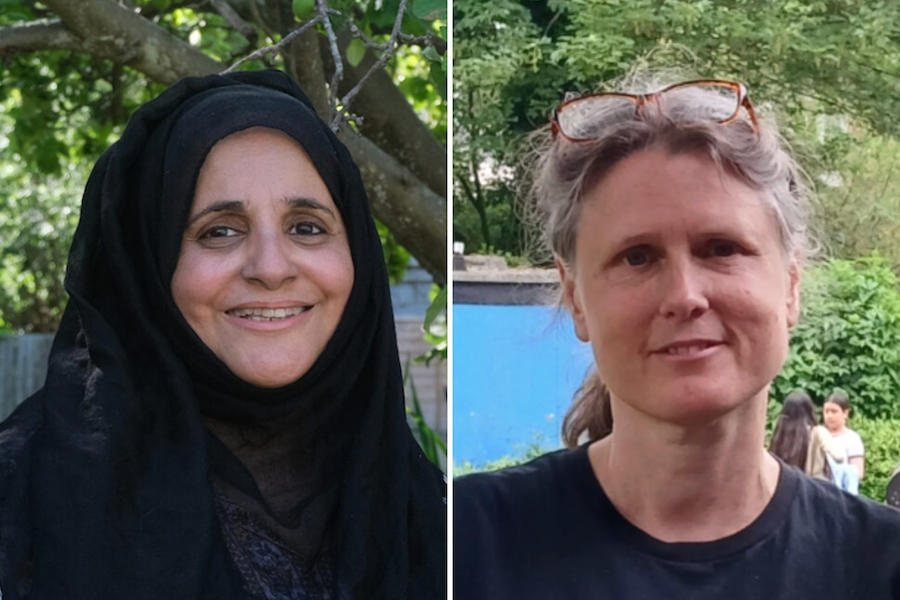
One week before the local elections, two of the Greens’ candidates for a key target council, Lambeth, spent yesterday in police custody. As revealed by The Spectator, one, Saiqa Ali, posted that Donald Trump is ‘owned by Jews’, depicted the world being crushed by a giant serpent with the Star of David on its skin, and appeared to honour Hamas, among many other horrors. The other, Sabine Mairey, promoted a video saying a terror attack on a synagogue ‘wasn’t anti-Semitism’, but ‘revenge’ against Israel. They have both been arrested for stirring up racial hatred.
Rachel Millward, the Green party’s co-deputy leader, said on the BBC’s Question Time last night that ‘the Green party stands absolutely united in wanting to create a society without hate… A handful of [our members] will not share our values. We’re doing everything we can do to address that.’ Even for the Polanski Greens, this was breathtaking.
An obvious first step to ‘create a society without hate’ is to remove from your own organisation the now almost 20 documented haters who you have chosen to be candidates for public office. ‘Doing everything we can’ is the exact opposite of what the Greens actually did, which was nothing.
Our stories about Green candidates with hideous views started on 12 April. For weeks, the Greens refused to disown any of the candidates, or to make any substantial comment whatever. Green canvassers continued to knock on doors for them. Polanski claimed the stories were a ‘weaponisation of a political attack’, and launched a recruitment drive off the back of it.
After the stories appeared, according to an extraordinary report in the Times, the Green party’s other deputy leader, Mothin Ali, met three of the extremist candidates – Saiqa Ali, Ifhat Shaheen (who, we revealed, called 7/10 an act of self-defence and asked whether “Zionist funding” was behind Tommy Robinson) and Mark Adderley (who suggested Israel was responsible for the Bondi Beach terror attack). Saiqa Ali said she felt pressured by the party to make an apology which she didn’t really believe. Ifhat Shaheen said she felt like leaving.
Mothin Ali encouraged them to take legal action against the party. ‘We need to get some serious legal advice,’ he said. ‘We need to make sure that we are putting the party on notice straight away, and we need to start with some class action. Because it won’t be the end. They’re coming after more and more people.’
It often takes a while for stories about problem politicians to break through
Polanski himself appears to sympathise with his deputy. After being criticised for asking whether British Jews suffer from a ‘perception of unsafety’, rather than ‘actual unsafety’, he doubled down. His response to this week’s terror attack against Jews included retweeting a post accusing the police officers who arrested the suspected terrorist of using excessive force. This earned him a rebuke from the Met’s commissioner, Sir Mark Rowley, who said he was putting public safety at risk.
Polanski and Mothin Ali may be reckoning that all this will motivate the hard-left vote, while passing less politically obsessive people by. Some of the latter will still vote for the Greens because the last few weeks haven’t dented the cuddly image enough. Saiqa Ali is still on the ballot, she’ll win her seat and can be brought back into the fold once the fuss has died down. Most of the others never left the fold: Ifhat Shaheen, for instance, continues to be promoted by the Greens in Hackney, where she’s a candidate.
But as a journalist I’ve seen this movie many times before. Indeed, I’ve made this movie a few times myself – with Ken Livingstone, Lutfur Rahman and a bit of Corbyn, for instance. It often takes a while for stories about problem politicians to break through. But if the underlying behaviour carries on, it always does for them in the end.





Comments