The Russian word pravda is often translated as “truth”, but it can also mean “justice”. The proto-Slavic prav had that latter meaning, pravo refers to a legal right, and the first law code in Kievan Rus’ was called the Russkaya Pravda. Over time the word has come to mean “truth”, but with strong connotations of “moral or spiritual truth”, or a just way to order human relations. Sometimes it is translated into English as “social justice”, whereas istina is the term for objective truth. In other Slavic languages, such as Serbo-Croatian, pravda has retained its meaning of “justice” or “fairness”.
Truth and justice are synonymous, or related, in the human mind, and it is actually quite unusual to care about truth in a literal, scientific sense, irrespective of the social consequences. It is a characteristic found in nerds, and especially those on the autistic spectrum; only a small number of people obsess about the objective truth, and they often repulse the rest of society as a result. For most, a sense of pravda is more important, as is the approval of peers, and they also tend to question the intentions of people making dissenting claims. If you’re seeking knowledge which might disrupt social harmony, you’re probably a bad person with ulterior motives, and your arguments will be mentally screened out by people who don’t wish to expend energy on issues that don’t concern them.
We’ve seen an odd, smaller-scale repeat of the summer of 2020 in Britain this past week
It is only with the advent of universities that we developed institutions committed to finding empirical truths, and only relatively recently that open inquiry was permitted in sensitive areas; Catholics, Jews and Nonconformists were still excluded from Oxford and Cambridge until the 1870s, while most Ivy League colleges were originally established along sectarian lines.
In recent years there has been a notable return to older concepts of quasi-religious tests in academia, and a key driver in the upheavals within American universities during the 2010s was a search for pravda over istina. This resulted in more than 200 professors losing their jobs, more than during the Red Scare (admittedly from a far larger pool). Many were ruined simply for questioning the prevailing wisdom, and in some cases the hysterical drive for justice drove people to suicide. It was merciless.
This movement culminated with the events of June 2020, an eye-opening time for many nerds, revealing how large numbers of people were prepared to assert something that seemed plainly false: that a disproportionate use of lethal force on black men in the United States was primarily driven by racism, even when there was plenty of evidence showing that this was not the case.
It was one thing to state that racism exists, and influences personal relations; that is certainly true, although hard to measure. It is another to suggest that this has a quantifiable impact on group disparities, without any attempt at presenting evidence and where there are clearly other factors at work. Systemic racism felt true, not because there was evidence, but because it was the only explanation that satisfied a sense of justice. In fact, not only could systemic racism not explain these disparities, but in the United States and Britain there was a system in place – under the guise of Diversity, Equality and Inclusion – which had the precise opposite effect, an established legal form of systemic racism. It’s very disconcerting, radicalizing even, to believe that millions of your countrymen have no interest in seeking the truth when it conflicts with their idea of social justice. It’s why the summer of lockdown had the claustrophobic feel of a medieval village in the midst of religious hysteria.
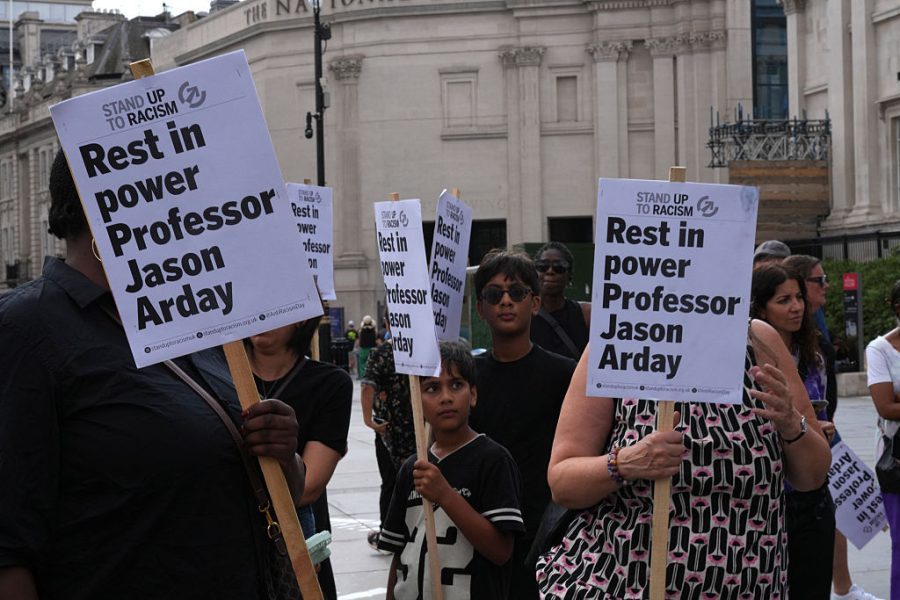
We’ve seen an odd, smaller-scale repeat of the summer of 2020 in Britain this past week, with the tragic death of Jason Arday, the Cambridge professor accused of plagiarism and fabrications.
Following the horrible news – Arday was just 41 and left two children – many public figures instantly blamed the racist media for a “witch hunt”. Among those who blamed journalists were Labour MPs Kater Osamor, Dawn Butler and Tulip Siddiq, who has, of course, faced her own problem with the press, Zarah Sultana, the Green party’s Zack Polanski, Kehinde Andrews, professor of “black studies”, actor Noel Clarke, and of course Ibram X Kendi, who claimed that the media “lynched” Arday.
The media was certainly obsessed with the story, apparently running over 200 articles about the Cambridge academic in ten days, an avalanche of comment both in the mainstream press and on substack. I didn’t write about him, not because it didn’t interest me but because by the time I had formulated any thoughts, there were already about 50,000 takes on the subject. The world of commentary is heavily over-saturated, and I’m not sure I could add much more; even having spent a day at the end of my holiday writing about it, I then read Sarah Ditum’s analysis, which expressed everything I had to say about the subject, but better.
Yet it’s still worth emphasizing that the story was newsworthy: Arday was a much-lauded, high profile academic with a literally unbelievable life story, about to publish a book following a major deal. His behavior clearly invited questions about one of the world’s most prestigious universities – and institutions are what make such stories scandalous. It was also fascinating and funny, as a human interest story.
The media’s interest was further justified by the fact that Arday sent libel lawyers to journalists who had raised legitimate questions, and even reported one to the police. The investigative journalism was a clear case of “speaking truth to power”, and the most important and crucial intervention came from the Guardian (in contrast, the BBC did not exactly cover itself in glory). If there was a racial element to the media’s obsession, as some have argued, it is that it illustrated how many progressives will overlook all sorts of red flags in the name of equity, the social and legal goal of the British state.
None of this has deterred some people from turning the death into a small British version of the summer of 2020. There is, of course, no consistency to this, and many of those who now call this a witch-hunt are perfectly happy to invite pile-ons against their enemies when it suits them. Indeed, many of the same people who call this a “witch hunt” are openly campaigning for a witch hunt against the journalists who wrote about Arday, publishing a list of names and asking for personal and professional information about them.
Others, including Green party leader Zack Polanksi, have called for media regulation laws, the consequences of which they have no understanding. Writer Matt Haig urged Andy Burnham to ensure that journalists face “consequences” for what he calls a “politically motivated campaign”. Novelists Will Self has suggested that journalists who covered the story have their computers seized. As with 2020, it seems that some people have lost their minds.
One petition is calling for a law to protect individuals from the media, which would presumably limit the number of stories they can run. No one is really explaining how “Jason’s Law” might work, or whether there has to be a quota of articles on particular individuals. Presumably the state should decide what newspapers get to report on, and this could be decided by some neutral body committed to truth and justice; we could perhaps call it “Pravda”.
At the vanguard of this campaign is the The Good Law Project, which has criticized the Guardian for taking up right-wing attack points, especially going after one reporter at the paper. They seem to have no interest in whether those “attack points” were correct or not, and whether the Guardian was in fact doing what newspapers are supposed to do.
The Arday story also blew up because it cast a light on academia and its declining interest in truth over justice. It is hardly reassuring to read Cambridge’s Chancellor respond by quoting the line that “you’re not here to learn how to be clever; you’re here to learn how to be kind”. Aren’t you here to seek the truth? This contrasts with the wise words of Richard Dawkins – the greatest living Englishman – who has criticized the “visceral, naked, irrational hatred spat out by some defenders of Jason Arday”.
At a vigil for Arday in London, where a crowd chanted his name, MP Diane Abbott claimed that “other professors” had waged a three-year “vicious campaign” against Arday because they “just didn’t believe that a black man should be a Cambridge professor”, a very serious allegation made without the slightest bit of evidence.
Dawn Butler quoted Malcolm X, stating that “if you’re not careful, the newspapers will have you hating the people who are being oppressed, and loving the people who are doing the oppressing”. The Good Law Project’s founder, lawyer-turned-political activist Jolyon Maugham, evoked the spirit of 2020 when he told the crowd that “today of all days is very much a day for white people to listen and not to speak”.
The most disturbing words came from Lord Woolley – the head of Homerton College – claiming that Arday was the victim of a “lynching” and a “public execution”, and saying that:
The dogs of hell, the hounds of hell, sought to pursue any inaccuracy that they could say Jason is a bad man, Jason doesn’t deserve to be in Cambridge. For them, Jason doesn’t deserve to be alive. There needs to be some reckoning. There needs to be some justice.
Woolley, you won’t be surprised to learn, was appointed by Theresa May’s Conservative government to head the Race Disparity Unit, set up to look into why some groups have better average outcomes than others. One man they certainly wouldn’t have asked for his opinion was the main target of the vigil’s anger, the man who first exposed Arday, former Cambridge researcher Nathan Cofnas.
Cofnas was removed from Emmanuel College in 2024 for his research into IQ and race, and the contrast in the university’s approach to the two men has been noted. One was accused of multiple fabrications and plagiarism, the other of conducting politically unpopular (and, to some, dangerous) work.
To most people, who care more about pravda than istina, I imagine that Cofnas’s offense was probably the greater, because it suggests a fundamental immorality, a desire to upset social relations, whereas Arday was simply a fabulist. That is not how intelligent, rational people at one of the greatest universities should think, however.
Louise Perry was perceptive in contrasting the success Arday had enjoyed at Cambridge and the difficulties experienced by Cofnas. Cofnas was determined to pursue what he saw as the truth, an idea which society finds repulsive. Arday appealed to them with fantastic stories of overcoming hardship. One of those things is obviously far more attractive to modern universities.
“Racist” is obviously a highly moralized term, implying that someone is beyond the pale
I’ve met Cofnas on a few occasions, at various conservative-aligned get-togethers. He’s a slight, affable, dryly amusing figure and – forgive the racial stereotyping – quite New York Jewish in his mannerisms. He could almost be played by a young Woody Allen, if Allen cast himself as a race scientist hated by society for his controversial views. He’s obviously one of those unusual people who can’t bear to hear what he regards as fictions being repeated for the sake of social harmony or group cohesion; a nerd, in other words.
At one conference I recall him getting exasperated by a speaker who was defending Trump’s tariffs, which Cofnas regarded as moronic populism aimed at flattering favored groups, in this case the native working class. Most people in politics tend to accept these sort of concessions to truth in order to build coalitions, because in our ancestral environment it was necessary for survival; not Cofnas, clearly, who in our ancestral environment would have ended up being ritually sacrificed after disputing that the shaman had in fact transformed into an owl.
Cofnas believes that average differences in IQ between population groups are both a real measurement of intelligence, and are not 100 per cent environmental. This is perhaps the most offensive idea in the world, although more people in the scientific community believe it than let on, since it’s career-ending to admit. Because of this, even those condemning the Floydification of Arday’s death often pre-amble their opinion by pointing out that Cofnas is a “racist”. I can’t peer into men’s souls, especially one I’ve met only on brief occasions, but this qualifier goes to the fundamental problem with public discourse over academic questions.
“Racist” is obviously a highly moralized term, implying that someone is beyond the pale. Cofnas believes that the evidence points to certain facts, and whether you want those facts to be true or not, that is not a subject that can be resolved morally; it’s either true, or it’s not, and our repulsion at the idea makes no difference to whether genes or environment influence outcomes. How we apply those findings to create a just society is indeed a moral issue, but that is not for intelligence researchers to resolve. Are people who believe in the hereditary explanation less likely to feel respect or warmth towards black people? On average, almost certainly. But again that doesn’t make much difference to whether it’s true or not.
Cofnas has been called not just a racist, but also a white supremacist (which would certainly make things awkward for his Korean wife), although I first heard about him after reading an interesting study of his, disputing a fringe Right-wing theme that Jews are invariably political radicals. He pointed to data showing that Jews were over-represented in conservative movements as well as left-wing ones – so long as those groups weren’t explicitly anti-Semitic. The mainstream inter-war German conservatives had plenty of Jewish support; the Nazis, not so much.
It was over-representation, the absence of “equity”, which drove hostility, and Cofnas saw IQ differences as the most likely explanation. In this he managed to counter the most poisonous theme in western politics with the single most offensive possible explanation, but in Britain the trend certainly seems true: whenever someone on Twitter makes a point of emphasizing the Jewish surnames of certain immigration liberals, I always feel tempted to point out that we wouldn’t be in this mess if more people had voted for Michael Howard back in 2005.
After Cambridge, Cofnas moved to the University of Ghent, where things got even worse: he has been physically attacked by students, some of whom openly fantasize about beating him up in chat groups, seemingly without any sanction, and threatened with prosecution by a magistrate because of his views. It’s both horrendous and slightly farcical, the making of a Woody Allen film. It’s certainly far closer to the idea of persecution which Arday’s supporters claim of him.
Because of his stated views on a question within his field, it is natural for people to assume that Cofnas exposed Arday because of racial prejudice. In fact, it is because Cofnas’s name is mud, a non-person, that the information was leaked to him to do the exposé, on the grounds that it would not make sense for either Cambridge or Arday to sue someone with no reputation. This made Cofnas strangely untouchable, except that now he is the scapegoat, and as he put it, there’s a not unreasonable chance he’d have been murdered if he turned up in London this week.
Ghent University has now suspended Cofnas, setting the bizarre precedent that exposing another academic’s plagiarism invites career punishment. It’s another disastrous development for academia, which has suffered a wave of reputational damage over the past decade, and continues to circle the drain in its pursuit of “justice”. But then again, someone needs to be sacrificed, and it’s certainly not going to be anyone at Cambridge: pravda demands it.
This article first appeared on Ed West's substack, Wrong Side of History.






Comments