Steven McRae ranked for a decade as the Royal Ballet’s star virtuoso – a fearless technician of dazzling precision, speed, stamina and verve. Serious injury, including a torn Achilles tendon, has recently dogged him to the point that anyone sane would have thrown in the towel, but with a sheer bloody-minded resilience and ego to match his phenomenal talent, he has fought his way to recovery through a fearsome regime of therapy that would make any Wimbledon champion or Olympic gold medallist blanch.
McRae tap dances as if possessed by the daemon associated with the composer
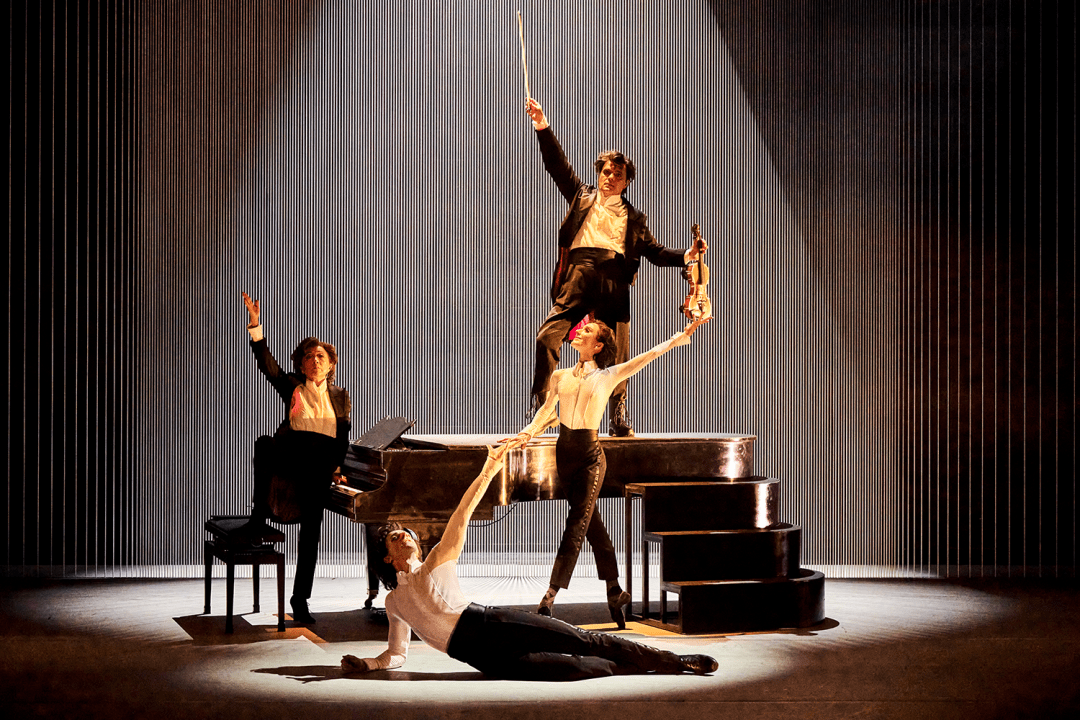
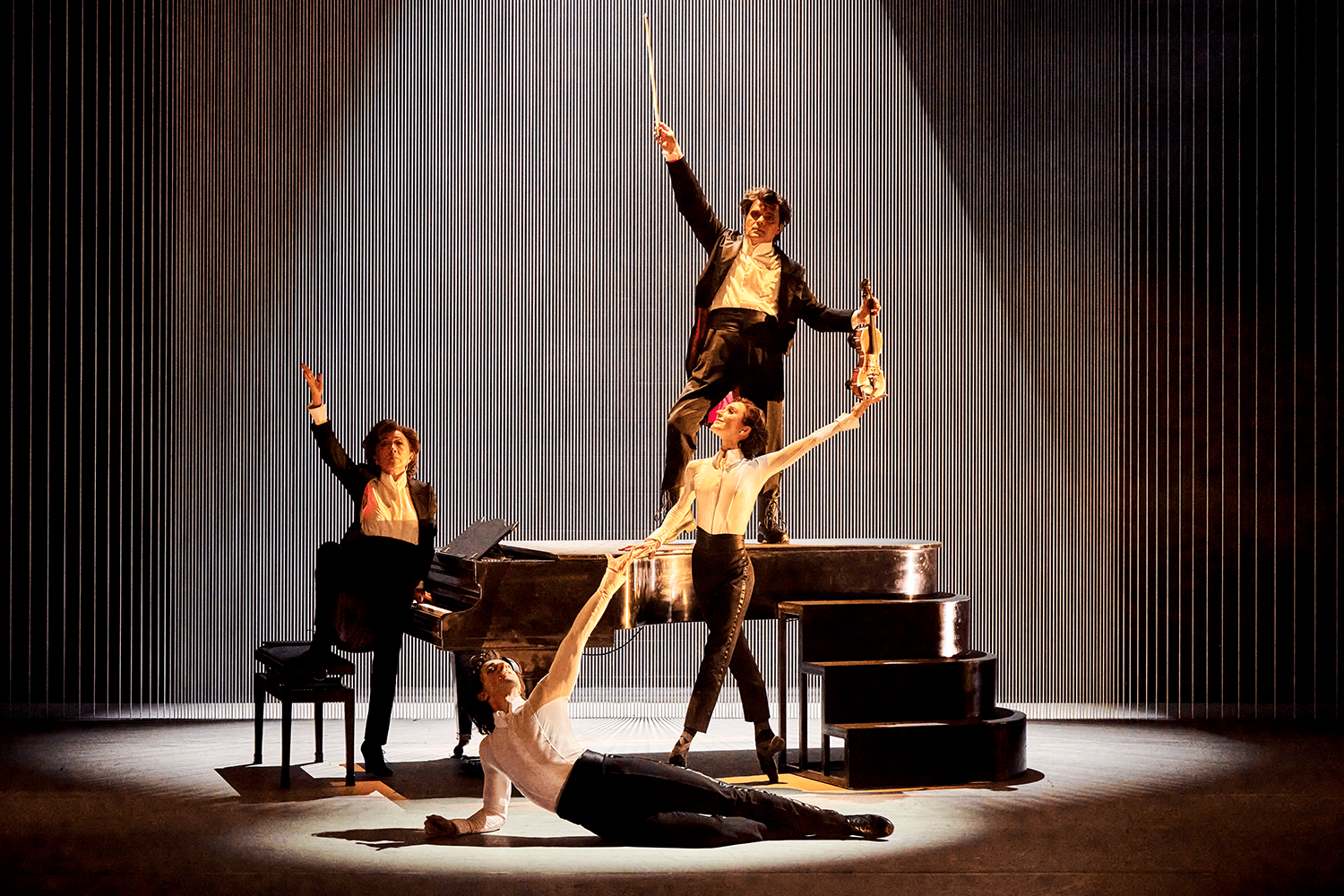
After another long period off stage, McRae returns to performance in a cabaret-style show in the friendly intimacy of the Linbury Theatre. Sensitively directed by Natalie Abrahami, it presents McRae in a collaboration with the violinist Vasko Vassilev, formerly leader of the Royal Opera House’s orchestra. In the first half, the two of them engage in somewhat archly scripted dialogue recounting their formative years – McRae’s in suburban Australia, Vassilev’s in Communist Bulgaria. Grainy home movies are shown, but nothing very revealing is said as they reflect on how they came to be where they are. An anodyne pas de deux that McRae dances with the exquisitely elegant Sarah Lamb, choreographed by Loughlan Prior, shows him tentatively feeling his way back into ballet.
In the second half, the temperature rises several notches, as Vassilev plays, most impressively, some Paganini caprices and variations, to which McRae tap dances as if possessed by the daemon associated with the composer. Lamb reappears dolled up as Cyd Charisse to his Fred Astaire, and Pamela Tan-Nicholson vamps it up as a pianist. Atmospherically lit, it’s all quite entertaining if protracted.

But where does it leave McRae? Now 40, he is too old to continue as the fire-cracking whizzkid, and in a crowded field he doesn’t have the ideal physique for ballet’s classical or romantic roles – though he is scheduled for Manon with Lamb in November. Perhaps a stint in the West End beckons?
It’s ironic and a bit sad that a show striving to be so cool and du moment as San Francisco Ballet’s Mere Mortals should emerge so jejune. Several of its elements would be classed as impeccably chic: a spaced-out score by Floating Points, prominent exponents of ambient electronics, gorgeous backdrop video (catastrophic weather events and cascading showers of gold and silver, in the manner of Bill Viola), as well as some sharply etched jerk-and-twerk choreography by the Canadian Aszure Barton. There’s nothing wrong with the dancing either, though nobody in the cast I saw stood out as exceptional.
But my heart sank when I read in the programme that Mere Mortals was aimed at ‘exploring eternal philosophical questions through the timely subject of AI’. Because of course it does nothing of the kind: it’s a ballet, for God’s sake, set in a wordless fantasy world. The narrative claims to reflect the myth of Pandora’s Box, though you’d be hard pushed to detect this from anything on stage – there’s no box in sight, and Pandora (I presume that’s who she was meant to be) is a writhing stick insect, cowed by a grimacing Lord of Cosmic Evil (no visible resemblance to Sam Altman) accompanied by a menacing phalanx of drones in fascistic black uniform.
It amounts to an exercise in the portentous symbolist style that was fashionably radical in the 1920s; a century later, never mind the nod to AI, it seems merely shallow and opportunistic.




Comments