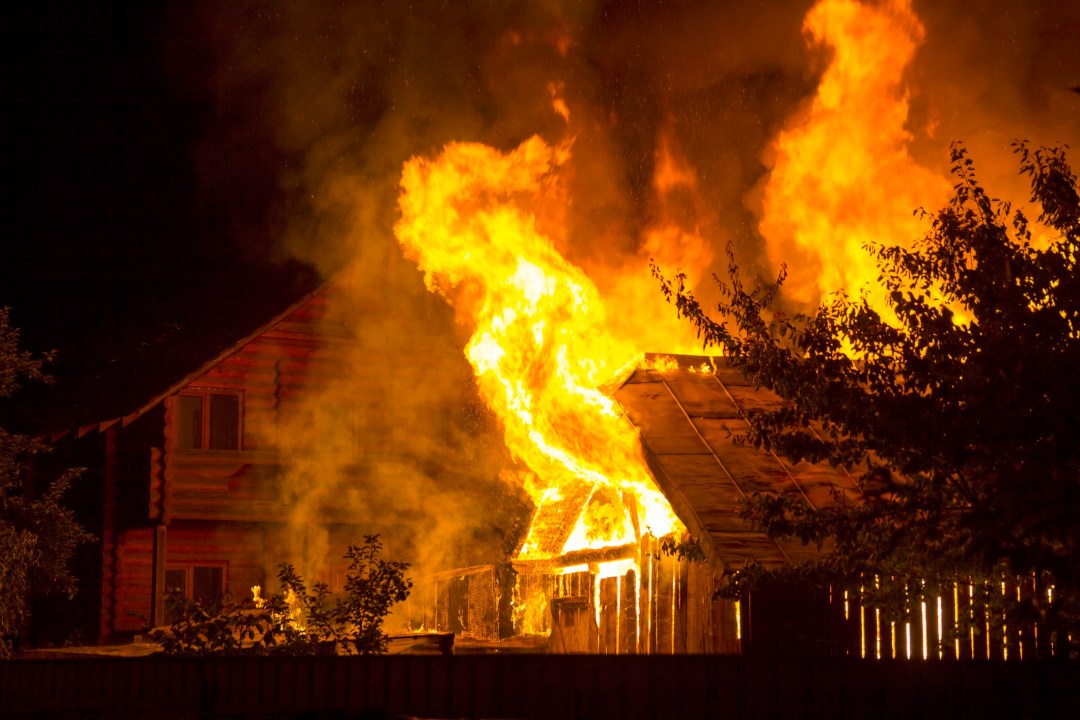
These wildfires are terrifying. We had a billowing blaze in the barley field next to us in Kent only a couple of days ago. Within moments it was yards away from our ancient tumbledown cottage. Mercifully, the wind abruptly switched direction and the flames and smoke moved away, finally beaten down by the local farmer and fire crew. It was soberingly close call.
Those folk in Stourbridge, West Midlands, last week were less lucky, with 19 houses destroyed, and 18 badly damaged. Looking at the photos of the stark, smouldering wrecks, I can almost smell the awfulness. The reek of a burned out, water-and foam-soaked building never leaves you. Just like the heady scent of a Kentish hop, crushed and rubbed between your fingers, it’s impossible to describe, impossible to forget.
Almost 60 years ago, our home burned to the ground. It could have been so much worse – nobody died, nobody was badly hurt and we were well looked after in the aftermath – but it changed everything. Kenthurst House near Rolvenden, Kent, was a handsome Victorian villa set in a vast garden with fine views across the Weald. On Thursday 8 June 1967, a mighty storm boomed and crackled above it. The rain fell in sheets, the thunder roared and a bolt of lightning zapped one of the chimneys.
My father was away and, being a seven-year-old boy, I was at school. My mother was in the house, though, with her mother and joked: ‘It sounds as though we’ve been struck.’ Well, we had been, well and truly. Smoke curled, drifted and then poured from the roof as a tiny fire took vicious hold and turned itself into an intense blaze that raged through the rafters. The alarm was raised and – as I see from a Kent & Sussex Courier cutting my mother kept – fire engines from Tenterden, Headcorn, Ashford, Cranbrook, Marden, Rye, Broad Oak, Maidstone, Hawkhurst and Tunbridge Wells arrived under the control of Divisional Commander Alexander Campbell. One of the appliances had a collision with a car en route and, according to the paper, ‘… had to be taken back to the workshop.’ Another ended up in a ditch, the crew sprinting to the fire.
It was hours before the fire was controlled. The roof and top two floors were completely burned out and the main landing in the house collapsed on several firemen who were briefly trapped. Once rescued, one of the men was rushed to hospital with serious lacerations. There were ladders and hoses everywhere and fire engines on every available bit of garden.
The desk at which I’m now sitting survived
Of course, being at school, I missed all this. I was swept up by my best friend’s mother, kept away from the television and told I was staying the night. Next day, my mother came and explained all. I remember now that I was more upset at having missed the fire engines than I was about losing our home. It took a while for that dreadful news to sink in.
Although the flames were impossible to extinguish fully and the house was all but destroyed (the resulting ruin was pulled down), the fire moved slowly and thanks to a chain of intrepid neighbours, several items on the ground floor were saved. My grandfather’s piano, for example, was bizarrely untouched and the desk at which I’m now sitting also survived, as did some pictures and – thank the Lord he didn’t believe in – my father’s precious bottles of wine. Several drawers of clothes and cutlery were retrieved but not the chests from whence they came. Everything else was either burned to a crisp or ruined by water. Scores of sodden books and bundles of soaked, charred curtains littered the lawn.
I couldn’t believe the devastation when, finally, I saw the still smoking wreck and, crucially, smelt it. And I never realised until the other day how deeply lodged in my hippocampus that odour was. Walking past a newly burned-out barn, something pinged in my brain, and I shocked myself by suddenly bursting into uncontrollable tears.
We were so lucky after ‘the fire’, as my parents and I came to refer to it. Friends lent us places to stay and inundated us with clothes, toys, books and offers of help. I was promptly packed off to boarding school in order that my parents might regroup in peace. It took them an age and things were never the same between them.
We were woefully under-insured, and my father had only the money he earned as a journalist. We were wholly dependent on the charity of friends and family. My parents struggled for endless months to find somewhere permanent for us to live – my father stubbornly vetoing anywhere my mother suggested. He hated the house we ended up in, and my mother hated his resentment.
When two of pa’s closest friends – both of whom had lent us cottages – came to offer well-intentioned advice, he took umbrage and showed them the door, never to speak to them again. He behaved appallingly and my mother never forgave him. My heart really goes out to those who lost their homes in Stourbridge. The shock – and that smell – will never leave them.





Comments