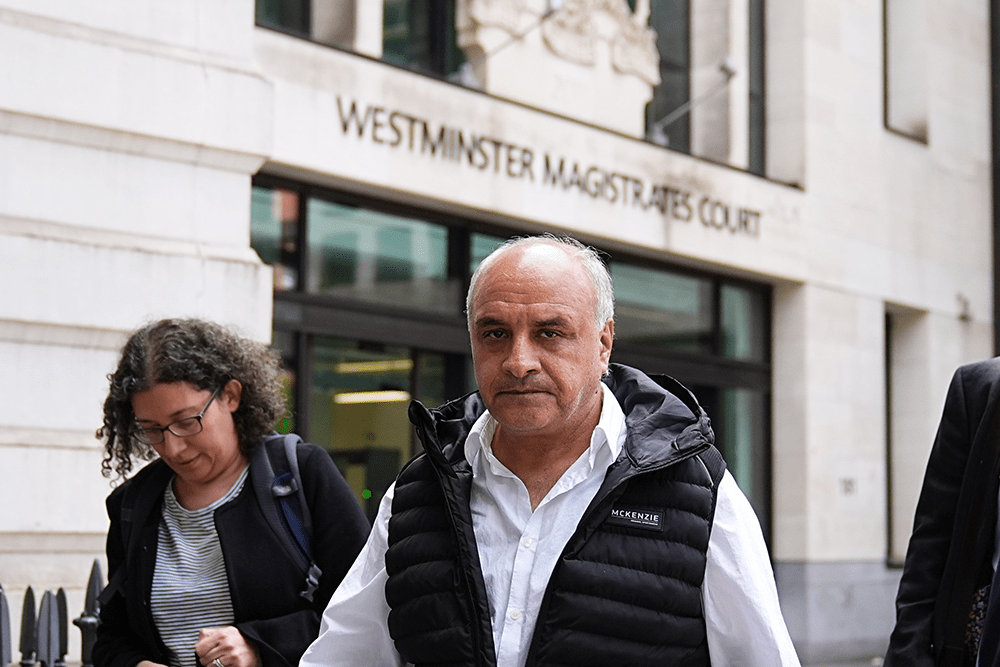
For much of the last year, it has seemed like the Crown Prosecution Service (CPS) has been battling to create a de facto Islamic blasphemy law in Britain. But today, they suffered a great defeat when the Court of Appeal rejected their bid to overturn the acquittal of Hamit Coskun, whose conviction for burning a Quran was overturned in October.
For now, at least, there is no blasphemy law in England. It’s worth reflecting though on how strange and sinister the CPS’s actions have been, and what they have tried to do.
It’s worth reflecting on how strange and sinister the CPS’s actions have been, and what they have tried to do
In February 2025, Hamit Coskun burned a Quran outside the Turkish Consulate, while saying ‘Quran is burning’, ‘fuck Islam’ and ‘Islam is the religion of terrorism’. During this protest he was attacked by two men. One of these men went home to get a knife before assaulting Hamit.
Since then the state prosecutor has been determined to criminalise Hamit. Indeed, it often feels like they’ve spent far more energy and time on Hamit, than on the two men who assaulted him during his protest. Only one of them has even been identified.
On charging Hamit, the CPS appeared to invent a new offence, ‘offending the religious institution of Islam’. When media attention forced them to backtrack, the CPS still prosecuted him on public order charges, securing a conviction in the Magistrates court last June. This was overturned on appeal to the Crown Court in October. That should have been the end of it, but the CPS, and its Director of Public Prosecutions, Stephen Parkinson, appealed that decision with a submission which stated that burning a Quran is ‘an obviously provocative act’, ‘an act of desecration’. In that document the CPS also made their reasons for appealing clear. They were concerned that Coskun’s case would ‘undoubtedly be relied upon in future public order cases involving inflammatory acts of desecration’.

In other words, the CPS were committed to instating Islamic blasphemy codes. That’s why they spent so much time and money taking this minor public order offence all the way to the Court of Appeal. On 17 February, the court heard the CPS argue that Quran burning was inherently disorderly, that Coskun’s choice to conduct his protest in Central London outside a consulate made his acts ‘more disorderly’, and that the violent responses of two men showed that Coskun’s protest was criminal:
‘[Coskun’s] protest involved abuse of the Muslim faith at a location at which believers were likely to be present or visiting; the location in central London outside a diplomatic mission made it more, not less disorderly; the fact that the Respondent acted alone was no reason for finding either ingredient not proven; the time of day and the short duration of the incident were both irrelevant; neither had served to avoid the breakdown in public order that followed; the court was wrong to “disregard” the actions of Mr Kadri and the delivery driver; the violent reaction of these observers was highly material to what was “likely” to happen, indeed it was the best indicator.’
The CPS continue to insist that they don’t want an Islamic blasphemy law, but if it is always illegal to burn a particular religion’s book, that is a de facto blasphemy law.
Their spokesman said:
‘There is no law to prosecute people for “blasphemy” and burning a religious text on its own is not a criminal act – our case was always that Hamit Coskun’s words, choice of location and burning of the Quran amounted to disorderly behaviour, and that at the time he demonstrated hostility towards a religious group.’
This, frankly, is disingenuous. The CPS instructed their barrister, and will have approved the arguments he made. Had they won, had the court accepted their argument then a binding precedent would have been created for all Crown and Magistrates’ courts, meaning that burning a Quran in public would have always been a criminal act.
Toby Young, Director of the FSU, which, along with the National Secular Society, paid all Hamit’s legal expenses told me, ‘I’m relieved by this judgement, but not remotely surprised. If you read between the lines, the justices are saying the CPS’s case was completely hopeless. I agree — and the CPS’s lawyers must have known that too. So why did they bother? It’s hard not to conclude that the decision to bring it was a political one, not a legal one.’
I believe that Toby is right. The CPS sought an Islamic blasphemy law by the back door. Thank God they have lost. I understand they will not be appealing the judgment. For now, at least, we are free to ‘desecrate’ religious books.



Comments