
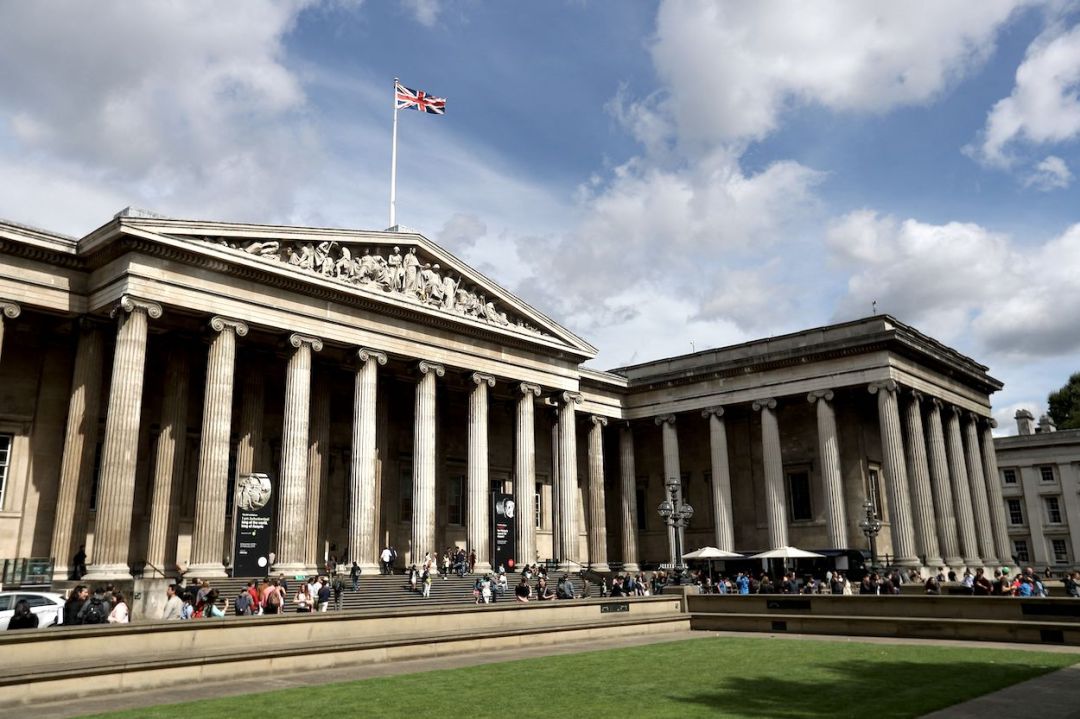
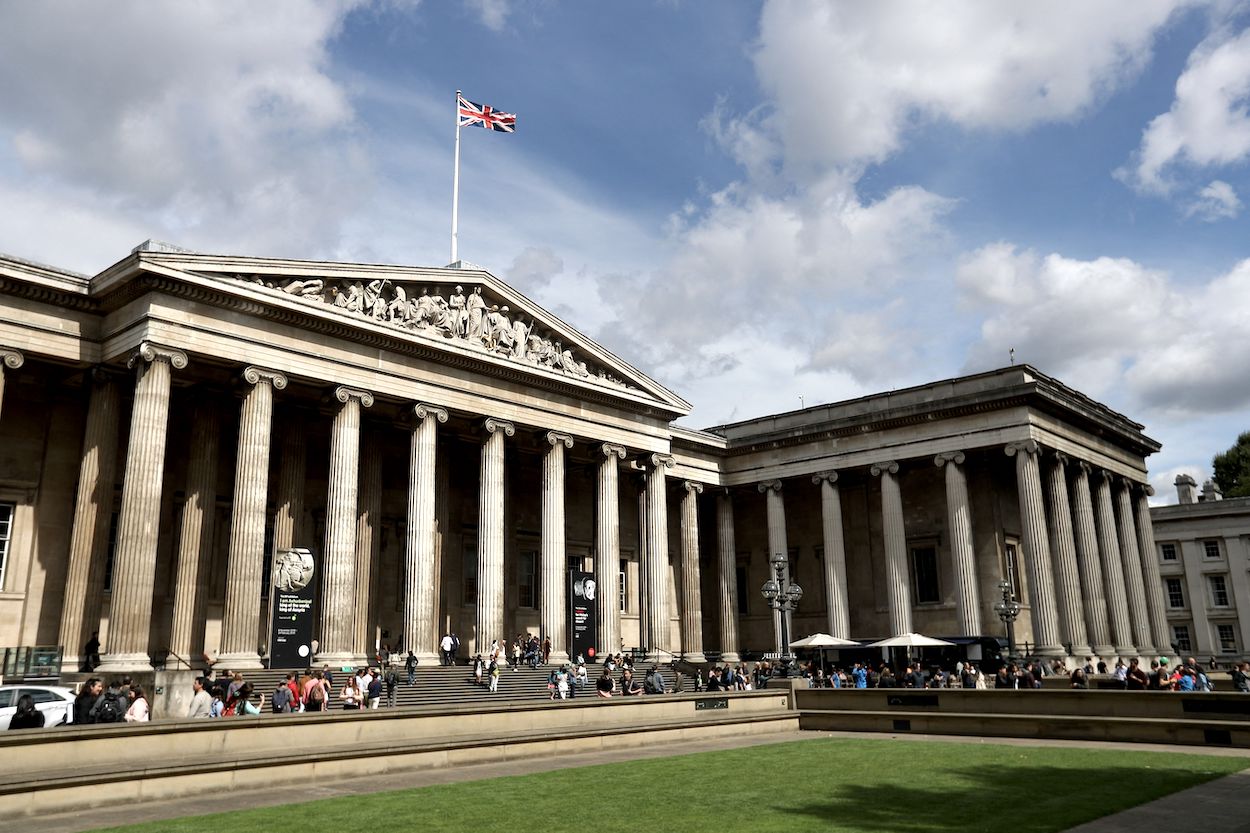
What’s in a name? Quite a bit if you’re the British Museum and the P-word is involved: ‘Palestine’. Pro-Palestinian activists are outraged – it is Monday, after all – because the museum has altered its terminology. Representatives of UK Lawyers for Israel (UKLFI) objected to displays in the British taxpayer-funded institution giving the name ‘Palestine’ to the historical land now home to Israel, Gaza and Judea and Samaria (the West Bank). They pointed out that these territories went by various names over the centuries, including Canaan, Israel and Judah, and that using only ‘Palestine’ is a) historically inaccurate and b) plays into highly contested modern-day Palestinian political narratives.

Since ‘Palestinian’ is now associated exclusively with Arabs, where a century ago it was routinely used to refer to Jews, the concern is that these displays reinforce the misconception that the land between the Mediterranean and the Jordan was home to a single continuous nation or culture that endured for centuries or even millennia. In fact, the territory repeatedly changed hands, usually as the possession or protectorate of a conquering empire, and the only extant civilisation to be an independent sovereign in this strip of hills and deserts and water-starved fields were the Jews.
Anti-Zionists often downplay, ignore or even deny this part of the historical record because it debunks their claim that the Palestinians, as we understand them today, were a sovereign nation on the land until the Jews arrived in the late nineteenth and early twentieth centuries and supplanted an indigenous people. In truth, there has been a continuous Jewish presence in the land, even following the Roman Republic’s defeat of the Hasmoneans in 63 BCE, subsequent conquest of Judea, and enslavement or expulsion of many of its Jewish citizens.
We started out in Culture War of the Week, 2026, and somehow ended up halfway across the world in the time before Christ, and I don’t blame those of you who quit the tour and handed back your headphones along the way. Do people really get worked up about this stuff? They do. What’s more, they should. Our regard for the history of past civilisations is a good barometer for the regard in which we treat our own. Truth either matters or it doesn’t, and if it doesn’t, why are we bothering? Incidentally, the truth involves acknowledging that, while the propagandistic mythologies peddled by pro-Palestinian activists distort history in service of ideology, so too do those Zionist counter-narratives that attempt to write out the Arabs altogether to justify the domination or expulsion of contemporary Palestinians.
In some ways, the pro-Palestinian movement is hoist by its own petard: in pushing for recognition of ‘Palestine’ as a state it has embedded the modern definition in the public consciousness, so that the historic term, highly useful for propaganda purposes among the general public, must be deployed more cautiously to guard against misrepresenting history.
The British Museum has replaced some references to ‘Palestine’ and ‘Palestinian’ with ‘Canaan’ and ‘Canaanite’, but UKLFI says that the work and financial cost involved mean further changes will be carried out ‘in phases over the coming years as part of the museum’s long-term “Masterplan” redevelopment’. (An unfortunate name when facing charges of having erased Jews from history.)
Something about this rankles
Something about this rankles, though. The ideological rewriting of history is offensive to opponents of the progressive movement, but isn’t lawfare just as objectionable, exactly the kind of cry-bully finger-wagging progressives unleash to get their way? This is the paradox of lanyard legalism: can the procedural tools of coercive progressivism – lawfare, language-policing, institutional and policy capture – legitimately be used to counter progressive ideology? Are those who long for the Before Times merely fighting to restore institutional neutrality, or are they also battling against a culture of politically mandated compliance?
It’s a genuine dilemma but those troubled by it must contend with an equally legitimate, and more practical, point: a culture war in which only one side is prepared to fight isn’t a culture war, but a series of merciless onslaughts met by agonised self-restraint. Noble defeat is still defeat. Defending civilisation in the present means defending it in the past, too.




Comments