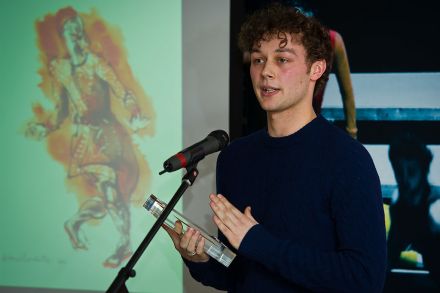
Graham Watts

Graham Watts is Chief Executive of the Construction Industry Council, a member of the Construction Leadership Council and Chair of the Building Safety Competence Foundation.

Is Reform’s Simon Dudley right about building safety?

From our UK edition

Trade-offs and compromises are part of all government policy. One day’s priority can easily be eclipsed by the next day’s events. As a recent example, Ed Miliband has been stressing the government’s manifesto pledge to veto new fossil fuels extraction in the North Sea but the pressure on energy prices caused by the war in the Middle East has encouraged Rachel Reeves to suggest that the UK should control more of its own energy supply by opening up new offshore oil and gas fields; the implication being that the immediate economic interest is greater than the longer-term net zero targets.
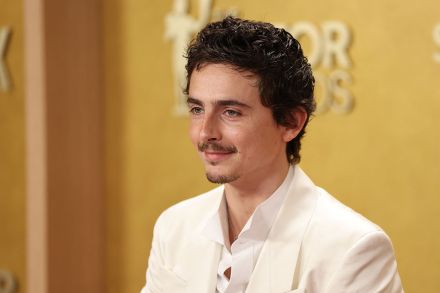
What Timothée Chalamet gets wrong about opera and ballet

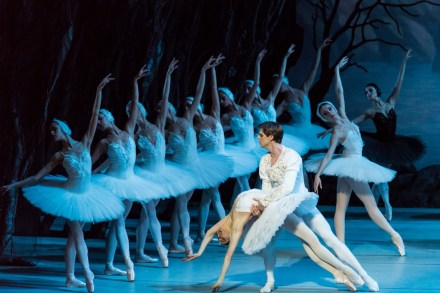
In February, Timothée Chalamet said to his fellow actor Matthew McConaughey, as part of a CNN and Variety town hall: ‘I don’t want to be working in ballet or opera or things that are, hey, let’s keep this thing alive even though it’s like no one cares about this thing anymore.’ The studio audience laughed along with Chalamet, while McConaughey weighed in with, ‘yeah, yeah, yeah, we hear you.’  Perhaps realising the offence he was causing, Chalamet added, ‘with all due respect to the ballet and opera people out there, I just lost 14 cents in viewership.’ Two weeks passed before the video of this went viral, leading to widespread condemnation of Chalamet’s remarks by those in the ballet world.

Parliament’s restoration is a shambles

From our UK edition

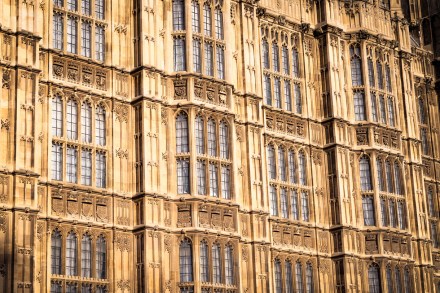
For most of us the term R&R means the promise of rest and relaxation but for anyone associated with the Palace of Westminster it stands for ‘Restoration and Renewal’, a long overdue process that has already been subject to several reports and an Act of Parliament. While parliamentarians have dithered, creating committees and writing reports, the state of the palace has deteriorated Another report, ‘Delivering restoration and renewal of the Palace of Westminster’, was published on 5 February setting out four costed options for reform. The joint client board of both Houses, comprising ten Lords and seven MPs, has sat on the fence by recommending two very different options for further investigation.

Rayner’s resignation will save her from one embarrassment

From our UK edition

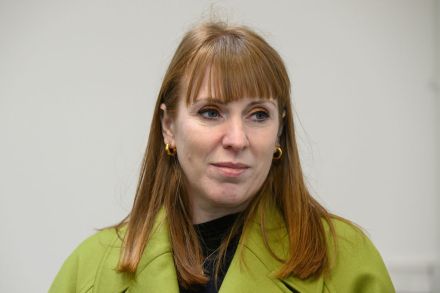
The misjudgement over Stamp Duty which led to Angela Rayner’s resignation as Deputy Prime Minister and Housing Secretary, may be deeply embarrassing for her (and her party) but it will likely save her from the embarrassment of failing to achieve the government’s target of delivering 1.5 million new homes by 2029. In an interview on Sunday Morning with Trevor Phillips, back in December 2024, the then DPM vehemently argued that this was her target, and she would be accountable for it. That interview might best be remembered for her inability to respond to Phillips’s assertion – backed up by quoting the government’s own data – that five out of every seven new homes would be needed just to keep pace with immigration. If the 1.

Why has the Royal Ballet and Opera cancelled its Tel Aviv show?

From our UK edition

Popular opinion has always been able to make or break a production but until the 21st century that was generally a verdict delivered through the box office. Nowadays, people power can kill off a production before it has even made it to rehearsal, let alone sold a ticket. This modern phenomenon appeared to have claimed another victim with the recent news that the Royal Ballet and Opera has cancelled performances of its new production of Tosca, planned for the Israel Opera in Tel Aviv, next year. Intriguingly, the people exercising power in this instance are not the public but staff within the Royal Opera and Ballet itself.

Are plus-size ballerinas the future?

From our UK edition

Iain Mackay, a former ballet dancer who is now artistic director of the Royal Ballet School, told the Times in a recent interview that ‘bigger ballerinas… are the future of the art form,’ and that ballet ‘has moved away from the “slim” female fixture.’ It’s essential that we move away from ballet students being body shamed by their teachers, as illustrated by the 2023 Panorama investigation, The Dark Side of Ballet Schools. A similar scandal emerged when it was alleged that children at Vienna State Opera’s ballet academy were told to smoke to suppress their appetite. It’s not just size that destroys the dreams of many aspiring ballet dancers. Any number of body shape, musculoskeletal or flexibility issues can end a career before it has even begun.

Labour deserve credit for its Grenfell response

From our UK edition

Angela Rayner’s lunchtime announcement to the House of Commons, giving details of the government’s response to the Grenfell Tower Inquiry’s final report, was a week earlier than the Prime Minister’s commitment to respond to the Inquiry within six months of its publication on 4 September 2024. Frankly, it’s the only deadline that has been met in the sorry saga that has taken almost eight years to bring the Inquiry’s business to a conclusion. Sir Martin Moore-Bick made 58 recommendations, 37 of which were directed at government, with the remainder directed at other bodies and institutions.

It is time for Grenfell Tower to come down

From our UK edition

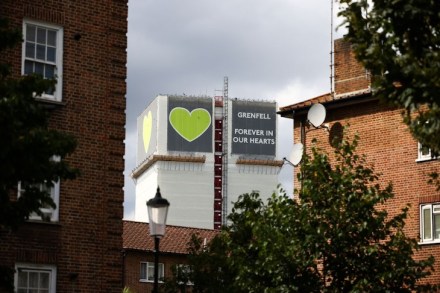
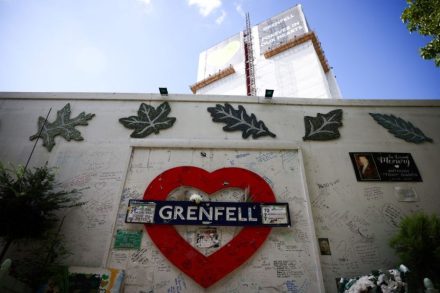
The government’s decision to demolish the remaining hulk of the Grenfell Tower, announced on Wednesday evening by Angela Rayner at a meeting of victims’ families and survivors, has inevitably attracted mixed views and controversy. Grenfell United – an amalgamation of groups representing survivors and the bereaved families of Grenfell – immediately issued a statement, saying there had been a lack of meaningful consultation with those closely affected by the fire. They alleged that the Deputy Prime Minister could not give a reason for demolishing the tower and that she ‘refused to confirm how many bereaved and survivors had been spoken to in the recent, short four-week consultation.

What really caused Vladimir Shklyarov to fall to his death?

From our UK edition

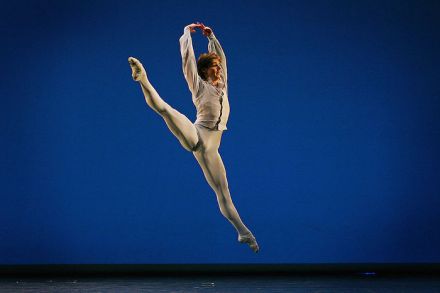
At approximately 1 a.m. on Saturday, 16 November, Vladimir Shklyarov fell to his death from the fifth floor of his apartment block at Lieutenant Schmidt Embankment on St Petersburg’s Vasilyevsky Island. He was 39. That much is true. How and why he fell will be the subject of ongoing conjecture, perhaps for years to come. Shklyarov posted on social media: ‘I’m against all warfare…I want neither wars nor borders’ Nicknamed ‘the Skylark’ by English-speaking balletomanes, Shklyarov was nearing the end of his career as one of his generation’s greatest dancers, possessing an elegant lyrical, yet athletic, virtuoso performance style and technique, which was second to none.

Is it time to cancel Strictly?

From our UK edition

The BBC's Strictly Come Dancing returned this weekend, but rather than being met with the usual fanfare there is a growing feeling that the glitter ball may have been irreparably tarnished. Some former contestants have alleged that they were subject to bullying by their professional partners and – having already used almost 300 contestants in its now 20 year history – many think that the producers have been scraping the bottom of the celebrity barrel in recent years. Such criticisms have led to speculation that it might be time to cancel the show. Cancel culture won’t yet claim Strictly as another victim. There are signs of life, however. This year there has clearly been an attempt to secure some genuine celebrities amongst the fifteen hopefuls.

The vital lesson that must be learnt from the Grenfell inquiry

From our UK edition

Today’s long-awaited publication of the final report of the Grenfell Tower inquiry provides a forensic account of the ‘root causes’ of the tragedy that led to the loss of 72 lives. More than seven years since those awful early morning hours of 14 June 2017, Sir Martin Moore Bick’s 1,694 page report represents another traumatic reference point for the victims and their relatives. First and foremost, it is important to recognise their continued suffering and to extend heartfelt sympathy to all those impacted by the tragedy.  Six weeks after the fire, I assisted the choreographer Arlene Phillips in arranging the Gala for Grenfell at the Adelphi Theatre in the West End. In preparation for that event, we visited the ravaged tower and its surrounding environs.

In defence of breakdancer Raygun

From our UK edition

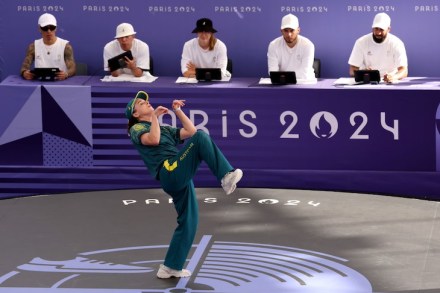
How annoying must it be to win an Olympic title but be totally eclipsed by a competitor who failed to win a single contest? Such has been the fate of Ami Yuasa of Japan who defeated Dominika Banevič, the reigning World and European Champion, to win the Breaking gold medal at the recent Olympic Games. Her Olympic glory was totally overshadowed by 36-year-old Australian, Rachael Gunn (known competitively as Raygun) whose performance went viral despite losing each of her three preliminary battles, including a contest against Banevič (known as Nicka).

The dark side of Strictly Come Dancing

From our UK edition

Wallowing in the cosy entertainment of Strictly Come Dancing has been a staple Saturday evening ritual for millions during the autumn months of the past 20 years. For the BBC, it’s a prized cash cow, having been exported (under the Dancing with the Stars brand) to around 60 other countries. It’s a show built on schmaltz and competition as celebrities (mostly with no dance experience) are paired with professional dancers in a weekly gladiatorial contest where one couple is routinely eliminated by a mix of public vote and the imperial thumbs-down from the judges.

What drives Ukraine’s fighting spirit?

From our UK edition

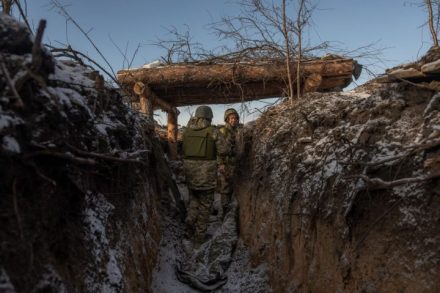
Judging by the welcome uplift in commentary around the second anniversary of the Russian invasion of Ukraine, the popular western view appears to be that the war began on 24 February 2022. However, that aggression – the largest incursion by one European country on another since the Second World War – was just an explosive escalation of a war that had started ten years ago. Throughout those years, Kyiv’s Mykhailivska Square has featured rows of Russian military vehicles captured during the war in Donbas. The population of Ukraine is less than a quarter of Russia's but despite this disparity in size the country has kept the Russian bear at bay for a decade.

‘We don’t have time to waste’: An interview with Ukraine’s Azov brigade commander

From our UK edition

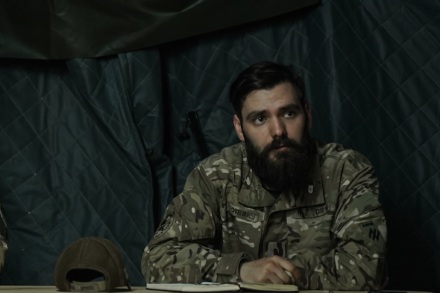
The acting commander of the Azov brigade, Major Bohdan (pronounced Bogdan) Krotevych, is a hero in Ukraine. In last year’s Siege of Mariupol, he and 2,000 men – together with civilians and other units of the Ukrainian armed forces – held out for almost three months as defenders of the Azovstal Iron and Steel works. That huge network of tunnels and bunkers provided shelter to withstand daily bombardments from far more numerous Russian forces. Ironically, it was the Soviet Union that built this enormous infrastructure to withstand such aerial bombardment.  Major Krotevych – his call sign is 'Tavr', meaning a native of Crimea – spoke to me from the Azov Brigade HQ in Kyiv. He is surprisingly young – just 30 – and unsurprisingly tired.

‘I’m a singer, not a politician’: An interview with Ukraine’s Eurovision winner Jamala

From our UK edition

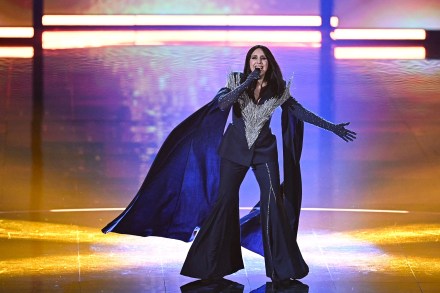
Tucked in the margins of the recent Eurovision Song Contest was Jamala’s 30-second cameo of 1944, her winning song from 2016. Recently ranked third by The Guardian in the all-time list of Eurovision winners, her song almost didn’t make it to the contest when Russia tried to have it banned. Jamala’s lyrics referred to Stalin’s ethnic cleansing of Crimean Tatars, which took place over just three days in May 1944, but Russian politicians alleged they were thinly disguised to refer to the 2014 annexation of Crimea. Whatever the real meaning, I doubt there can have been a more personal song in the history of Eurovision, not least because Jamala’s great-grandmother was amongst 191,000 Tatars deported from Crimea in cattle trains.

War in Ukraine is tearing the world of ballet apart

From our UK edition

Throughout the Cold War, ballet was the gilded bridge that connected the USSR to the West. World leaders visiting Moscow were routinely taken to the Bolshoi Theatre, a stone’s throw from the Kremlin, to see the great Russian dancers, such as Galina Ulanova and Maya Plisetskaya. The latter described her experiences as being a bird in a golden cage, exhibited for the pleasure of visiting dignitaries. But if ballet was one of the few shared loves of leaders on both sides of the Iron Curtain, events of recent days suggest that even this connection between Russia and the Western world is in danger of being shattered for good.

Gove’s cladding fix doesn’t go far enough

From our UK edition

Michael Gove’s building safety announcement today addresses the two contrasting problems of the cladding scandal, but fails to provide any convincing solutions. On the one hand, the Secretary of State for the Department for Levelling Up, Housing and Communities (with the unmemorable acronym DLUHC – apparently pronounced 'de-Luck') has finally brought to an end the absurdity of people living in buildings of between three and six storeys (11 to 18 metres), which are clad in unsafe external wall systems, being required to take out loans to remediate homes that were never fit for the purpose of keeping them safe when purchased.

The building safety bill won’t end Britain’s cladding nightmare

From our UK edition

The government's Building Safety Bill has been a long time coming, but its publication today offers little certainty for residents caught up in Britain's cladding scandal. For leaseholders, the bad news is this: many will remain trapped in buildings cloaked in combustible external wall systems. Despite the housing secretary Robert Jenrick’s insistence that the new system would 'reassure the vast majority of residents’, there is little in the bill to alleviate their worries.

What lessons are there from the tragic death of Liam Scarlett?

From our UK edition

The death of Liam Scarlett was confirmed in a brief message from his family on 17 April. On the previous day, the Royal Danish Theatre had announced the withdrawal of the 35 year-old English choreographer’s Frankenstein from their coming season due to allegations of inappropriate behaviour dating back to 2018/19. It was the last of many such cancellations that had constituted Scarlett’s annus horribilis following the termination of his position as artist-in-residence at The Royal Ballet in March 2020.