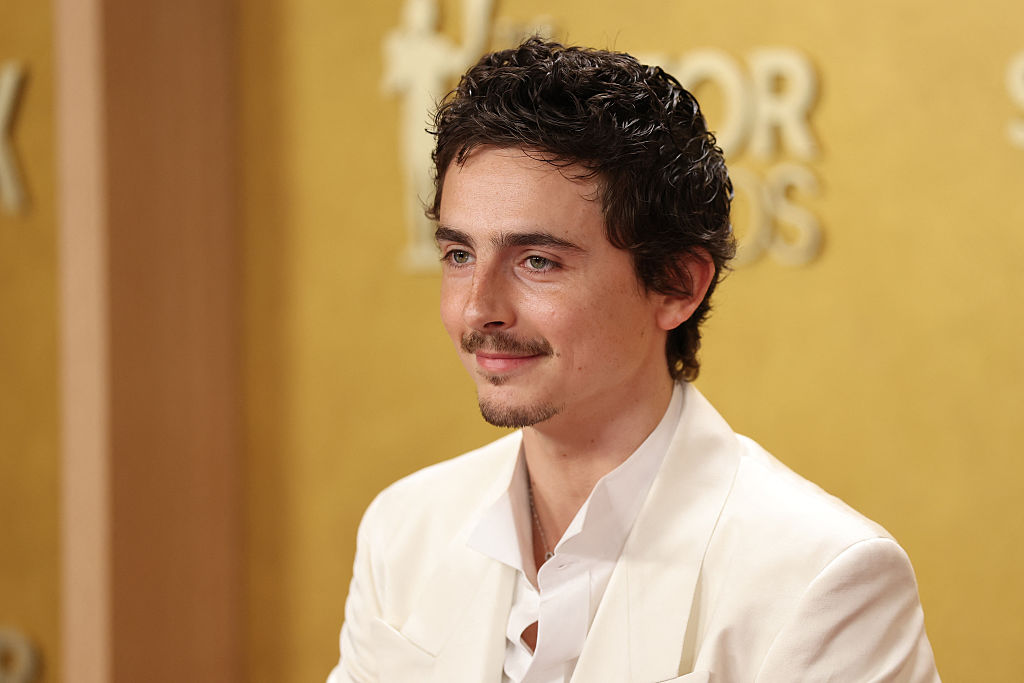
In February, Timothée Chalamet said to his fellow actor Matthew McConaughey, as part of a CNN and Variety town hall: “I don’t want to be working in ballet or opera or things that are, hey, let’s keep this thing alive even though it’s like no one cares about this thing anymore.” The studio audience laughed along with Chalamet, while McConaughey weighed in with, “yeah, yeah, yeah, we hear you.” Perhaps realizing the offense he was causing, Chalamet added, “with all due respect to the ballet and opera people out there, I just lost 14 cents in viewership.”
Two weeks passed before the video of this went viral, leading to widespread condemnation of Chalamet’s remarks by those in the ballet world. Derek Deane, former artistic director of English National Ballet, was one of the first to react, stating “when my production of Swan Lake is performed at the Royal Albert Hall, almost 5,000 people are there at every performance. A dying art form? I think not.”
Christopher Wheeldon, a choreographer who mixes ballet with Broadway shows, stated, “Ballet and opera are not relics of the past. They are living, evolving art forms sustained by artists who devote their lives to mastering them. As artists we have a responsibility to respect other art forms, even those we may not personally admire. They all matter.” Social media platforms have been, and continue to be, awash with criticism of Chalamet.
One issue that has not been much referenced is that Chalamet’s mother, Nicole Flender, was a professional dancer: she attended Yale University on a ballet scholarship and danced with New York City Ballet as a child, switching to Broadway musicals such as Fiddler on the Roof and Hello Dolly before marrying Marc Chalamet. So, one might reasonably assume that her son has not made these comments from a position of ignorance.
Chalamet’s reference to keeping ballet and opera alive when “no one cares” was part of a wider discussion with McConaughey about the attention spans of the moviegoing public, and the generational differences in consumption between Gen Z and Millennials. Chalamet specifically referenced films such as Barbie and Oppenheimer that still managed to arouse passionate support from younger audiences. Clearly he doesn’t believe the same applies to ballet and opera. I think though he is mistaken.
I read Chalamet’s comments while on a visit to the Lithuanian National Ballet and Opera in Vilnius, just before witnessing a class of the company’s ballet soloists. For those not familiar with ballet, every dancer’s day invariably starts with a “class” in which all aspects of their technique are exercised by a ballet master. Fifty young boys and girls were also sitting avidly watching the process, all almost certainly dreaming about becoming ballet dancers themselves one day. Around 1,200 young people pursue vocational dance training in the UK, far more than can ever gain employment as professional dancers. It’s an international passion for an art that is far from dying.
Chalamet’s comments may have some resonance when it comes to the high cost of accessing ballet and opera. The only available ticket I could find for Rigoletto at the Royal Opera House, later this month, cost £282, but the production is virtually sold out. So, the price may be high but the house is generally full.
It’s perhaps not coincidental that Chalamet’s remarks came within a month of the Academy Awards ceremony, to be held on 15 March. Chalamet is up for the Best Actor award for his performance in Marty Supreme and, as has been the case in past years, some notoriety in the run-up to the Awards can be a good thing.
Perhaps the wittiest response has come from Seattle Opera, which is selling tickets for its production of Carmen with a discount using the promotional code, “Timothee!” On Instagram, Sir Matthew Bourne pointed out that if nobody cares about ballet and opera, why is the world’s most popular musical about ballet and opera, noting that Phantom of the Opera has grossed over $6 billion, more than double the income of the highest-grossing film (Avatar, at around $3 billion)
Being generous, I think that Chalamet was trying to say that movies have a bigger and more diverse audience than opera or ballet and that he’d rather be involved in an art form that connects with the most people, which is fair enough. What he didn’t need to say was that no one cares about ballet and opera, a statement he might now be regretting.
Graham Watts is Vice-President of The Critics’ Circle and Chair of the National Dance Awards.





Comments