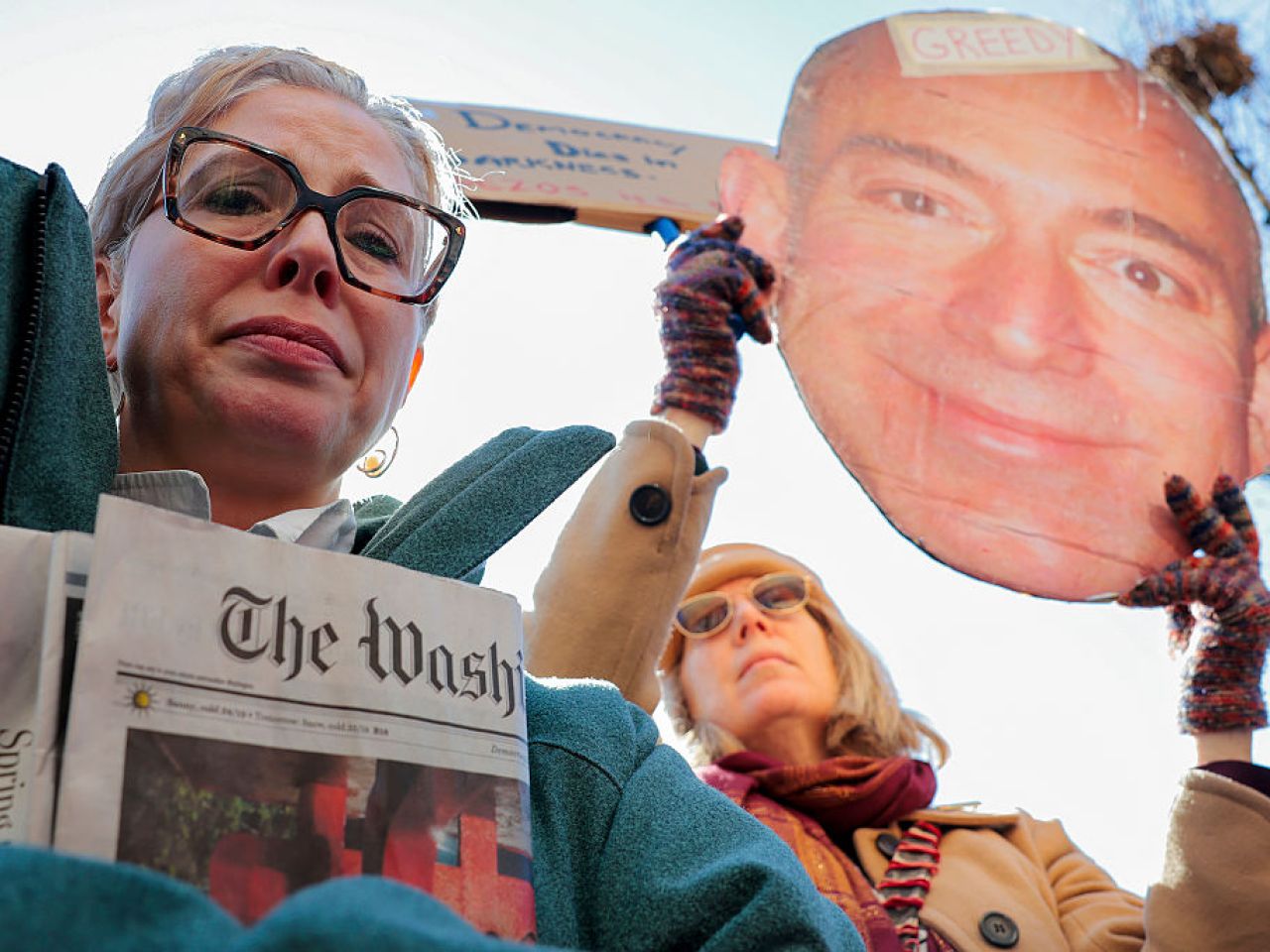


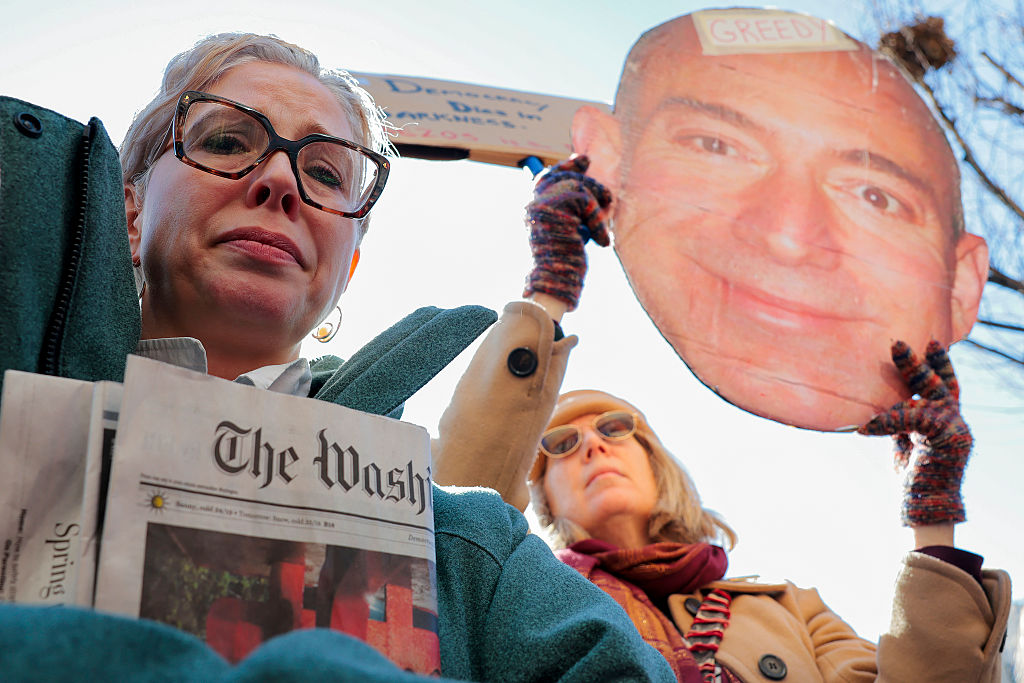
Elon Musk knows something Jeff Bezos doesn’t. Each has had turns as the world’s richest man, and both are media overlords. But whereas Musk’s purchase of Twitter arguably won a presidential election and briefly put the fate of the United States federal government in Musk’s hands, Bezos’s purchase of the Washington Post has bought him nothing but grief. No election victories, no sway in Washington, just the hatred of the journalists he subsidizes to the tune of hundreds of millions of dollars.
Media power in the 21st century is about platforms, not publications. Bezos shouldn’t have needed Musk to teach him this: the whole strategy behind the business that made him rich, Amazon.com, was to become a universal retailer, a platform – the platform – for everything sold. Bezos wasn’t just a successful merchant in a given market, or even successful in every market. He became the merchant who owned the marketplace itself.
By the time Bezos bought it, the Post was ossified
So what led him to waste his money on the Washington Post?
It has been a waste: we know Bezos clearly isn’t happy with the Post because he keeps changing it, and we know Post employees aren’t happy with him because they tell us. The Post’s readership is no more satisfied, as demonstrated by avalanches of cancellations the paper has had to endure recently. Bezos bought the Post for $250 million in 2013 and has poured countless millions more into the operation since then. Could he have sown any greater acrimony if he’d just burned that cash in a pile?
Bezos can take the financial hit, of course – in his case, it’s more of a tickle. But the reputational cost is something else, as perhaps is the wound to his pride. Musk paid vastly more for Twitter, a staggering $44 billion, but it’s made him a bona fide media czar, or, as he might prefer, media doge. It also made him the czar of DoGE, which empowered him to dismantle decades-old agencies and federal programs, a libertarian dream come true. Bezos’s Post, on the other hand, can only editorialize about libertarianism to a readership largely consisting of retired federal employees, with predictable results.
But Bezos thought he was buying much more than a newspaper 13 years ago. That was before populism shattered the “liberal international order” with such shocks as Brexit and Donald Trump’s presidential victories. The liberal international order may have been showing some cracks even in 2013, but nothing else was on the horizon. Its biggest challenger in America seemed to be an alternative liberalism called libertarianism, which the New York Times declared might be having a “moment.”
The Washington Post was as much an organ of the Cold War liberal establishment as the Central Intelligence Agency was – in fact, the two overlapped in several places. The Post was bankrupt when Eugene Meyer, who’d just resigned as Federal Reserve chairman, bought the paper in 1933. Although Meyer was a Republican, he was an internationalist and fired the Post’s non-interventionist libertarian editor, Felix Morley, in 1940. That same year Meyer’s daughter Katharine married Philip Graham, who would serve during World War Two as an assistant to “Wild Bill” Donovan, the head of the CIA’s ancestor agency, the Office of Strategic Services.
After the war, Philip Graham eventually became publisher of the Post, but one day in 1963 he had to be whisked away under sedation after ranting about an affair John F. Kennedy was having with Mary Pinchot Meyer, the beautiful ex-wife of another CIA maestro, Cord Meyer. (No relation to Eugene.) Graham was released from psychiatric care just long enough to kill himself in August 1963. Kennedy, of course, wouldn’t long outlive him. Mrs. Meyer was the victim of an unsolved murder a year later. Perhaps unsurprisingly, Felix Morley’s grandson, Jefferson, is today a leading JFK assassination researcher.
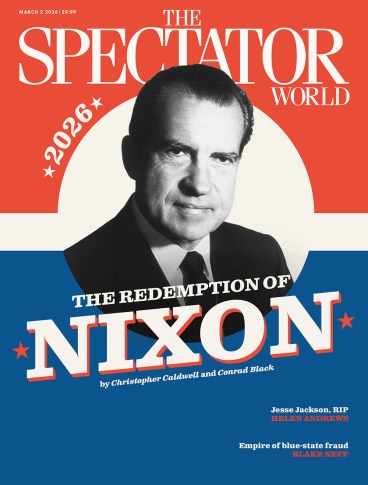
Katharine Graham became the Post’s president and publisher after her husband’s suicide, and she hired Ben Bradlee, an editor widely thought to be well connected with the CIA. But it was a disgruntled FBI insider, passed over by President Nixon for the coveted role as successor to J. Edgar Hoover – a man whose files on everyone, including members of Congress, made him untouchable by any elected official – who used Post journalists Bob Woodward and Carl Bernstein to get revenge on the elected head of government who had thwarted him. Watergate was the Post’s greatest glory, and the “deep state’s” greatest victory.
By the time Bezos bought it nearly 40 years later, the Post was ossified, yet it still symbolized what Franklin Roosevelt, Harry Truman, John F. Kennedy, and Lyndon Johnson had built – a governing architecture that overshadowed anything as old-fashioned as the United States Constitution and aimed to manage, in liberalism’s name, not only America but the world. Bezos was buying a piece of the end of history.
Yet it turned out to be just the end of an era. Now the likes of Trump and Musk have begun inaugurating a new one. Bezos knows how to sell papers under this dispensation – Post circulation boomed during Trump’s first term. Then it collapsed, as the Post whose employees bragged about their “accountability journalism” failed to hold Joe Biden to account or report on his unfitness for office.
Bezos doesn’t want to waste his time, or money, riding this merry-go-round, even if he’s not sure what he does want to do with his antique media property.
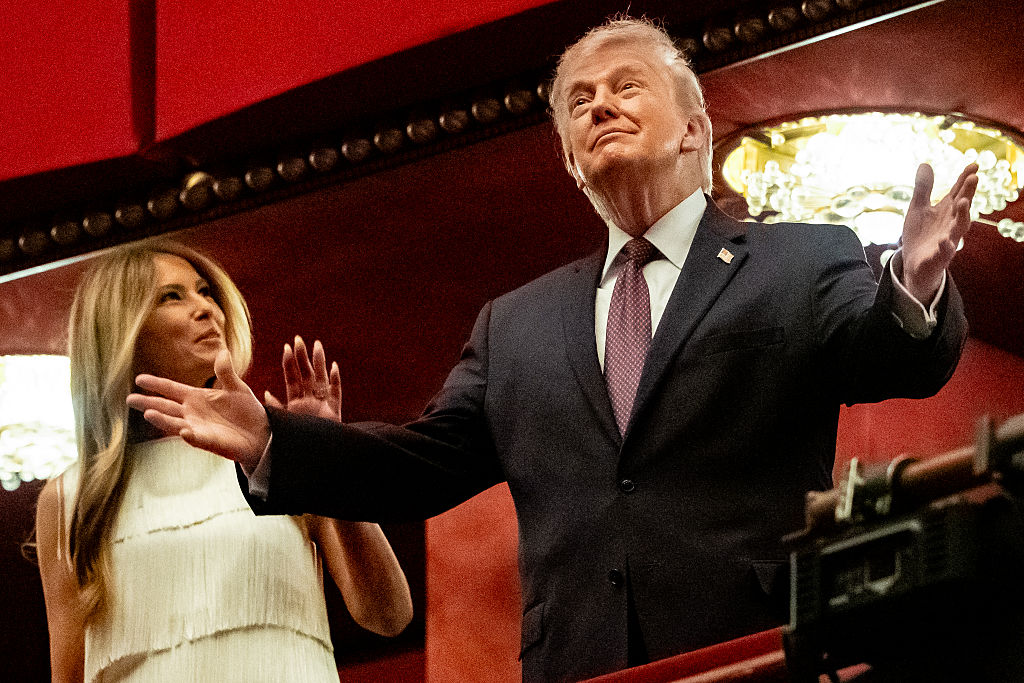
Bezos’s detractors say the $35 million Amazon put up for the Melania movie was a bribe to Trump. If that’s so, aren’t the hundreds of millions he’s pumped into the Post a bribe to the other side? But it never pays to underestimate liberal doublethink – or ingratitude, as Jeff Bezos has learned.


Comments