

I don’t much like Lord of the Flies. It’s nasty, weird in an oblique, psychotic way and wrong. William Golding – a war-damaged, depressive alcoholic – wrote it as an antidote to the uplifting escapism of The Coral Island, a Victorian yarn by R.M. Ballantyne about plucky young British castaways surviving and thriving in the tropics. Golding turned it on its head and revealed, supposedly, the heart of darkness that lurks within us all.
Au contraire, Golding’s misanthropic message was bollocks
Says who? The lesson of the Christmas truce in the trenches is that ordinary men have to be coerced into killing one another. The lesson of Jena is that free-thinking individuals are averse to being slaughtered which is why, as a corrective, Bismarck invented the modern education system. The lesson of a real-life Lord of the Flies incident in 1965 in which six boys from Tonga were marooned for over a year is that, au contraire, Golding’s misanthropic message was bollocks.
Yet generation upon generation of children across the English-speaking world have this propaganda for the forces of darkness rammed down their throats at school. And I don’t think it’s accidental. When the world is run by people whose business model is perpetual war, of course it suits their agenda to persuade us all that this violence they inflict on us is actually our fault, not theirs.
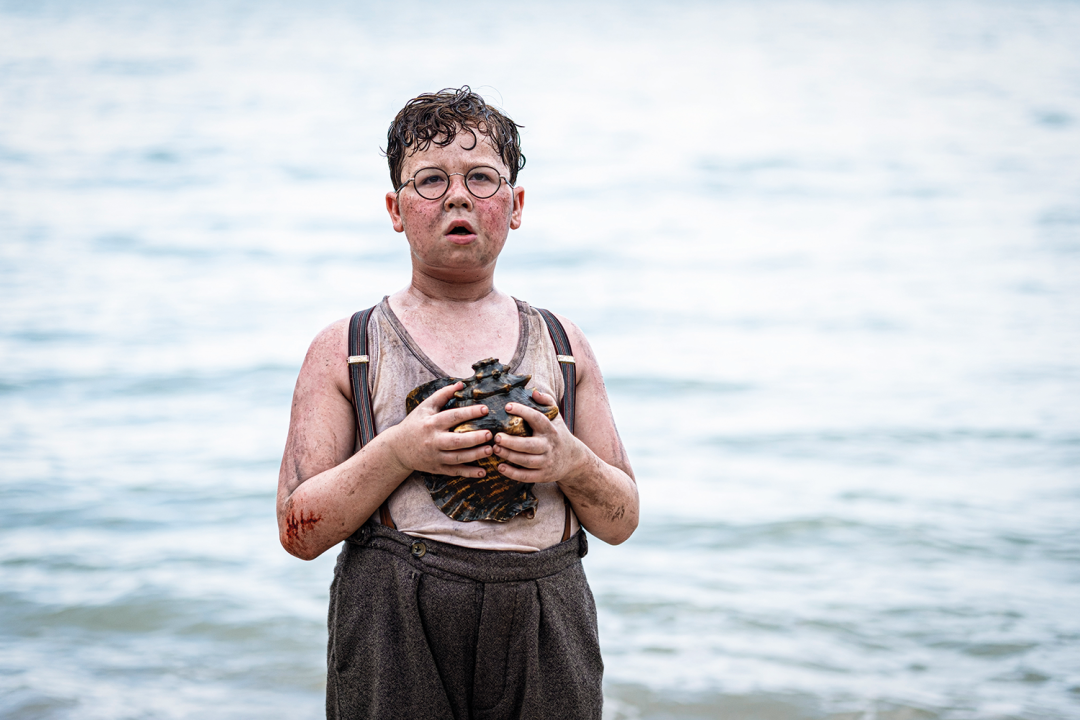
So it doesn’t really surprise me that the BBC’s new adaptation is so mesmerisingly brilliant. Programming like this is far too important to be left to chance, which is why they gave it to writer Jack Thorne, the chap responsible for last year’s big exercise in over-promoted, toxic agit-prop Adolescence. Thorne and director Marc Munden have done a fantastic job with Lord of the Flies which will deservedly be one of the year’s most fêted and admired TV shows.
Yes, there are annoyances. Foremost among these is the casting in the ‘goodie’ role of Ralph of mixed-race actor Winston Sawyers, which serves only to point up the whiteness of the main baddie character, Jack, played by the extravagantly blond and public school-looking Lox Pratt. No reflection on the boy players but it’s hard not to notice these details, as of course you are meant to…

Still, this is an adaptation that captures magnificently the brooding, serpent-in-Eden darkness and otherworldliness of Golding’s book. Even if you loathe the plot, as I do, you can hardly fail to be haunted and transported by the hallucinogenically arresting style: the gorgeous close-ups of Malaysian jungle wildlife (like Attenborough, only without the whispery voiceover explaining that manmade global warming will soon make this caterpillar extinct); the supersaturated colour of the pellucid blue pool where Ralph and Piggy bathe; visually arresting scenes like the one where Jack and his choirboys first materialise on the beach.
It’s terribly self-conscious, stylised and arthouse cinematic – but none the worse for that. You could almost be watching a procession from The Seventh Seal as the choir, summoned by the conch, emerge from the haze in an ecstasy of eerie choral chanting, their archaic and idiosyncratic blue robes and Canterbury caps mysteriously immaculate, despite the fact they’ve supposedly just crawled from the wreckage of a plane crash that killed all the grown-ups.
Golding objected to the way his Faber editor cut all the early scenes from his original manuscript showing how the boys ended up on a tropical island after being evacuated from some manner of nuclear conflict. But it did serve to point up the book’s dreamlike quality: all those boys, violently transplanted from ‘civilisation’ to this tainted paradise by air disaster, still in their fusty 1950s school uniforms, without a scratch to show for it.
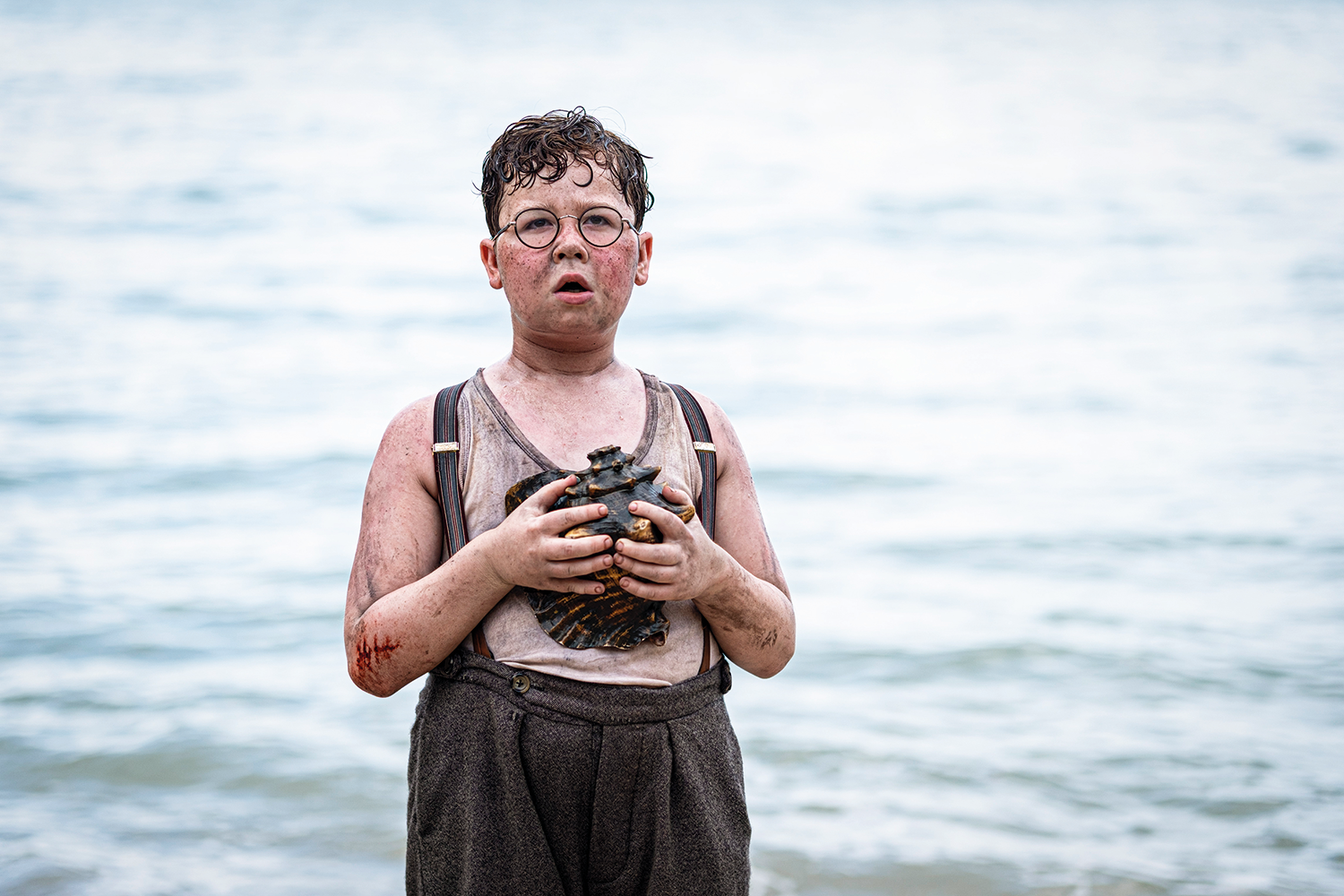
So debased has the BBC’s coinage become in recent years that it comes as quite a shock to be reminded what truly great art it is still capable of producing when it pulls out all the stops. The costume and art departments deserve every award going; so too does Cristobal Tapia de Veer for his score, which ingeniously evokes the style of contemporaneous composers such as Britten and Tippett; and David McKenna, the Northern Irish newcomer, so affected, rounded (no pun intended) and believable as the wise and doomed Piggy, ought to be a shoo-in for best supporting actor.
This will deservedly be one of the year’s most fêted and admired TV shows
The presiding genius, though, is surely director Marc Munden, whose thrilling invention I’ve admired ever since he shot the classic 2013 cult conspiracy thriller Utopia (‘Where is Jessica Hyde?’), in which a fake virus is used as a pretext to wipe out the populace by persuading them to take a deadly vaccine. I see that one tabloid has cooked up a story about viewers being put off by the apparently excessive use in the first episode of a fish-eye lens. But they’re wrong. It enhances the queasy, disorienting strangeness, while also perhaps indicating that this episode is told from the myopic Piggy’s perspective.
That said, jolly impressive though it all is, I ain’t going to be sticking it out to the end. I don’t want to see dear lovely Piggy get his head stove in. Nor do I want to see the destroyer captain emerging from the midst of a world war in order to ram home the point that this violence, it’s institutionalised, and everywhere and within us all.



Comments