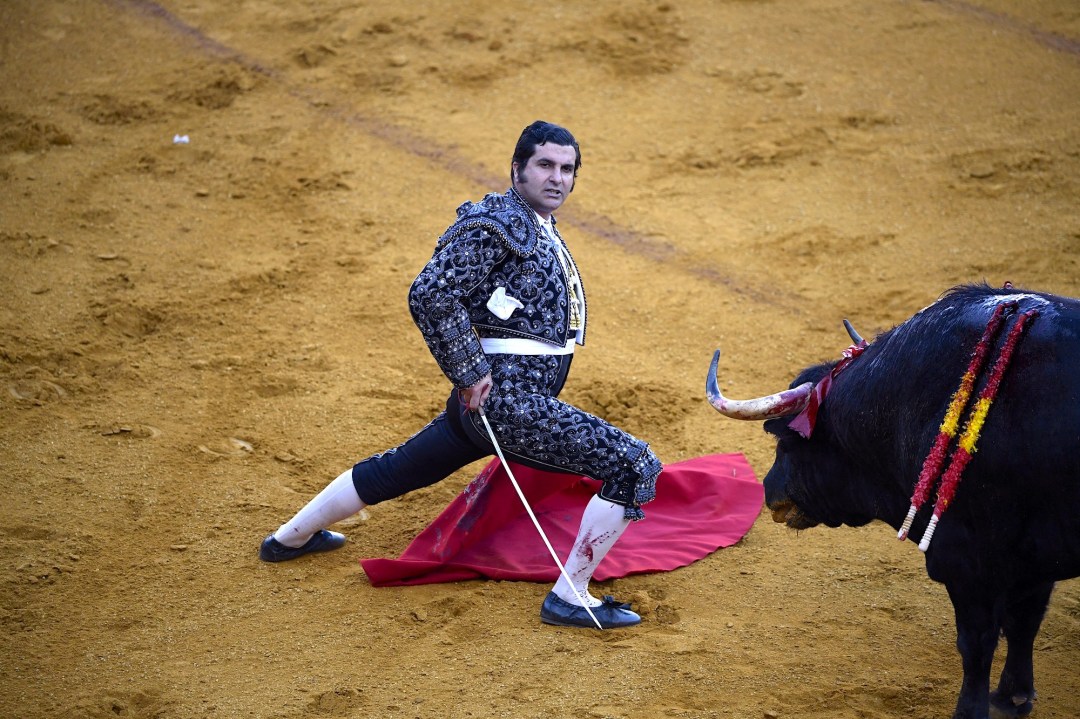
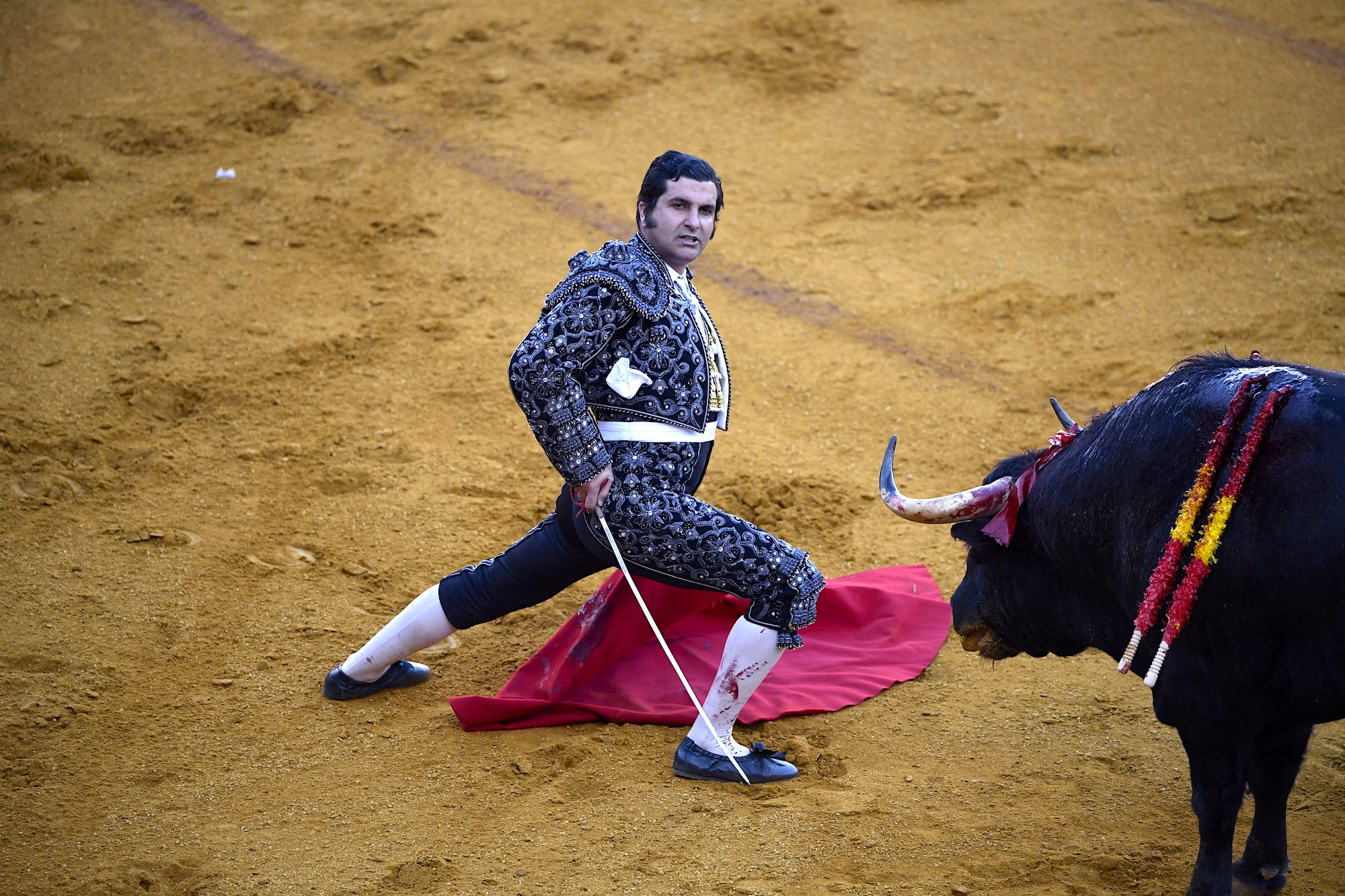
For the six days in April, the Maestranza ring in Seville is the centre of the bullfighting world. During one of the traditional corrida, Spain’s greatest living matador, Jose Antonio Morante, made a mistake. Local press described ‘un exceso de confianza’. Suddenly, he found himself with the bull at his back, charging, and was gored at the top of his thigh, suffering injuries so eye-watering that they made international news. One of his colleagues, Roca Rey, was also hospitalised several days later, with a severe injury to his right leg. Morante described the ‘immense pain’ of the incident.

Sport has a complex relationship with danger. Since the beginning of last year alone, an extreme sports athlete, Felix Baumgartner, died during a paraglide; a Finnish racing driver, Juha Miettinen, had a fatal crash during a qualifying competition; and an Irish boxer, John Cooney, was killed by a brain haemorrhage.
The attributes of sporting success – mastering technique, imposing discipline, pushing boundaries – are all achievable in games where there is minimal risk of severe injury or death. This is evident in the lives of Novak Djokovic, Rory McIlroy and Sydney McLaughlin-Levone and hundreds of other tennis, golfers and athletes. And, as a philosopher, J.S. Russell, argues: ‘The risks taken today in dangerous sports are increasingly unrelated, even indirectly, to the satisfaction of any practical needs of the participants or of society more generally.’ Humans don’t need our bodies to fly or to drive half a tonne of power into another person’s head. But still danger remains attractive.
The appeal to the audience is straightforward. Some are agonised or repulsed by introducing physical danger into something as ephemeral as sport. But for the rest, there is more riding on the outcome of dangerous pursuits. Ther is more tension to the proceedings and a greater rush at their conclusion. (Bullfighting enthusiasts may bristle at this. A leading English-language chronicler, Alexander Fiske-Harrison, does not consider bullfighting a sport, as ‘no-one keeps score and there is no way for anyone or anything to win’. He prefers to think of it as a category of performance art, whose success is determined by ‘how much the audience has been emotionally moved’.)
For the participants, the draw of dangerous sports is more complicated. Some have physical or mental gifts that make them unusually talented in their discipline, and the desire to maximise this talent can overcome the revulsion to risk. A big-wave surfer, Laird Hamilton, has described how he was so terrified by the biggest waves he encountered that the only way he could ride them was to accept his fear as part of the process. In extreme cases, such as that of free-climber Alex Honnold, neuroscientists discovered that his amygdala, the part of the brain that registers fear, failed to respond to images that typically provoke a threat response. Honnold’s limited capacity to sense danger is precisely what enables him to exploit his physical capabilities as a climber.
For others the danger of sport is a way of experiencing sensations that modern life has inadvertently quelled. Societies legislate and promote safety and comfort. Some who want to escape this might be able to do so through artistic expression. Safe sports, such as tennis, put players into another world, governed by a different set of rules. But Russell suggests that these games could feel ‘anaemic’ next to dangerous sports, which ‘incorporate a challenge to capacities for judgment and choice that involves all of ourselves – our body, will, emotions, and ingenuity – under conditions of physical duress and danger at the limits of our being.’ They push us to the edge of human experience.
Dangerous sports push us to the edge of human experience
This is problematic only when the true level of danger is unknown or obscured. To the list of sporting deaths, we should add Steve McMichael, a member of the NFL’s Hall of Fame, who died from motor neurone disease in April 2025; Shane Christie, a former New Zealand rugby player who took his own life in August; and Gordon McQueen, a Scottish international footballer, whose was killed by pneumonia in January. All three of these men were found to be suffering from chronic traumatic encephalopathy at the time of their deaths, a degenerative condition caused by repeated head traumas during their sporting careers. None of these men knew of CTE when they began their careers. Hamilton, Honnold and Morante made informed decisions about their sporting lives. McMichael, Christie and McQueen, it turns out, did not.
Sport’s simultaneous attraction to and revulsion from danger puts its administrators in an impossible position. For decades, racing in Formula 1 was an incredibly hazardous career. During the 1960s and 1970s drivers died at a rate of more than one a year. Following the accident that killed Ayrton Senna in 1994, organisers put more chicanes onto racetracks, only for fans to complain that the spectacle had been neutered. Boxing referees must give the paying punters the best contest they can while also keeping their combatants alive. Both Morante and Rey received immediate medical attention. This time it was enough. Next time, it may not be.






Comments