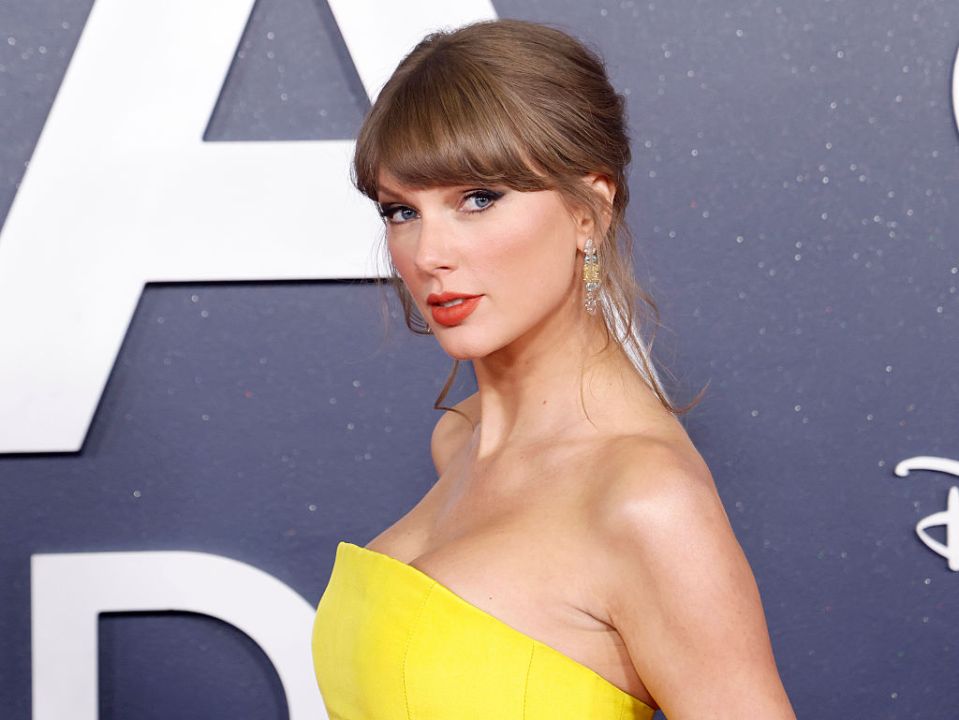
There’s an old saying that if “you come for the king, you better not miss.” While this is usually relevant to organized crime circles, it is equally apt when it comes to the reigning monarch of American pop music, the now-Mrs. Kelce.
While Taylor Swift has not gone on a world tour this year (unlike her ex Harry Styles), she has been a mainstay on social media and in the papers alike. This is thanks to everything from her marriage to the NFL player Travis Kelce – at Madison Square Garden, of all places – to the re-release of her 2025 album The Life of a Showgirl, complete with new songs.
The Vanity Fair hit job paints Swift as a controlling megalomaniac
One of these – “Cleveland!” – celebrated her union with Kelce and attracted criticism for its faux-naïve presentation of how an ordinary li’l girl like Tay-Tay could find her one true love. Few were convinced by the presentation of how a billionaire musician was really a down-home country girl. Yet if there was even the tiniest hint of a Swift backlash, which had been brewing since the decidedly corporate nature of her nuptials, it was cast into sharp relief by the Vanity Fair hit job which paints her as a controlling megalomaniac who has carefully constructed an alternative reality for herself.
To quote Hamlet, “there needs no ghost, my lord, come from the grave to tell us this.” The most committed Swifties will undoubtedly be appalled and angry at any slur cast on their idol. They have lost no time airing their fury at the Vanity Fair journalist May Jeong. But most people who were not born yesterday will be entirely unsurprised at the “revelations,” such as they are, that suggest that Swift has always been ambitious, and that her parents drove her to early success that has only grown more over the decades.
Jeong’s piece contrasts the “A-side” – the accepted narrative when it comes to the peerlessly successful Swift – with the grubbier and more unseemly account of her rise to megastardom, and for sneakily coy reasons refers to her merely as “The Star” and “The Mastermind,” while making it abundantly clear who she is referring to. And there are numerous lines that overstep the mark from commentary to pure snark, such as when Jeong observes that Swift is “not musician, not artist, not celebrity, but a combination of victim and victimizer.”
But what stands out about the article – entitled simply “The Mastermind” – is how staggeringly naïve it is, not just about human nature but about the world of popular culture. If Jeong was to have met, say, David Bowie in the Seventies, and had written a disappointed and sarcastic article about how the Thin White Duke was now indistinguishable from the flower child who sang about sun machines coming down a few years before, then the shape-shifting Bowie would have replied “that, my dear, is the whole point.”
As a serious figure in American popular culture and public life, Swift is someone who should be scrutinized and debated, rather than simply accepted. And it is possible for her critics, which have occasionally included this writer (The Life of a Showgirl was not a great album), to wish for some in-depth journalism to explore the inherent contradictions in a woman who seems half Jay Gatsby, half Daisy Buchanan. Yet she is not ending 2026 a diminished or washed-up figure, despite Jeong’s (hopeful?) conclusion, of Swift’s wedding: that “you might have heard the determined whoosh of a weighted blade dropping, dropping, dropping, the ax of public opinion falling in downward demotic motion.” The narrative arc would be much easier if Swift had erred in some way, but as far as her admirers – from the casual to the fanatical – are concerned, she is not the controlling, demagogic presence that she has been painted, but a vibrant and often brilliant musician who has brought an increasingly moribund industry to life.
There will be those who worship slavishly at the altar of Swift’s hipper frenemy Lana Del Rey, and read profundity into lyrics that she delivers as if half asleep. But what Swift has done far more successfully than anyone else is to offer cross-generational appeal and musical pizzazz to her millions of fans worldwide, and it is far from impossible that she will win an Oscar next year for her excellent “I Knew It, I Knew You” from the Toy Story 5 soundtrack. As she once sang, haters gonna hate, hate, hate but this particular showgirl will rise above this particular round of criticism, as she always has.




Comments