Angela Rayner: ‘You cannot buy your way into democracy’
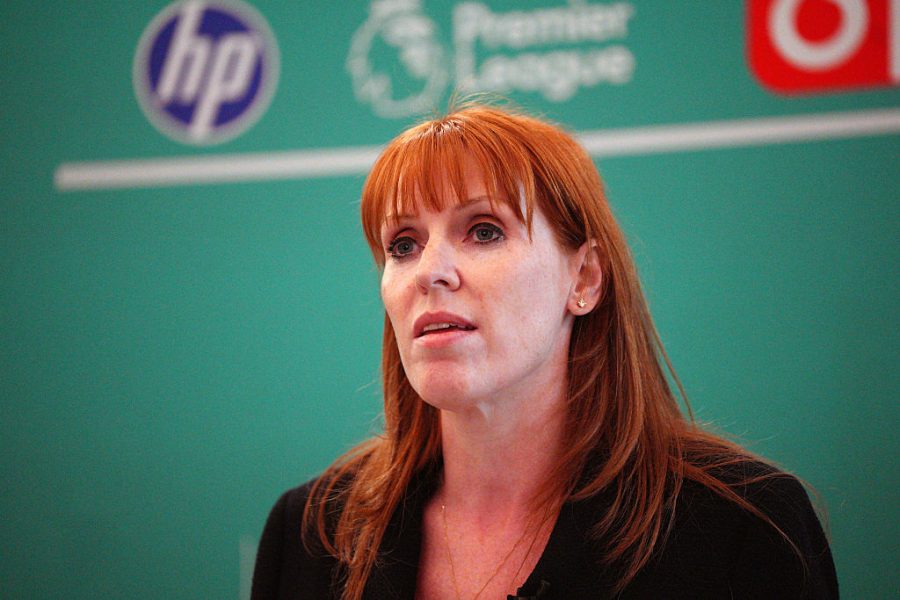
This week, Reform UK received an unprecedented £72m in donations from the crypto billionaires Christopher Harborne and Ben Delo. This amount is more than the total secured by all UK political parties last year, which stood at £69m. On Sky News this morning, Rachel Johnson asked Housing Secretary Angela Rayner if Labour were rattled. Rayner said the government’s priority was having ‘secure elections… for the people’, pointing to the Rycroft Review and new legislation targeting overseas donations, which she said would be backdated to the 25th of March, when the review was published, to close any loopholes for recent returnees to the UK. Pressed on whether this meant Reform’s donations could face legal problems, Rayner declined to comment directly but said Reform had ‘a lot of issues’ regarding the source of its funding. Johnson asked whether Labour would reinstate a cap on individual donations, noting Andy Burnham had previously proposed one before dropping it. Rayner said a ‘task and finish group’ was examining the issue and that she had written to the Electoral Commission for its views, but did not commit to a specific cap. Asked whether crypto billionaires funding a party ‘smells like democracy being bought’, Rayner said people were rightly concerned, and that ongoing police scrutiny of the donations would help determine whether existing rules had been circumvented.
Robert Jenrick: ‘We will make choices that we think are right for the country, not for any particular donor’s business’
On GB News, Camilla Tominey pressed Reform’s Robert Jenrick on whether the donations will push Reform towards looser cryptocurrency regulation. Jenrick said crypto was an opportunity for UK financial services and jobs, but insisted Reform had made no policy promises to the donors. When Tominey put it to him that any party leader would face pressure to soften crypto policy after such a donation, Jenrick said ‘no one has leant on us’, and argued the donors were ‘patriotic Brits’ motivated by disillusionment with the two main parties, and a desire to ‘level the playing field’. Jenrick claimed that Reform’s promise to raise the tax-free personal allowance showed that they are prioritising working people, not the ‘super rich’.
Tom Tugendhat: ‘We knew he was a Republican. We didn’t think he was this kind of republican’
Camilla Tominey also spoke to Shadow Foreign Secretary Tom Tugendhat about Donald Trump’s comments appearing to back a united Ireland, and asked whether Andy Burnham needed to challenge him directly. Tugendhat said he had already told contacts in the US cabinet that Trump was ‘fundamentally wrong’ and that the intervention was unhelpful, noting that Northern Ireland’s status had been settled by the Good Friday Agreement, negotiated with US involvement and agreed by the British and Irish governments. He said the prime minister should make clear that Northern Ireland remains part of the United Kingdom unless its people decide otherwise through the agreement’s mechanisms, and argued the focus should instead be on resisting Russian aggression, strengthening the UK-US trading relationship, and defending shared democratic freedoms rather than ‘silencing’ the democratic voice of Northern Ireland’s people.
Angela Rayner: ‘It was always a stretch target’
On the BBC, Laura Kuenssberg asked Housing Secretary Angela Rayner whether the government would quietly abandon its target of building 1.5 million homes given rising borrowing costs, construction costs and a cooling housing market. Rayner admitted the target remained a ‘stretch’, but insisted she was not giving up on it, pointing to a £10 billion social and affordable homes programme as evidence of progress. Kuenssberg noted that ‘a slim chance’, in political terms, usually means something won’t happen, suggesting Rayner could use current headwinds as cover to quietly drop the target and avoid being blamed for missing it later. Rayner said she was being honest about the difficulty rather than abandoning the goal, and that changes to the National Planning Policy Framework allowing development around transport infrastructure showed the government was taking action to keep the target within reach.
Jacob Coxon: ‘If we slow down… there is a strong chance we could all die in the immediate future’
Laura Kuenssberg also interviewed Jacob Coxon, whose resignation from Anthropic this week went viral after he spoke about the potentially existential threat of AI. Coxon told Kuessberg that some people building the technology privately estimate a greater than 10% chance it could lead to human extinction, and argued that AI could soon be capable of hacking laboratories to produce deadly viruses or breaching critical infrastructure. Coxon welcomed comments from AI bosses about ‘pacing the frontier’, but warned that there has to be a ‘coordinated slow down with China’ to avoid an international race.




Comments