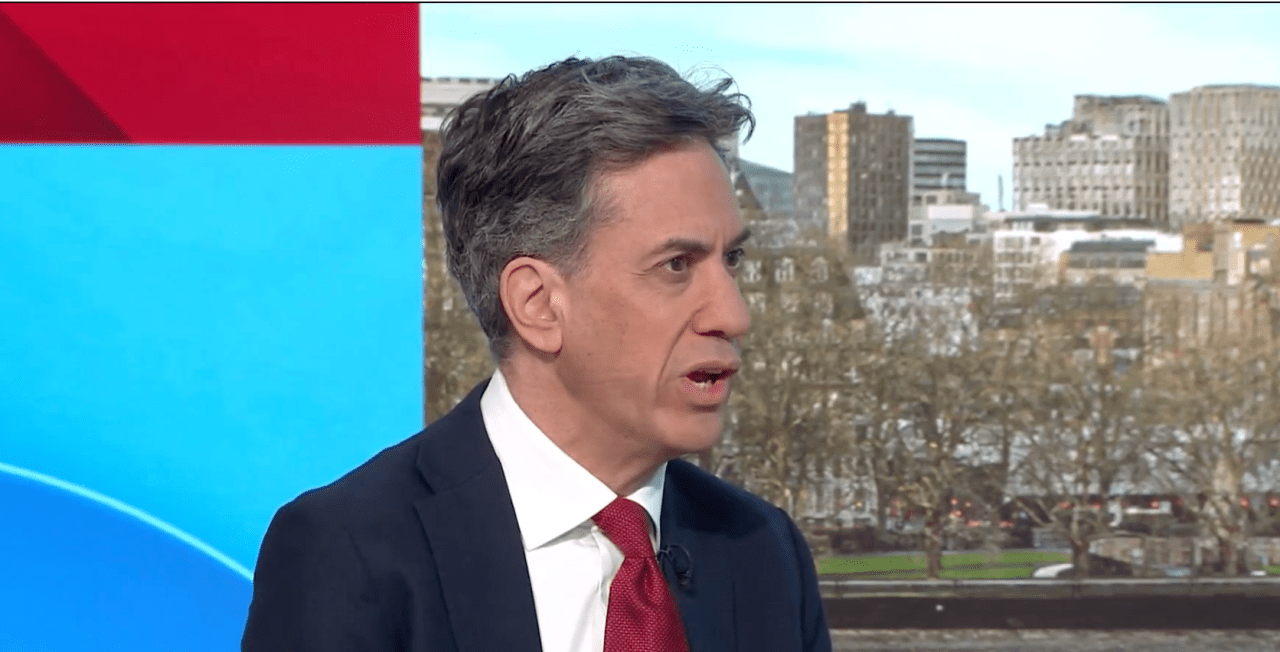
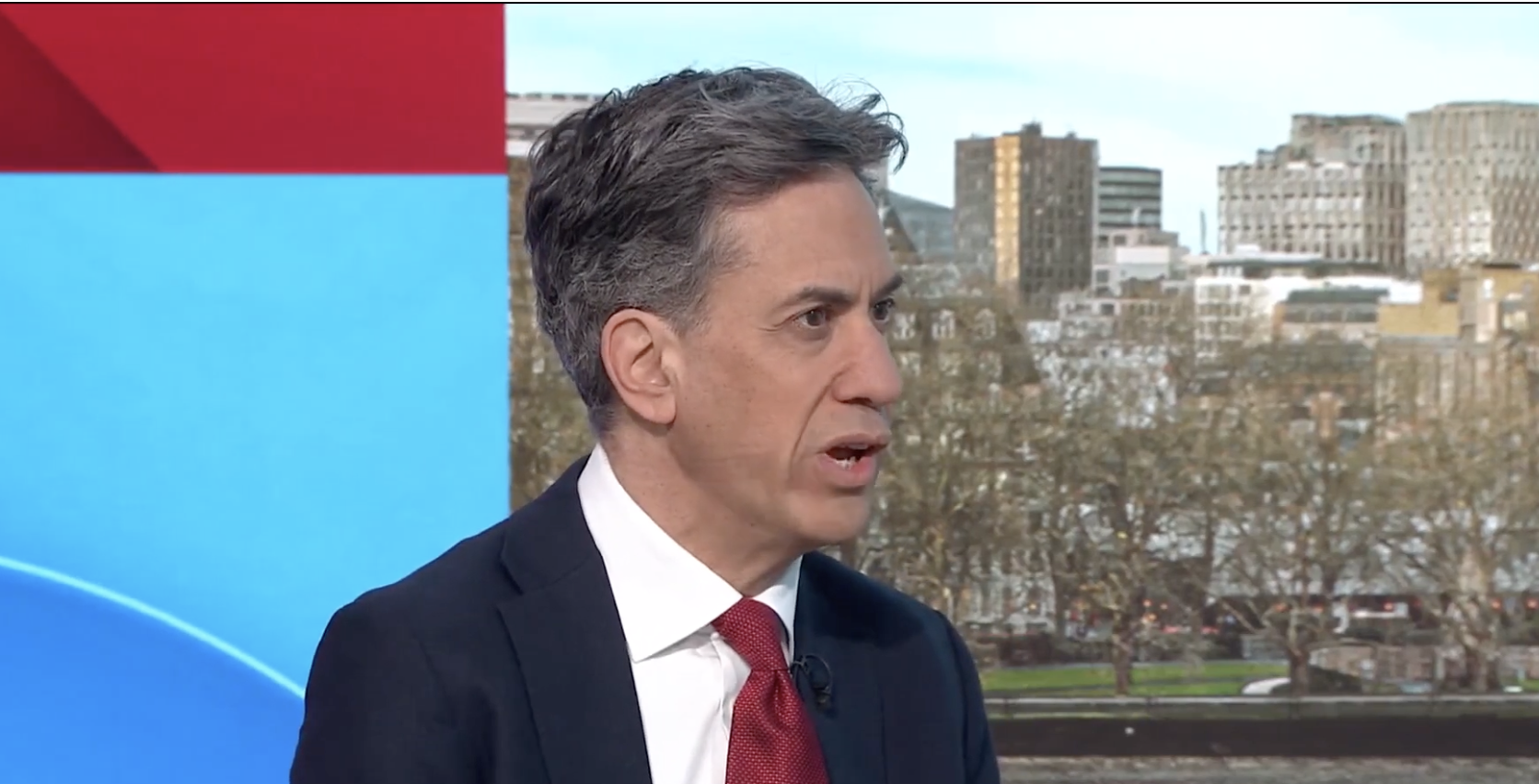
Ed Miliband: Government may send drones to get Strait of Hormuz open
The backlog of oil tankers unable to pass through the Strait of Hormuz because of the war in Iran is threatening to send economic shockwaves around the world. This week, Donald Trump called on allies to ‘send ships to the area’ to help open the passage. On Sky News this morning, Trevor Phillips asked Energy Secretary Ed Miliband how the government would respond to the president’s request. Miliband acknowledged the importance of opening the strait, and said the UK is talking to its allies about the issue. Phillips asked if the UK will deploy drones to the area. Miliband said there are a ‘range of things’ the government could do, including the use of autonomous mine hunting drones, but he called for de-escalation as the ‘best and most conclusive’ way to keep the Strait of Hormuz open.
Ed Davey: ‘I’d say to Donald Trump: No’
On the BBC, Laura Kuenssberg spoke to Liberal Democrats leader Ed Davey, who claimed the UK should not be at the president’s ‘beck and call’. Davey said the prime minister should make decisions based on our national interest, and accused Trump of being ‘insulting’, ‘reckless’ and having no plan for this ‘illegal war’. Kuenssberg asked if it isn’t in Britain’s national interest to help get the Strait of Hormuz open again. Davey agreed it was, but argued that the quickest way to achieve that would be through de-escalation and stopping the war. Kuenssberg also asked Davey whether his suggestion that the UK should stop using US missiles for its Trident nuclear deterrent is a sensible approach. Davey said the policy is a response to Trump being ‘totally unreliable’, and claimed the UK could spend the ‘billions’ that it would cost in this country instead of the US, and control the missile technology ourselves.
Claire Coutinho: ‘We would have moved faster than the Labour government’
On GB News, Camilla Tominey asked Shadow Energy Secretary Claire Coutinho how her party would be handling the conflict. When the US and Israel first attacked Iran, Tory leader Kemi Badenoch accused the prime minister of cowardice, but has since retreated to a position more similar to that of the government. Coutinho told Tominey that her party holds the same view as Australia and Canada in supporting the US and Israel’s ‘endeavours to stop Iran from gaining nuclear weapons’. She claimed the Tories would have moved faster to allow allies to use UK bases, and suggested that Keir Starmer actually would have done the same if he hadn’t been overruled by his cabinet. Coutinho also criticised the government for taking so long to deploy the warship HMS Dragon to protect British assets in the area.
Ed Miliband: ‘If it’s necessary to intervene we will’
This week, Ed Miliband told petrol retailers and energy companies that the government ‘will not tolerate unfair practices, price gouging’ as a result of the conflict in the Middle East, and on Sky News he told Trevor Phillips he would ‘fight the British people’s corner’ to keep costs down. However, the longer the situation around the Strait of Hormuz is unstable, the higher energy costs will rise. On the BBC, Laura Kuenssberg asked the energy secretary when the government would step in to support people. Miliband said the government had taken action to cut bills in the budget before this crisis, and is now ‘preparing for all eventualities’. He noted that it is difficult to predict what will happen to the energy price cap in July, because it is dependent on how long the conflict continues. Kuenssberg asked if the government would do as Liz Truss did and give universal support to all households if bills were to rise too high. Miliband said it is too early to say, and it would depend on ‘the scale of the impact’.
Claire Coutinho: ‘The first port of call should be to reduce costs’
Laura Kuenssberg asked Shadow Energy Secretary Claire Coutinho whether she agreed in principle with the government offering financial support to people if energy costs remain high. Coutinho argued that the government should rule out the September increase in fuel duty, even if prices come back down. She also said the government should be trying to make energy cheaper rather than using tax payers’ money, and claimed that her ‘Cheap Power Plan’ could lower energy bills by 20% by taking actions like removing the carbon tax. When pressed again on the original question, Coutinho acknowledged that the Conservatives had given financial support previously, and would consider doing so again in another energy crisis.


Comments