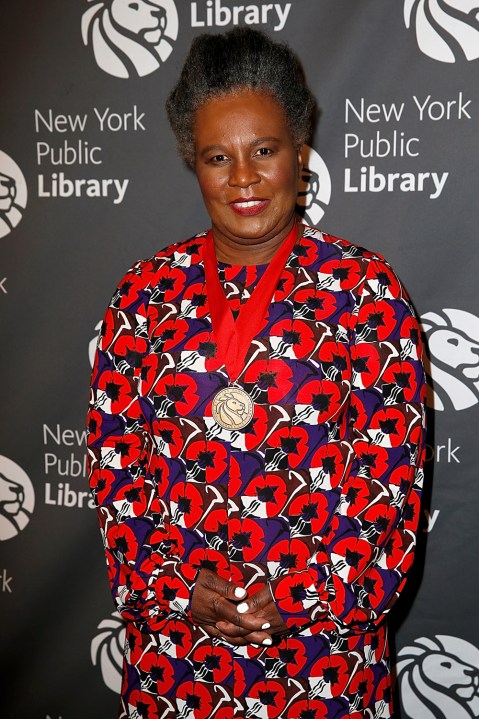
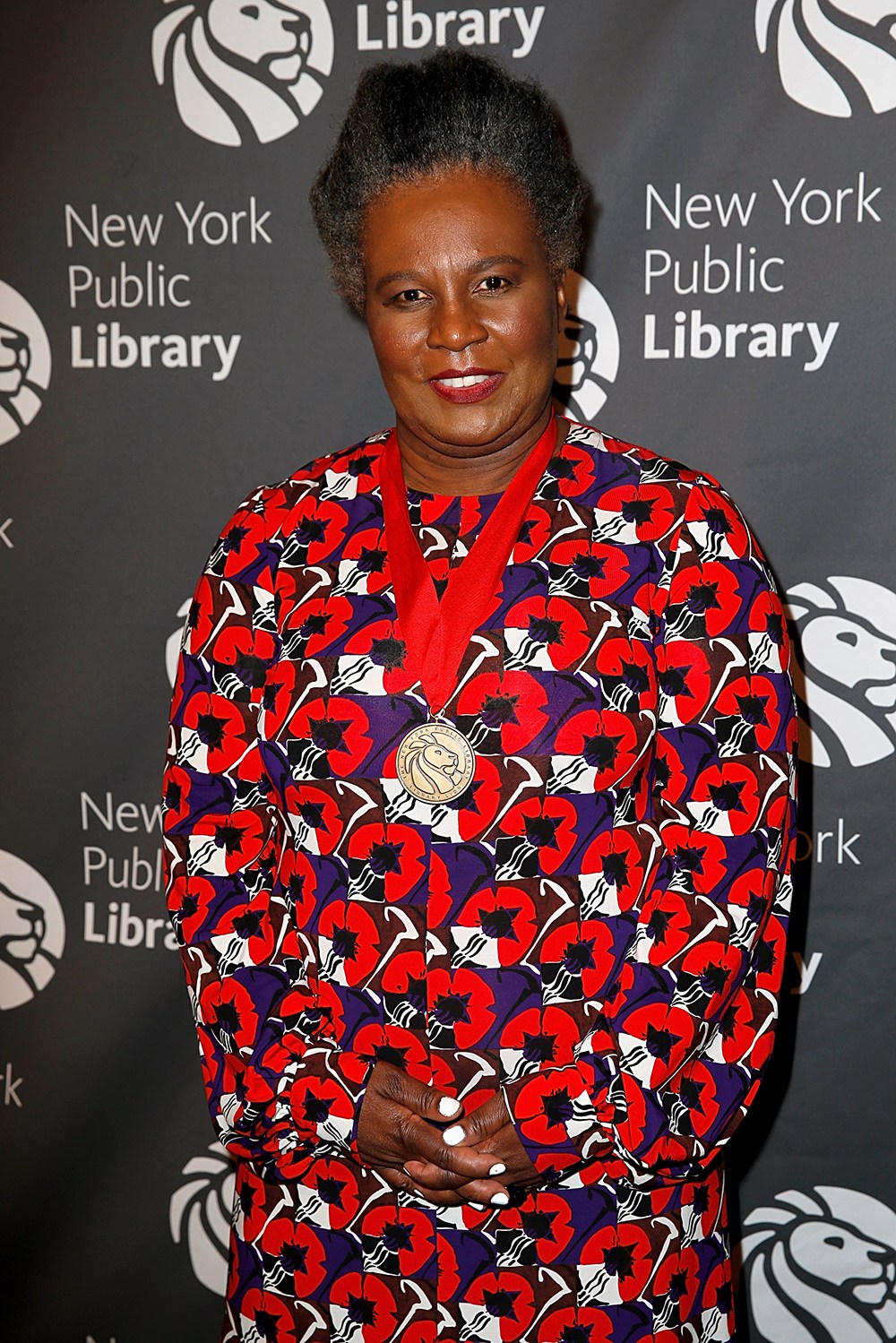
The Jamaican-American poet and essayist Claudia Rankine won a slew of prizes for her book Citizen (2014). Her blend of emotive prose and personal recollection helped many people understand the challenges of being black in the US, where the experience is qualitatively different to that in the UK – a subject explored with erudition by the Nigerian-British writer Tomiwa Owolade.
The murder of the unarmed teenager Trayvon Martin, along with those of George Floyd and Breonna Taylor, made headline news; but many more casual examples of racism or double standards occur every day. In the Netflix true crime documentary The Perfect Neighbor, a white woman in 2023 makes constant complaints to the police about her innocent black neighbours and eventually shoots dead a black mother of four. The police would never have treated a black suspect in the same way – driving her home to pick up essentials before taking her to a hotel.

Triage is the story of a friendship, and the challenges that arise from different ways of dealing with shared political opinions. The black narrator, who may or may not be based on the author, met a woman known as the Theorist, originally from Ramallah, at college in America, where they bonded over anger about world injustice. Here they devised the ‘collapse’– a way of falling to the ground to symbolise their weight of despair – but later their paths diverged. The Theorist became an activist, who protested, lectured and wrote furiously about perceived injustice; the narrator, being more passive (‘inert’ in the words of her friend), wrote about her experiences and grief without fighting for any political cause.
Both characters are from the far left, and their assumptions grated on me. They unquestioningly refer to the recent attack on Gaza by the Israelis as ‘genocide’. War is hell, but it was started by Hamas on 7 October 2023. Although the deaths that occurred in Gaza are regrettable, soldiers bent on genocide do not drop leaflets warning civilians to evacuate targeted areas. If Hamas did not store arms in hospitals and schools, ban civilians from the safety of the tunnels and spend billions in worldwide aid on weapons instead of medical training and secular education, civilian suffering would reduce.
There is the repeated use of the phrase ‘no one coming’, regarding support from the rest of the world over apartheid, occupation and so on. But it was pressure from the world that helped secure the release of Nelson Mandela and the end of apartheid. There is global criticism of Israel for its West Bank settlements. At the UN, Israel is more castigated than Iran, whose leaders murdered 40,000 civilians in the first half of this year alone.
There is the supposition here that questioning of affirmative action and diversity, equity and inclusion is racist. But positive discrimination at universities such as Harvard did not primarily impact whites; it discriminated against clever students from East Asia.
Rankine assumes prejudice against trans people. But recognising biological sex is necessary to protect women in safe spaces. There is the usual far-left bemoaning of treatment of refugees. But encouraging legal rather than illegal migration is vital for security. The two protagonists grieve the loss of free speech. But does Rankine think that she would be free to publish such opinions in Iran, Saudi Arabia, North Korea or China?
The frequent alliteration is irritating: ‘refusal, rejection, renunciation’; ‘hazard, hapless, happenstance’
Then there is the tedious wordplay: ‘Casualties inform and form’; ‘what’s lost in you? What loss in you’; ‘exit not exegesis’. The frequent alliteration is also irritating: ‘refusal, rejection, renunciation’; ‘hazard, hapless, happenstance’; ‘hungry, hoping, haunted or hunted’; ‘fictions, frictions, fray’.
Rankine has highlighted real episodes of racism: a colleague’s poem in which only white women were desirable and black women were ‘big’ and ‘wore Zulu bracelets’. And thinking people did notice the ‘othering’ when Donald Trump referred to ‘the blacks’ (not like ‘us’).
Rankine is also expressive. We perceive the narrator’s grief when she feels left behind by the Theorist; we are also aware that the narrator had a violent childhood, and it seems obvious that she suffers from PTSD. This might explain her dwelling on grief and collapse without actually doing anything to protest against it. The frustration is shared by the Theorist. Some of Rankine’s prose is beautifully vivid: the silencing she feels as a result of abuse is ‘shipwrecked off the coast of sound’. But in the end, I felt as irritated with the narrator as her erstwhile friend. My advice might have been: stop moaning and do something.




Comments