
Iran has declared that the Strait of Hormuz is ‘completely open’ in an announcement that has been welcomed by Donald Trump. In response to the statement by Iranian Foreign Minister Abbas Araghchi, the US President declared his gratitude on social media.
Iran says the shipping lane will remain open for the ‘remaining period of ceasefire’; the two-week truce agreed between the USA and Iran expires on 22 April.
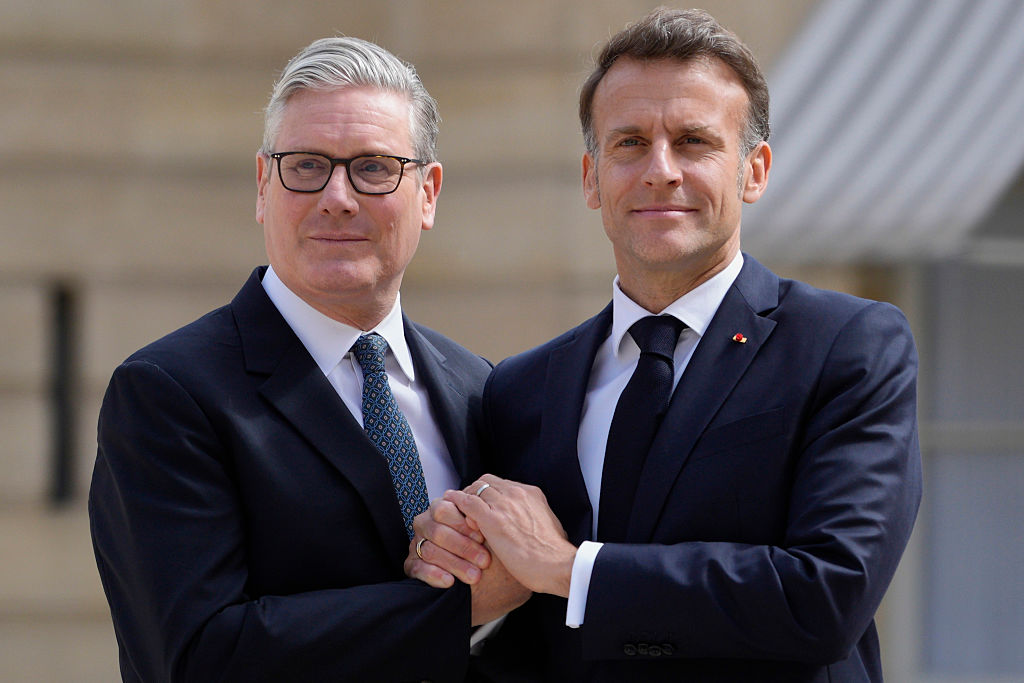
Springtime in the French capital is always a delight but particularly for Starmer after the latest revelations about Peter Mandelson
The Strait of Hormuz – through which one fifth of the world’s oil flows – has been closed since America launched its offensive against Iran at the end of February. According to shipping data, fewer than 300 ships have passed through the Strait since then, compared to the 138 ships that went through the Strait each day before the conflict.
Today’s announcement rather takes the wind out of the sails of Emmanuel Macron and Sir Keir Starmer. The Prime Minister is in Paris to co-host a virtual summit at the Elysee Palace. Springtime in the French capital is always a delight but particularly for Starmer after the latest revelations about Peter Mandelson.
Billed as the Strait of Hormuz Maritime Freedom of Navigation Initiative, the two leaders want to flex their muscles on the international stage in a desperate attempt to stay relevant. Over 30 heads of state and government are participating, including German Chancellor Friedrich Merz and Italian premier Giorgia Meloni. Trump is not involved.
In a social media post on Friday morning, Macron said his objective was to come up with a security plan for shipping through the strait. He stressed it would be ‘strictly defensive’ and put in place ‘when security conditions allow’.

Starmer echoed Macron’s remarks, saying that was essential to build a ‘coalition of countries around the principle that the ceasefire should be permanent, there should be a deal, and that the Strait of Hormuz is open.’
The Prime Minister added that it’s, ‘in all of our interests to do that, because what’s happening in the war in Iran is affecting each of our economies.’
Few European countries are feeling the pinch as much as Britain and France. On Monday, the International Monetary Fund (IMF) warned that Britain was most at risk among major economies from an energy crisis.
France is barely any better off. This week, inflation in the Eurozone for March was revised upwards to 2.6 percent year-on-year, a significant increase on the 1.9 percent in February. This is the highest level since July 2024. Furthermore, energy prices rose by 5.1 percent in the Eurozone in March compared with the same month in 2025.
All types of fuel exceeded the symbolic two-euro-per-liter mark earlier this month in France and there is anxiety that the country may soon run dry if the Strait of Hormuz doesn’t open – and stay open.
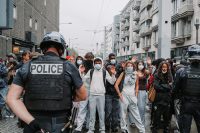
The other fear for president Macron is the return of the Yellow Vests. When they first mobilized in the autumn of 2018, the protestors took to the streets because of a green tax that caused diesel prices to rise to 1.50 euros per liter.
In the years since the cost-of-living crisis has deepened across much of provincial France, as has distrust and disdain for Emmanuel Macron.
Throw in anger at the rampant insecurity and uncontrolled immigration that has been ever present since Macron took office in 2017, and one understands why a poll earlier this month reported that 79 percent of the French believe the Yellow Vests will soon return.
The same poll also reported that 76 percent of the country does not believe Macron is capable of rising to the challenge of the social crisis caused by events in the Middle East. The majority of Britons feel the same way about Starmer. These are two leaders who have lost the confidence not only of America but also of their own people.



Comments