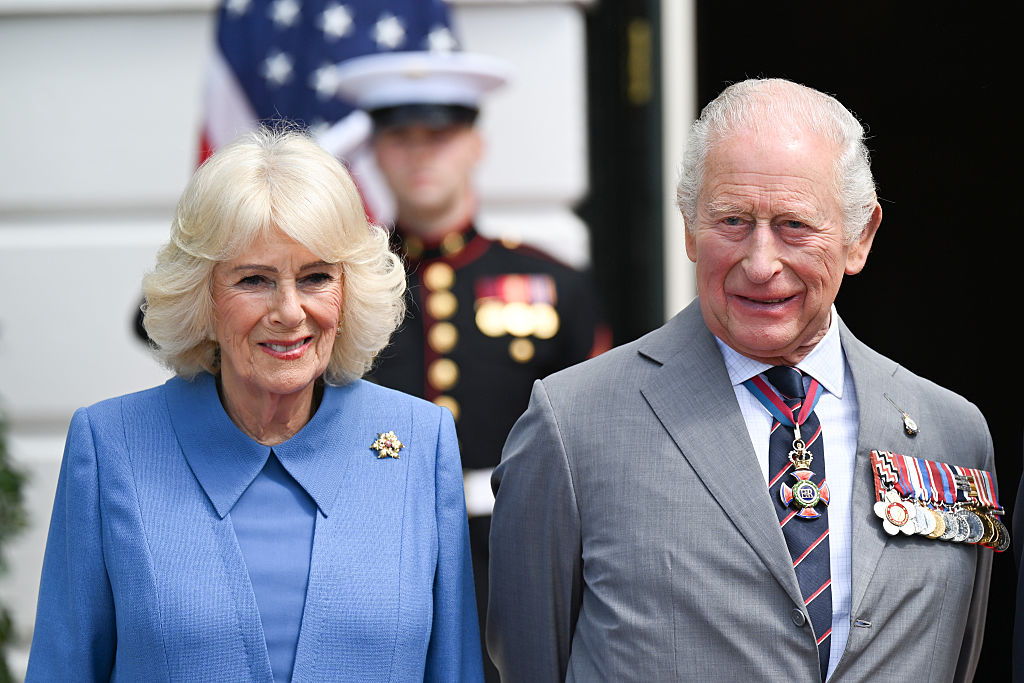
At St. Peter’s Church in St. George’s, Bermuda, the oldest Anglican church in continuous use in the Western Hemisphere, a photograph of the late Princess Diana with the then-Prince Charles has just been taken down. Removing the reminder of the King’s last visit to the island in 1982 was a matter of administrative prudence ahead of his arrival on Friday. A small gesture that reveals much about the respect and deference Bermudians feel towards the British monarchy.
The 2022 royal tour of the Caribbean by the Prince and Princess of Wales was defined by protest, demands for reparations and independence from the British Crown. Bermuda will not repeat that performance. In 1995, the island held an independence referendum that saw 74 percent of the electorate vote against a split from the UK.
It was, in many ways, a pragmatic calculation. Bermuda operates under the most devolved constitutional arrangement of any British Overseas Territory. Much like the reinsurance industry that thrives on the island, Bermuda ran the numbers, looked at the risks of total sovereign rupture and chose to retain the semi-autonomous settlement. In a jurisdiction of 64,000 people, prosperity runs on access to British passports, US capital and the kind of regulatory stability that independence movements have rarely delivered.
However, to describe the relationship as purely transactional misses the deeper affection that has existed for decades on the island. When Queen Elizabeth II died in September 2022, Sir John Swan – the former Premier who had called the 1995 referendum and resigned when it lost – told the Royal Gazette that “my heart took a beat” at the news. He had been knighted by her in 1990.
That’s not to say that on occasion there isn’t friction in the relationship. In 2017, Bermuda legalized same-sex marriage, only for the government to repeal it a year later despite intense pressure on Westminster not to. The UK eventually granted Royal Assent to the repeal on the grounds that Bermuda is a self-governing jurisdiction. Same-sex couples in Bermuda can still enter domestic partnerships, but not marriages.
The vote was driven in significant part by a religious coalition. On an island where around 78 percent of the population identifies as Christian, that coalition carried significant weight, spiritually and politically. Sunday observance still shapes the rhythm of the week here. Political candidates of all parties campaign through the churches, and the island has more places of worship per square mile than almost anywhere else in the Atlantic.
The independence movement does exist here, but it has failed to gain traction. Even Swan, asked in 2022 whether the Queen’s death might revive the question, said no. The world, he said, was in too much turmoil – and Bermuda was better off where it was. The man who staked his career on the question now says the moment has passed.
And we Bermudians know how a royal can serve as a social heat sink. During the 2017 America’s Cup in Bermuda, the political climate was fraught. The One Bermuda Alliance government had committed somewhere between $64 million and $110 million in public funds to the Cup. The opposition Progressive Labour party made the spending a centerpiece of a campaign built around economic inequality on the island. The OBA lost a snap election in July by 24 seats to 12.
But following Princess Anne’s arrival, the atmosphere shifted. For the weekend the talk on the radio call-ins was about her, not about the spending – what she had said, who she had stopped to speak to. As aide-de-camp to Governor John Rankin, I watched her work through the official program and then linger to thank the gardeners on the Government House grounds. At the end of the visit, after the official farewells, she shook my hand on the apron and said “thank you, Paolo.” We had only spoken once, briefly, the night she arrived but she had remembered me.
On the closing morning of the Cup, in June 2017, Princess Anne planted a tree at Government House. My wife Sara and our daughter Lily came with me. Lily, who was four, had spent the week excited about meeting a real-life princess. The Princess was warm and unhurried. She was wearing linen trousers and boat shoes, and she carried her own shovel down the hill to fill in the soil around the tree. After the ceremony Lily looked slightly crestfallen. The Princess, she explained, did not look like a princess.
This relationship has weathered worse than political disagreement. In 1973, the Governor, Sir Richard Sharples, and his aide-de-camp, Captain Hugh Sayers, were murdered on the grounds of Government House by a black power group. It was a dark moment, but from it the role of aide-de-camp became a Bermudian appointment – a proud tradition born of violence and tragedy, and one that still carries weight half a century later. I served as aide-de-camp to successive governors between 2015 and 2019. The post is a field officer’s appointment to support the governor as chief of staff, part of which is to enable the hosting of visiting members of the royal family.
Bermuda has long been accustomed to adverse weather conditions of both kinds; the kind that arrives off the Atlantic and the kind that arrives from Westminster. When the King departs the island on Saturday, the pomp and pageantry will subside – but the relationship will endure, despite the occasional rocky patch. After all, the Dark and Stormy is our national drink.




Comments