The name of the government’s highly-controversial ‘special representative’ to oversee its equally controversial definition of ‘anti-Muslim hostility’ will be announced this week, ministers told Muslim groups at Downing Street yesterday.
I understand that the shortlist of 12 includes, though is not limited to:
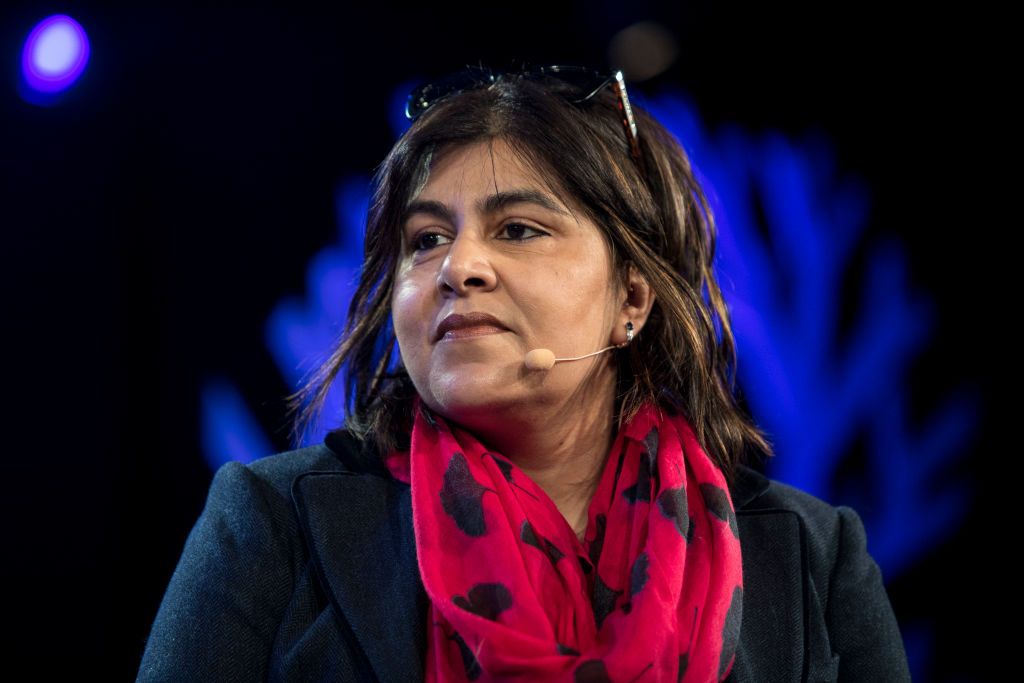
- Sayeeda Warsi, the former Tory co-chair and now crossbench peer;
- Dilwar Hussain, the former No. 10 cohesion adviser under Keir Starmer;
- Dominic Grieve, the chair of the working group which drew up the definition;
- Wajid Khan, the Labour peer and a former faith minister under Starmer;
- Afzal Khan, the backbench Labour MP;
- Farmida Bi, a senior lawyer and Labour peer;
- Qari Asim, a Leeds imam, lawyer and activist.
Some of these names have, to say the least, questions over them. Asim, for instance, was sacked as an adviser to the last government after calling for a film about the Prophet Mohammed’s daughter to be banned. And the definition itself, as I and others have previously argued, is deeply sinister. In the hands of some of these people, it could be weaponised to do really serious harm.
My informants say Warsi is seen as the frontrunner, though no one would say that she has got the job, and it might go to someone not named above at all. (There’s also been a debate about whether it should be a direct ministerial appointment, which involves less scrutiny.) I can see how ministers might think it cute to get someone with a Tory background, but appointing Warsi would make the government’s already very difficult task of trying to sell its definition impossible.
Many in Labour would hate the choice. And with the possible exception of Liz Truss, I believe that no one nominally associated with the Conservative party is regarded with more loathing and contempt by actual Tories than Sayeeda Warsi. After writing an unflattering review in the Times of her 2024 book, Muslims Don’t Matter, I received nearly a hundred messages of congratulation from senior people across every wing of the party, from wringing wet to future Reform defectors, including a former prime minister and three of Warsi’s former cabinet colleagues. As the review opened:
‘The scales have fallen from Sayeeda Warsi’s eyes. Baroness Warsi, the first Muslim to sit in cabinet and former co-chair of the Conservative party, now realises that the country that made her a peer at 36 is a place where Muslims are ‘shut out of decision-making’ – with the exceptions or recent exceptions, as she doesn’t say, of the mayor of its capital, the justice secretary, the chancellor of the exchequer, the home secretary, the education secretary, the health secretary, the first minister of Scotland, the head of the No. 10 policy unit, the 25 Muslim MPs elected in 2024 and the thousands of Muslim civil servants and councillors.’
Most importantly, many of Warsi’s views are fundamentally opposed to government policy. Let’s set out just how much trouble ministers would store up for themselves if they gave her a state-sponsored platform to decide what is ‘Islamophobic’:
Refuses to distance herself from extremists, saying it’s ‘playing by the rules set by the racist’
In the opening to Muslims Don’t Matter, Warsi says: ‘I’m done with caveating my views… I’m done with feeling obliged to distance myself from the bad views of the bad Muslims. I’m done with being held accountable for the actions of any one of the almost two billion people in the world who follow the faith I was born into… I’m done playing by the rules set by the racist.’
Claims the very term Islamist is a ‘fig leaf used by Islamophobes to disguise their bigotry’ and that it is ‘theologically unsound’ to speak of Muslim moderates or extremists
In the book, Warsi writes: ‘The bifurcation of Muslims into “moderates” and “extremists” [is] a clumsy and theologically unsound designation… the talk is now of “Islamist” and “non-Islamist”, but the connotations are the same. Islamist, a word with a dozen potential meanings, is often a fig leaf used by Islamophobes to disguise their bigotry.’
Compares Gaza to the Holocaust
She posted this video set in a 2040 where the Israeli attack on Gaza is commemorated with ‘Palestine genocide memorials’ in Berlin and other world capitals. Its imagery echoes that of the death camps, including a picture of a pile of shoes, matching the famous display in Auschwitz. Under it, she comments: ‘Never Again – we said! Never Again say Never Again if you did nothing to stop the carnage and bloodshed.’
Compares British ‘Islamophobia’ to the position of Jews in 1930s Germany
Speaking at the 2025 Hay Festival, she said: ‘I turned to [my husband] and I said, are we going to be like those Jewish families in Europe in the 1920s and 1930s, who were always sitting back, looking at the writing on the wall and thinking, “No, we’re going to be all right. We’re very successful. We live in the right part of town. We’re part of the establishment…” And then it will be too late. Should we be doing what everybody else around us seems to be doing right now, which is putting in place plan Bs and exit routes?’
Attacks the government’s own counter-extremism policy, Prevent, saying it is ‘broken,’ ‘toxic’ and ‘not [fit] for purpose’
In an interview, she said: ‘I think Prevent, as a brand, is broken. I think it’s toxic… Prevent is targeted towards British Muslims and British Muslim kids [untrue – only 10 per cent of referrals in 2024-25 were Islamist] and yet if you look at terrorists, 30 per cent of them are converts, including the two Lee Rigby murderers.’
She describes the British state as ‘crazy’ and ‘paranoid,’ saying: ‘The way we’re starting to operate now with the Muslims is McCarthyistic.’
Claims that criticism of Qatar during the 2022 World Cup was ‘orientalism in full view’
In Muslims Don’t Matter, Warsi writes: ‘The furore that led up to the tournament was orientalism in full view: from unproven allegations of corruption and dishonesty to a focus on importantbut historic human rights abuses; from questioning whether nations such as Qatar had a culture of sport to a spotlight on illiberalism on women’s and LGBTQ+ rights.’ She also wrote of the ‘Islamophobic weaponisation of gay rights.’
Allegations of corruption in Qatar were not, of course, unproven, and human rights abuses were not historic.
Praises censorship of a supposedly ‘anti-Muslim’ play and says this should be a model for now
In the book, she praises how the Lord Chamberlain’s office, then responsible for theatre censorship, in 1890 prevented the staging of Henri de Bournier’s Mahomet, depicting the life of the Prophet, after objections by the Ottoman ambassador. ‘Britain recognised… the need to acknowledge the religious sensibilities of all those it ruled over… It moved from an approach where Islam was considered fair game to a more considered, pragmatic approach… If we could show sensitivities during the more brutal era of colonialism, why are we not able to now?’
This may, of course, offer some clues to her approach as ‘anti-Muslim hostility’ czar. Artists and authors, beware.
Key mover in the campaign for a more expansive Islamophobia definition
Perhaps most importantly, Warsi hasn’t been in agreement with government policy on the very definition she would be overseeing. She co-chairs the All Party Parliamentary Group (APPG) on British Muslims and was a member of the panel which produced its report calling for a much more expansive definition of Islamophobia. That report says a definition must tackle ‘negative attitudes that would not be classed as crimes by police,’ must set ‘appropriate limits to free speech’ when talking about Muslims, and must create ‘tests… for ascertaining whether contentious speech is indeed reasonable criticism or Islamophobia masquerading as “legitimate criticism”.’
Pragna Patel of Southall Black Sisters, a progressive secularist and opponent of the definition, said the process by which the APPG sought views was ‘very troubling. My views were clearly unwelcome and I faced intense hostility from Baroness Warsi who chaired the session…. As the hearing progressed, it became clear to me that that I had been invited to give evidence solely to lend the proceedings an appearance of impartiality. What was meant to be an unbiased evidence-gathering exercise turned into an adversarial cross-examination of my position, in which Baroness Warsi assumed the role of chief interrogator and defender of the APPG’s position. Her conduct strongly suggested that she was working to a pre-determined agenda.’
The new ‘special representative,’ according to the announcement of the post, ‘will engage with communities and stakeholders, and support cross-sector action to strengthen understanding, reporting and response. They will also lead on work to facilitate understanding and implementation of the definition of anti-Muslim hostility across various sectors and contexts.’
Many Tories in the Cameron government came deeply to regret promoting and empowering Sayeeda Warsi. There’s still time for the Burnham government to avoid the same mistake.




Comments