
The ‘worst drought in decades’ is how Novara headlined an article attacking data centres at the beginning of this month. ‘This summer isn’t as bad as the drought of 1976’ ran the Telegraph’s headline. ‘The UK is reeling from its worst dry spell since 1976’ was the subheading of an article in the Australian Daily Telegraph, inviting readers to ‘see the pictures’ for a bit of schadenfreude.

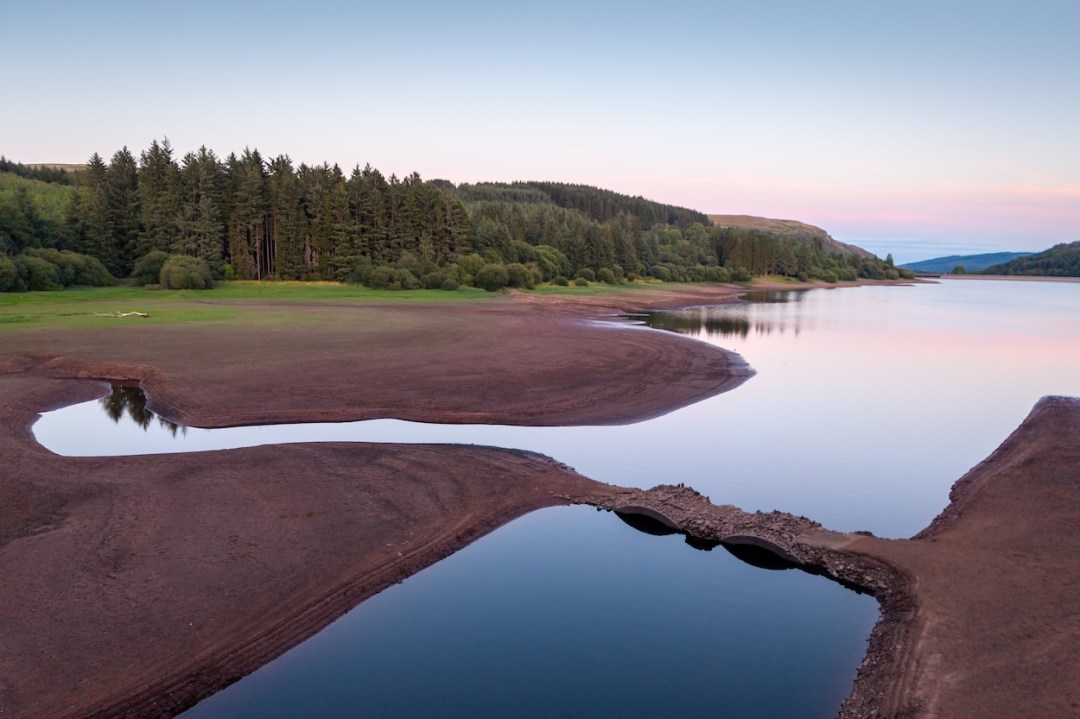
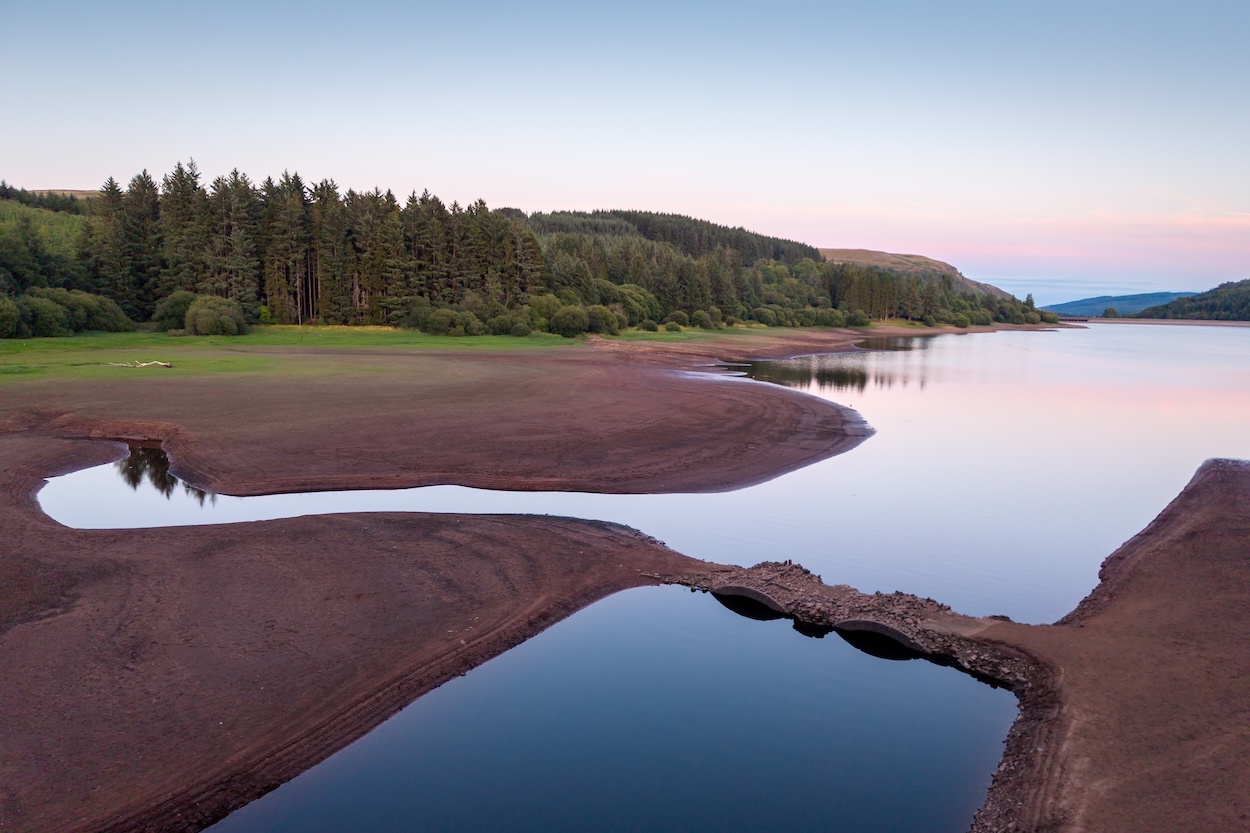
Andy Burnham’s government has also started telling the press that further restrictions on our water consumption are around the corner. Water companies may apply for non-essential use bans covering car washes, window cleaning and refilling commercial swimming pools. Sources told the the Times that this will be necessary because of the ‘exceptionally low volumes’ being recorded in reservoirs across the country. The press has also been focusing on reservoirs, and how they are ‘running dry’. The i paper names and shames the ‘12 reservoirs at risk of running out of water’, saying elsewhere that there are ‘UK towns at risk of running out of water within six weeks’.
The summer of 2026 will be remembered for many things – the fall of Keir Starmer, the Clacton by-election, perhaps the Arsenal winning the Premier League – but 2026 is unlikely to claim the crown for the worst drought in living memory. Nor is the lack of rainfall this summer an unprecedented crisis.
Reservoir levels, the indicator which tells us how the system is coping with periods of low rainfall, show that our water system is coping with this summer better than it did in 2025. The latest Environmental Agency briefing (covering 7 to 13 August) tells us that reservoir storage has fallen to 65.9 per cent. In the week ending 14 August last year, national reservoir levels fell to 65.6 per cent.
Another summer which outshines this one with respect to extreme weather is 2022. That year saw the highest temperature ever recorded in Britain, 40.3 degrees in Lincolnshire, while 2026 so far has only managed to produce a relatively breezy 38.1 degrees in Kew Gardens. It also saw reservoir levels fall far, far further than 2026. By the end of July of that year reservoir levels had already fallen to 65.2 per cent – lower than where we are now – plummeting to 49 per cent by the end of September.
Reservoir levels are not a perfect metric for how severe a drought is. If rain is forecast in the near future, as it was last August, then regional water boards can be more relaxed about measures such as hosepipe bans. It now seems that we were lucky at the beginning of this year to have exceptional rainfall. In the England south-east/central-south region, rainfall in January was 188 per cent of the long-term-average for the month. Reservoir levels reached 94 per cent by the end of February, meaning there was a significant buffer once the dry spell began. If we go on to experience a dry winter, as we did in both 2010 and 2011, we may be in serious trouble next year. But there is no reason to assume that this will happen. And other indicators related to drought are in surprisingly rude health this year. Groundwater levels were above historic norms at the end of July, according to the British Geological Survey.
The complications around reservoirs are partly why we should be sceptical when the issue is used for political purposes. None have been built in England since 1992. For years the left put the blame for this at the feet of privatisation – water was privatised in 1989 – and more recently the right has asserted that the problem is either planning related or caused by ‘Treasury brain’, pointing to the complications over the building of Abingdon Reservoir. The truth is that for a long time it made financial sense to focus on more boring improvements to the network, such as reducing the rate of leakage, or creating new interchange pipes between regions so that parts of the country which were running dry could draw water from elsewhere – something which Yorkshire did in the 1990s after local droughts became so bad that tankers had to carry water across the region to meet demand.
Reform has promised to put an end to hosepipe bans by categorising reservoirs as national infrastructure, but this is less smashing up the system than following in the wake of policy changes which have already started within the sector. In 2014 the Coalition introduced a new ‘resilience’ duty for Ofwat to encourage infrastructure development, and when Labour came to power in 2024 it shifted one reservoir, Fens, onto the ‘Nationally Significant Infrastructure Project’ track, and promised to build nine new reservoirs by 2050. Reform do want to go further, building desalination plants to provide even more capacity during emergencies.
The yellowing grass in our parks may be unsightly. But it is a stretch to say that we are about to die of thirst
Britain already has one major desalination plant, the Thames Gateway Water Treatment Works, which has been operational since 2010 and cost £250 million to build. It has since sat mostly dormant, operating only five times between 2010 and 2025. Given the scale of the tax cuts that Reform wants to implement, and the disastrous funding shortfalls in critical policy areas such as crime and justice, this seems like a slightly eccentric way to spend some of the billions of pounds that they believe they can save by welfare changes. Is preventing people from hosing down their garden for a couple of months once every few years really such a burden?
The desiccated yellowing grass in our parks and fields may be unsightly. But it is a stretch to say that we are about to die of thirst. Most likely the rains will begin to fall again by October, washing away this seasonal policy concern, along with the bluster about air conditioning.






Comments