The path ahead for Hungary’s new government – set to be formed in the coming days by Péter Magyar’s Tisza party – is not an easy one. The country is facing worsening economic problems: high inflation, slow growth, and deteriorating public finances. After 16 years of unchecked rule, the defeated Fidesz party will continue to have loyalists in key positions in business, public administration, the judiciary, and elsewhere.
Despite America’s social conservatives’ fascination with Hungary, Orbán’s policies have led neither to a renewal of family life and organised religion
Yet Sunday was a monumental day for European – and US – politics. The form of divisive populist nationalism spearheaded by Viktor Orbán, and later taken to new heights by Donald Trump, has been soundly defeated at the ballot box. It was, furthermore, defeated by a margin so large that any effort to overturn it would have been doomed to failure.
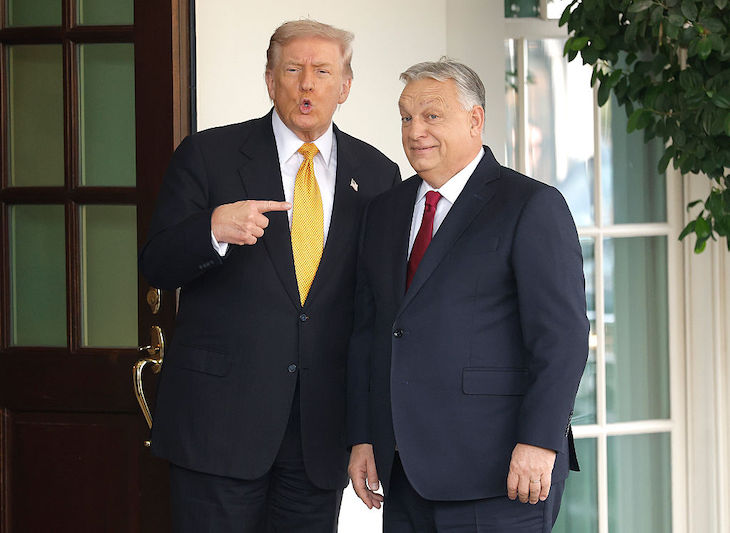
Notwithstanding allegations of vote buying and other irregularities voiced on election day by Viktor Orbán’s political director, Balázs Orbán, his boss decided to end his tenure on a high note, conceding and congratulating his challenger. In doing so, he has hopefully provided an example that his American followers will decide to emulate when the time comes – unlike after the 2020 election.
While it is too early to write Orbán off completely, it is important to dwell on the extent to which Orbánism – and by extension Trumpism, and similar experiments in radical, revolutionary nationalist politics – have been shown to be a dead end, politically and substantively.
Again, Fidesz has not lost the election by a little. Toward the end of the count on Sunday night, Tisza’s lead appeared at some 16 per cent, well above the polling average, giving the new Prime Minister the two-thirds majority needed to break more decisively with the legacy of the past 16 years.
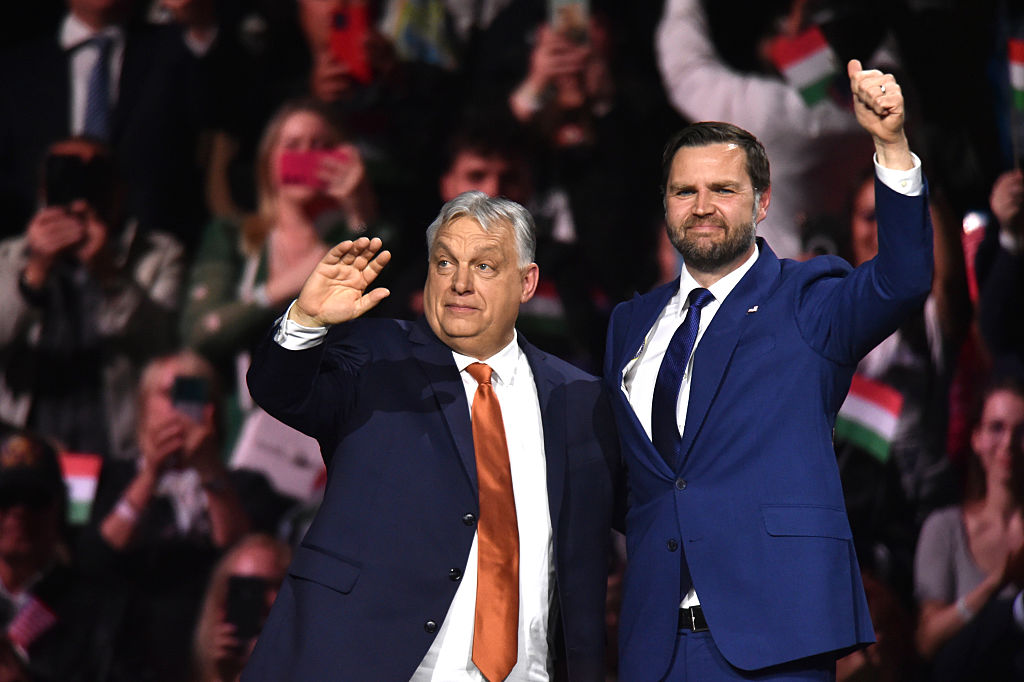
A decade or so ago, Orbán’s idea of ‘illiberal democracy’ might have appeared to some as a fresh, contrarian way of responding to the failures and blind spots of ‘liberal internationalists’, ‘neoliberals’, or the ‘blob’.
Today, to a decisive majority of Hungarians, the slogan is shorthand for bad leadership, economic stagnation, and cosying up to some of the worst regimes on the planet. Despite America’s social conservatives’ fascination with Hungary, Orbán’s policies have led neither to a renewal of family life and organised religion, but rather to demographic decline and the erosion of church attendance.
Extrapolating from one election is fraught with danger but, after the Hungarian election, the project pioneered by the likes of Orbán and Donald Trump now lacks truly influential champions. Robert Fico, Orbán’s Slovak apprentice and the current prime minister – with friendly ties to the Kremlin – lacks genuine ideological convictions (other than Soviet nostalgia), is burnt out, and is also an internationally insignificant player.
Meanwhile, Italy’s Giorgia Meloni has proven to be a thoroughly normal, non-revolutionary political actor. You’re free to disagree with her views on gay marriage or immigration, but if she were to become the avatar of the new form of right-wing politics across the West, neither our democracies nor our system of alliances would be in danger.
Jordan Bardella, the leader of France’s National Rally, has put as much distance between himself and the MAGA movement as possible – and he also comes across in a non-threatening way. There is still the Alternative for Germany, with its far-right streak, Freedom Party Austria, Nigel Farage’s Reform, and many other actors. Yet, their own radicalism and also their electoral appeal will likely be shaped by the success, or lack thereof, of other champions of the same cause.
Setting aside Trump’s domestic woes and his mishandling of important international situations, such as Iran, the 79-year-old US president looks less like a pioneer of a new and growing political movement and more like a figure whose relevance is well past its expiration date. Increasingly abandoned by the likes of Tucker Carlson and Alex Jones, Trump has now lost the only plausible international model for his own style of governance.
The opportunity that Orbán’s defeat and his acceptance of the result afford Europe a chance to move beyond the period of extraordinary politics in which the very existence of the EU and democracy in its member states were under threat. Here is to hoping that successive defeats of the current version of the Republican party at the ballot box, and the eventual departure of Trump from America’s political life will offer a similar degree of relief to the United States, its political institutions, and its alliances.


Comments