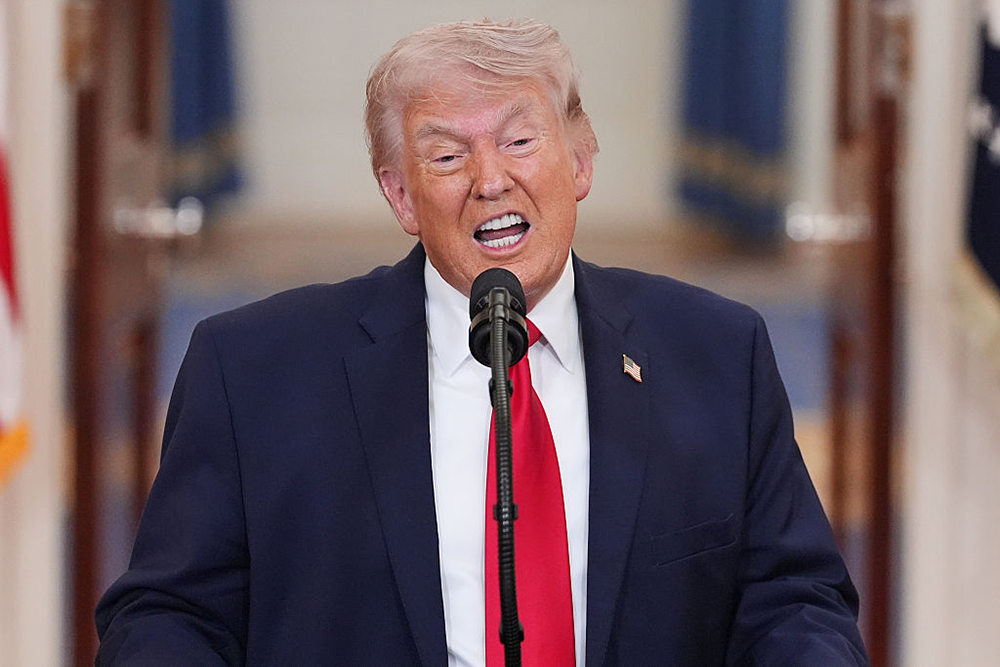
As US troops flock to danger, Donald Trump seeks ways to disentangle himself from the war on Iran. “We are on track to complete all of America’s military objectives shortly, very shortly,” he said in a 19-minute address at the start of the month. “It’s very important that we keep this conflict in perspective.”
What’s increasingly clear is that, despite its tactical successes, Operation Epic Fury is turning into a strategic quagmire and a political miscalculation. The President’s approval rating has sunk to -18 percent, the lowest in his second term. Among independents, Trump is on -45 percent, the worst recorded score of any second-term president. That is the perspective concerning the White House. This was supposed to be a jolly year, what with America’s 250th birthday. The President should be overseeing fireworks and celebrations, state ceremonies, UFC cage fights and so on.
Team Trump consoles itself with surveys that suggest voters who identify as MAGA are overwhelmingly in favor of America’s latest Middle Eastern adventure. “The CNN poll said that I’m at 100 percent,” boasted Trump recently. “And they’ve never seen that before, which is an honor. I was impressed that CNN would do that.” Why might a left-liberal network produce such a poll? Perhaps to suggest to the rest of the country that Trump’s supporters are fringe and fanatical.
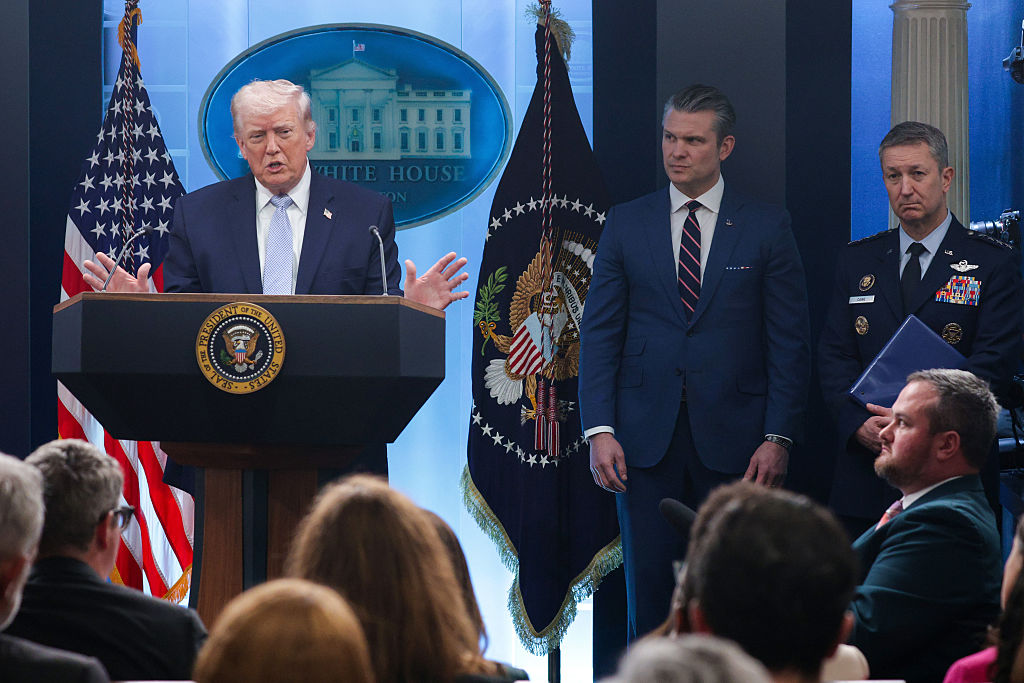
But a large number of people who voted for Trump are now unwilling to identify as MAGA, given they profoundly disagree with him on the war. A closer reading of the polls reveals that since the first strikes on Iran on February 28, the trends that give Republican strategists nightmares have accelerated.
At the start of his second administration, according to an Economist/YouGov survey, Trump enjoyed 53 percent approval among 18-year-olds – a staggeringly positive number for a Republican. Now, however, more than 60 percent of young people disapprove of Trump’s presidency. That change is mostly down to economics and a widespread feeling among the young that Trump’s so-called Golden Age has little to offer them. But the war and its knock-on effects on the economy have only exacerbated that frustration. Young people disapprove of Operation Epic Fury more than older voters, and young men in particular (the so-called “bro vote”) are abandoning Trump and his party in droves.
Another dispiriting issue for Republicans is that Latino voters, having warmed to Trump in 2024, are now turning against him at speed. A recent Fox poll showed his score among Hispanics has shrunk from 48 percent approval in December to just 28 percent today. In other words, the very voters who won the election for him in 2024 are deserting his coalition. As Commander-in-Chief in an age of acute political dissatisfaction, Trump faces all the usual incumbency headwinds. Fairly or not, voters will always blame the governing party for everything that makes them unhappy, from the economy to crime to immigration to medical care. That’s why presidents tend to suffer in mid-term elections.
But Trump, having launched a bold assault on America’s corrupt institutions in his second term, could have been in a strong position to reverse that conventional drift. His international tariff systems may have panicked Wall Street, but before last month the stock market had been making remarkable gains and various indicators suggested a coming boom. Inflation was cooling, unemployment was dipping, the manufacturing sector and real wages were growing. The White House plan was to present these signs as proof that the Golden Age was upon us.
The public may have been uncomfortable about the heavy-handedness of Immigration and Customs Enforcement under Trump 2.0, but the administration could point toward significant progress given illegal border crossings had reached an all-time low. Looking ahead to November, Republicans also had a good story to tell about Trump’s law-and-order campaign: recorded murder rates in cities are reaching historic lows. Gun assaults, carjackings and robberies are also significantly down. Yet now, as summer looms and America’s 250th birthday parties are meant to begin, Iran looks certain to dominate headlines for the rest of the year. The war has become a major international crisis that threatens to unravel Trump’s second term in the way Covid undid his first.
For all his outward war boosterism, Trump knows that yet another conflict in the Middle East is harming his legacy. That’s why he prefers to characterize Iran as a “short detour” abroad before he returns to the more important and ongoing job of Making America Great Again.
Wars are similar to pandemics in that they tend to spread and take over all government activity
But wars are similar to pandemics in that they tend to spread and take over all government activity. Trump’s America First supporters now hope that he will swallow his pride and cut his losses. But that is not as simple as declaring “mission accomplished” and suggesting, as the President does, that allies occupy the Strait of Hormuz and seize Iran’s oil.
America’s disgruntled friends in Europe and the Arabian peninsula do not have the military power to take on the fight. They are far more likely to solicit diplomatic help from China, America’s rival super power, to secure a deal with Iran that ensures energy supplies can flow through the Persian Gulf. Such an outcome would ultimately bolster Iran’s status in the region and undermine America’s basic war aims.
Even if Trump is able to pull off the deal of his life, and somehow make Tehran cave to his will, it will be extremely difficult for him to repair the political damage he has caused at home. The tragic irony will be that a President who came to power promising to undo the disastrous foreign policies of George W. Bush and Barack Obama ended up making exactly the same mistakes.
Comments