Joan didion

Olivia Nuzzi and the return of ‘celebrity journalism’

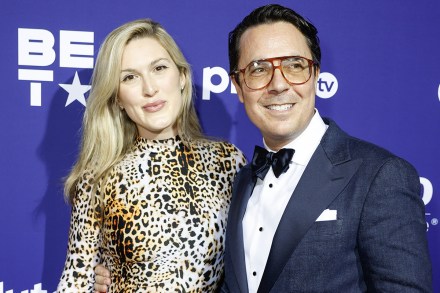
There are two competing ideas going around about “the old days” of journalism. In one, journalism was a sober public service, safeguarded by editors and ethics, untainted by the capital-A, capital-E Attention Economy. In the other, it was a racist, sexist boys’ club we managed to leave behind – even if only briefly, for long enough to support Teen Vogue’s politics vertical. (May they rest in peace.) The current pile-on concerning celebrity reporter Olivia Nuzzi, whose ex Ryan Lizza has revealed her affair with Robert F. Kennedy Jr., leans hard on the first fantasy. Once there were newsrooms; now there are “personal brands.” Once we had Walter Cronkite and Edward R. Murrow; now there is a woman in a Lana Del Rey cosplay Mustang with 1990s porn-star brows.

olivia nuzzi

Joan Didion’s unedited record of therapy is morbidly fascinating

In Notes to John, Joan Didion’s ostensibly private record of three years’ therapy under psychiatrist Dr. Roger MacKinnon – one memory troubles her a great deal. When her daughter Quintana Roo Dunne was about seven, they watched the (wholly unsuitable) Night of the Living Dead, before Didion insisted Quintana accompany her to the kitchen at midnight. She pretended to be afraid for herself, but really she worried the glass doors of the living room made Quintana vulnerable to intruders. Reading this book sometimes feels like being the imagined predator lurking in the dark: we catch only a slice of the illuminated interior, and Didion behaves as if she isn’t being seen. By the end of 1999, Quintana, who was 33, had reached a new crisis point in her struggle with alcoholism.

Didion

The thrill of being recognized

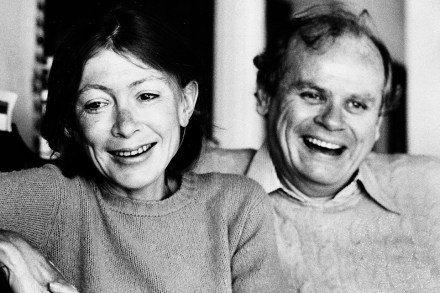
I had just left Tate Britain and was heading toward the Pimlico underground station when I noticed an attractive woman coming toward me. I smiled at her and she smiled at me. And then she stopped and said, “Are you Cosmo Landesman?” There are writers and journalists who get public recognition like this all the time. Alas, I’m not one. But I was married to one of them, and it’s a real drag having a famous partner. You have to stand there at the supermarket checkout line with a big fake smile on your face as your loved one laps up all the love from some adoring fan. Imagine how poor John Gregory Dunne must have felt being married to the very recognizable Joan Didion. Having a famous writer friend is also a bummer. Socially, you will always be in their shadow.

writers

Inside Joan Didion’s extravagant estate auction

On December 23, 2021, I left the Hollywood Roosevelt and walked down North Orange Drive to turn right and face Sunset Boulevard. It was dark when I passed the entrance to the Chateau Marmont. When I finally crossed the street to arrive at Book Soup, the “Bookseller To The Great & Infamous,” I turned to the cashier and asked if they had copies of Play It As It Lays by Joan Didion. He huffed, “Uh, yeah, we’re sold out.” Joan Didion had died earlier that day in Manhattan due to complications of Parkinson’s Disease.

joan didion

Searching for the American summer novel

I am convinced that the sweet-smelling tycoons that run candle-making companies must have read too much Proust when they were younger. With scents like “Inspire,” “Bohemia,” and “Sunny Daydream,” they cannot be aiming for something as cheap and transitory as mere tawdry olfactory pleasure. They must have become all but obsessed by À la Recherche du Temps Perdu, and be aiming for something akin to his narrator’s nostalgic odyssey upon tasting a madeleine: “and at once the vicissitudes of life had become indifferent to me, its disasters innocuous, its brevity illusory.” Rather pretentious, oui — but what other excuse can there be for a candle that proclaims it can smell like a cool library at midnight, or the depths of some dreamy reverie?

We are all still prisoners of the Sixties

In her 1970 essay “On the Morning After the Sixties,” author Joan Didion recalled a Berkeley autumn weekend seventeen years earlier when she was reading Lionel Trilling in a fraternity house instead of going to the football game, a collegiate occasion fixed in the memory of an earlier era, “so exotic as to be almost czarist.” It suggested “the extent to which the narrative on which many of us grew up no longer applies,” Didion observed in her crisp, distinctive tone. Before the Sixties, youthful elites were close enough to their patrimony to respect its intellect, energy, values and travail. Liberal guilt, such as it was, rarely went further left than Rockefeller Republican.

Joan Didion got inside all of us

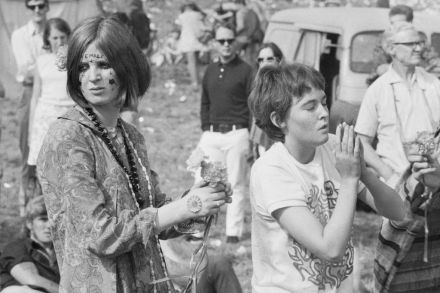
When asked what they knew about Joan Didion, a not insignificant number of people might mention her famous essay "Slouching Towards Bethlehem." It is the eponymous essay of Didion’s 1968 collection, the first non-fiction collection of her career. The essay ends with the oft-repeated description of Susan, a five-year-old in the Haight-Ashbury district of San Francisco. She wants a bicycle for Christmas, likes ice cream, Coca-Cola, and the beach — and gets high on acid. Didion describes the domestic setup, and her own discomfort: she "falter[s] at the key words" when asking her if she has other friends on drugs. Didion immortalized the scene of Sixties freedom gone wrong; there is no utopia here. Other Didion fans might be drawn to her essay "Goodbye to All That.

Bright lights, abandoned city

Joan Didion wrote that New York is a city only for the very rich, the very poor and the very young. That was in her cult classic 1967 essay ‘Goodbye To All That’, in which she created the farewell-to-New York genre. It’s a quote I carried with me through my twenties, from one grim apartment to the next, each smaller, farther out and more expensive than the last. This is simply the nature of the place, I told myself. If you don’t like it, move somewhere else. Many of us emerged from Mayor Mike Bloomberg’s luxury dictatorship in the aughts with a sense of battle fatigue.

city