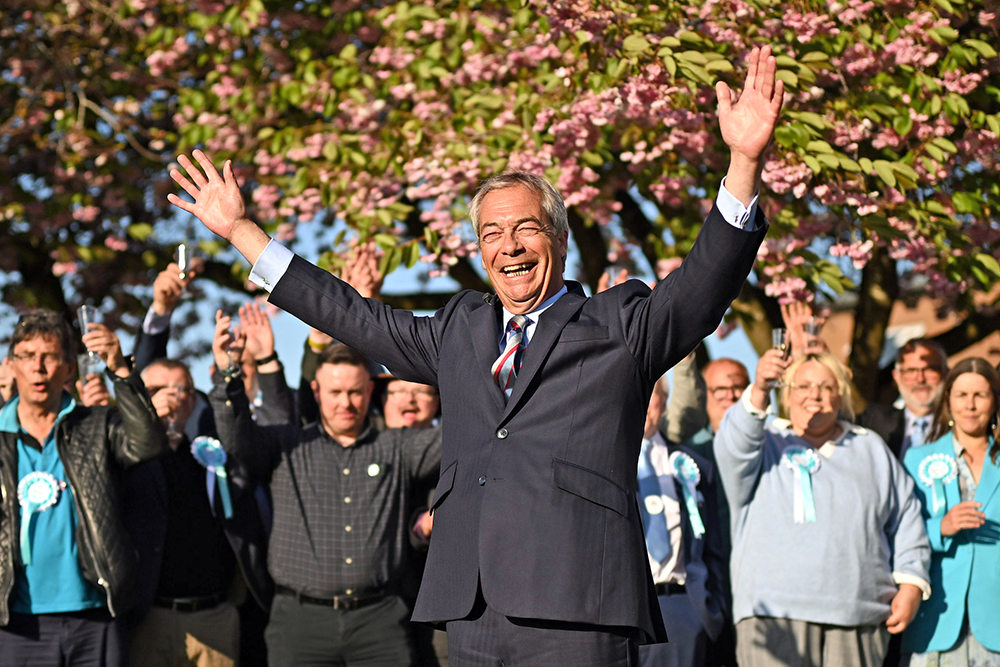
In our online edition, Danny Kruger, who is a dear man and my former employee, attacks our editor, Daniel Finkelstein and me for not joining Reform when ‘their party [he means the Conservatives] faces total extinction’. Lords Gove and Finkelstein are indeed Conservatives, but I am not a member of ‘their party’. I sit in the Lords as a ‘non-affiliated’ peer. My approach to life is definitely Tory, but not in a party sense. I would vote – if I had the vote – for any party that showed convincingly how it would govern in the light of conservative views. According to Danny, we should ‘stand barefoot in the snow’ in penitence and receive ‘absolution’ from Nigel Farage – whom he compares to Pope Gregory VII at Canossa. Then, if we are lucky, we shall be received into Reform in time for the May local elections. This is a bluff. Pope Nigel is not infallible and the chances of him leading the next government remain small. I claim no special insight in saying this: it is just the way our electoral system and related voter preferences tend to work. The opinion polls are already beginning to show this. I also think that those who insist Britain is ‘broken’ thereby establish a vested interest in proving their point. Reform is the product of anger, which I share, but anger is not the basis of good government.
As I sit writing in Westminster, yet another ‘anti-Zionist’ march is besetting Parliament, the date chosen, presumably deliberately, to follow immediately upon Holocaust Memorial Day. Danny Kruger says that I ‘scurrilously’ accuse Reform of anti-Semitism. I do not, scurrilously or otherwise. What worries me is its deferential relationship with the MAGA movement which is not, from a British point of view, patriotic. MAGA does contain growing anti-Semitic elements. Vice-President J.D. Vance carefully avoids any criticism of his media patron, Tucker Carlson, who has started opening the channels that let the poison in. American isolationism does draw on ethnic purity ideas and politicised Christianity which see Putin’s Russia as better than the decadent West. A British party which does not understand that the safety of Jews and of Israel are primary concerns for this country is blind to how these marches threaten the freedom of us all.
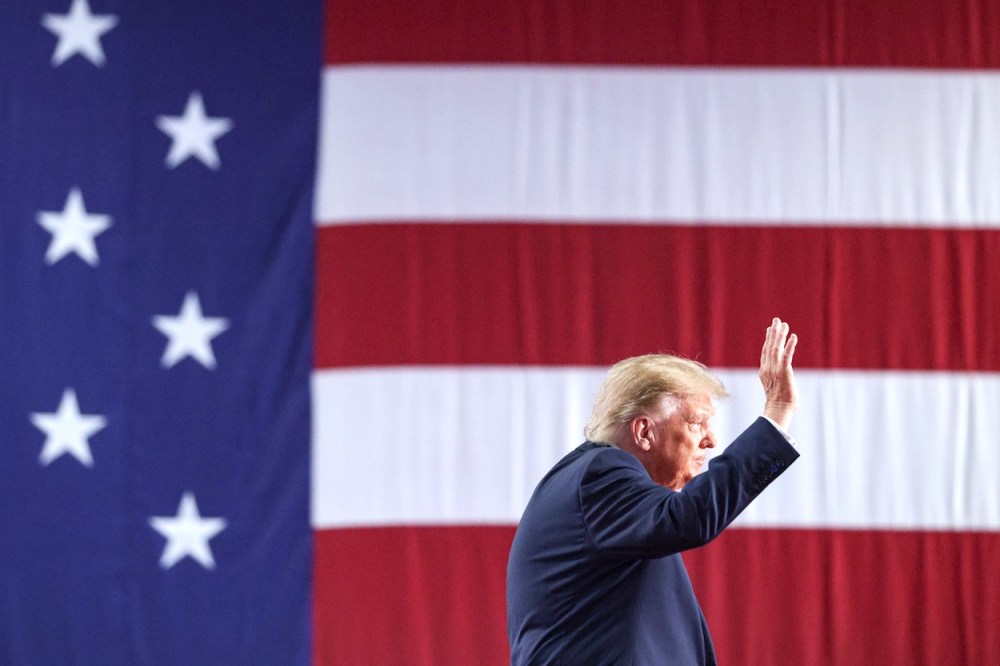
‘Psychologically, who the hell wants to defend a licence agreement or a lease?’ Donald Trump asked last week. He was speaking about his desire to own Greenland, but the answer to his question is: Sir Keir Starmer. The word ‘psychologically’ is apposite. It is not politically, diplomatically, economically or even legally necessary to give the Chagos Islands to Mauritius on a lease and then rent them back, but the idea grips Sir Keir’s mind and expresses what he calls his values. So strongly does it possess him that he seems to have pressed ahead without making sure – lawyer though he is – that his Chagos deal was compatible with our 1966 treaty with the United States. In doing so, he risks sacrificing one of Britain’s strongest cards with America, because Diego Garcia is its vital base in that vast region. He thought the risk had been averted when Trump appeared to let it through last May, but what can he do now that the President publicly denounces it? Psychologically, Trump is the polar opposite of Starmer: ownership is his key concept. What a culture clash over a far-flung atoll. Unless Sir Keir can suborn the Liberal Democrats, until now stout defenders of the Chagossian rights that the Mauritius deal ignores, he will lose the necessary vote in the Lords. Psychologically, how far will he want to go after that?
Speaking of polar opposites, will Trump, baulked in the Arctic, turn his gaze to the Antarctic? He loves President Milei of Argentina: the two men have met 15 times and Trump has recently put him on his exciting new Board of Peace. So far, Milei has been admirably restrained about his country’s claims to the Falkland Islands, but they remain in the Argentine constitution. Suppose Trump, spotting the weakness of the Antarctic Treaty and the increasing presence of China in the region, became attracted to the rich mineral resources of the Falklands (one of only five gateways to the Antarctic) and teamed up with Milei to exploit them and fight off Chinese expansionism. He recently proposed to buy out all 50,000-plus Greenlanders. He might believe he could manage it easily enough with only 3,500 Falkland Islanders. Might an emboldened Argentina then revive ownership ideas and drive Sir Keir to suggest a leaseback instead? That idea did not play so well when last suggested by British politicians in 1980, but Sir Keir may not know that lesson of history.
I am sorry Amol Rajan is leaving the Today programme. When he took up the post, I criticised him for his street-smart south London accent which simultaneously sounds know-all and know-nothing (and is hard to understand because it swallows words). But he improved fast on the programme, giving evidence of an inquiring mind. His early leaving (he is 42) has brought up the old argument about accents. Current ‘our BBC’ advertisements, in thrall to diversity, make much of every regional accent they can muster. But what one wants from a national broadcasting service privileged by unique funding is clarity and authority, especially in news. Therefore a well-enunciated, well-educated voice is best. This does not have to be English posh. The accent can, for example, be from Edinburgh or the Western Highlands, but probably not from Glasgow or the Eastern Highlands, whose vowels confuse outsiders. It must dispose listeners to believe it. Funny of the BBC not to notice that it still employs the greatest ever success of just such a voice – that of David Attenborough. This week, Mark Tully, once the Corporation’s most warmly authoritative foreign reporter, died. His voice was part of his success. Of course the BBC eventually fell out with him.






Comments