Since the 1990s it has been acknowledged that our culture has become unduly concerned with risk and obsessed with the possibility of danger. More recently, however, there has emerged a realisation that this ‘health and safety’ fixation has been counter-productive and corrosive.
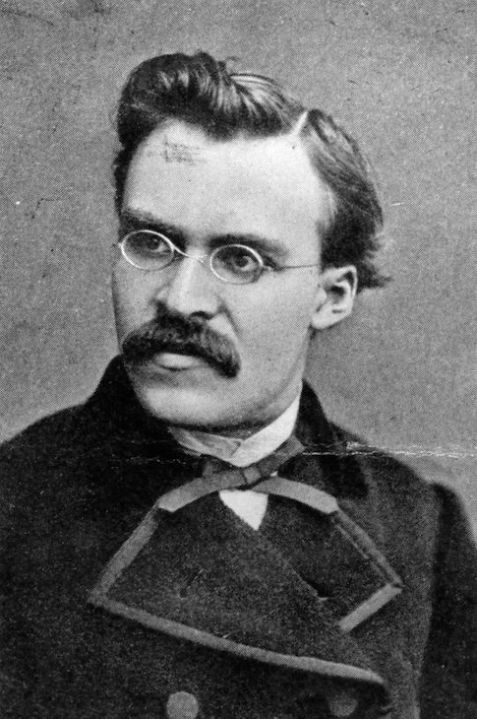
Nietzsche’s psychological philosophy has percolated down the ages, overtly or in evolved form
The diffusion of the precautionary principle in regard to science has stifled progress: look at the EU’s irrational hostility to genetically modified foods. But this mania has also had a general infantilising effect: consider governmental advice last month that drinking coffee which is too hot might scald your tongue. This safety first mentality has rendered countless numbers of children unprepared for the necessary challenges of adult life.
Starting from the turn of the millennium, the generations raised by ‘helicopter parents’, in a society over-alert to ‘stranger danger’, in a culture which has emphasised fragility and pathologised normal human feelings, have grown up to become the neurotic and reclusive young adults of today, perpetually afflicted by ‘mental health’ problems. Those at the older end of this spectrum and beyond became the politicians whose panicked, disproportionate and draconian response to the Covid-19 pandemic was the product of this culture of fear and unreasonable aversion to risk.
Mainstream society has for years been reluctant to heed counsel from wiser heads, who have always said that risk and the threat of danger are ineluctable facts of life, and that many of the plights faced by humanity have no ‘solution’. Now, finally, a quiet reversal has emerged in the unlikely avenue of self-help literature.
The success of books such as The Courage To Be Disliked, the enduring popularity of Don’t Sweat The Small Stuff, and the recent smash-hit The Let Them Theory suggests that at least this industry and its vast audience have re-discovered something our forefathers just accepted: that life is a scary and a struggle, that nothing is easy, that you must do what you know to be right and not be distracted or swayed by the judgment others, and that happiness is not a goal, only the consequence of hard work and perseverance.

Researchers in academia are now coming to agree. According to findings reported this week by staff at the University of Exeter and the University of British Columbia, children who are allowed the opportunity to take risks and dabble with danger have better physical and mental health as well as improved social and cognitive development. Their analysis of 74 studies from across the world concluded that three- to twelve-year-olds permitted to do ‘thrilling and exiting’ activities, such as ride a bike fast downhill or climb a tree, or are even just allowed to walk to school unsupervised, become fitter and more independent than their mollycoddled equivalents who are walled up at home, glued to their screens.
Yet long before academics told us of the benefits of taking risks, and self-help books advised us to confront life’s necessary challenges, Friedrich Nietzsche was exhorting his readers to overcome others and themselves. His proposed archetype for mankind, his Übermensch, has reached his elevated state of being through mastering his inner impulses, embracing danger and hostility, living through it, and coming out the other side stronger.
As the title of the best-known, most important and most consequential book on him and his work, Nietzsche: Philosopher, Psychologist, Antichrist by Walter Kaufmann, first published in 1950, intimated in its subtitle, Nietzsche was as much a psychologist as he was a philosopher, whose oeuvre addressed the inevitable travails of existence. He was one of the first self-help gurus, and he was much writing for his own benefit as he that of the public’s, in that life was hard-going for this loner plagued by illness and haunted by failure.
It’s no coincidence that this author, distressed that all of his books were commercial flops, and despairing of being invisible to his peers – ‘all these years no comfort, no drop of human sympathy, not a breath of love’, he wailed in one letter of 1888, the last full sane year of his life – also believed it imperative to remind himself, as much as his tiny readership, that ‘what doesn’t kill me makes me stronger’, of the need to ‘live dangerously’.
If those maxims have a ring of familiarity about them, it’s because Nietzsche’s psychological philosophy has percolated down the ages, overtly or in evolved form. ‘How One Becomes What One Is’, the subtitle of his autobiography Ecce Homo, has similarly been refashioned as today’s perpetual and popular entreaty, to ‘become the best version of yourself.’
It seems that his message, that danger and risk are intrinsic to being human, is also now finally beginning to get through. As he might have put it himself, in the title of another modern-day book that still sells vast quantities: ‘feel the fear and do it anyway’.





Comments