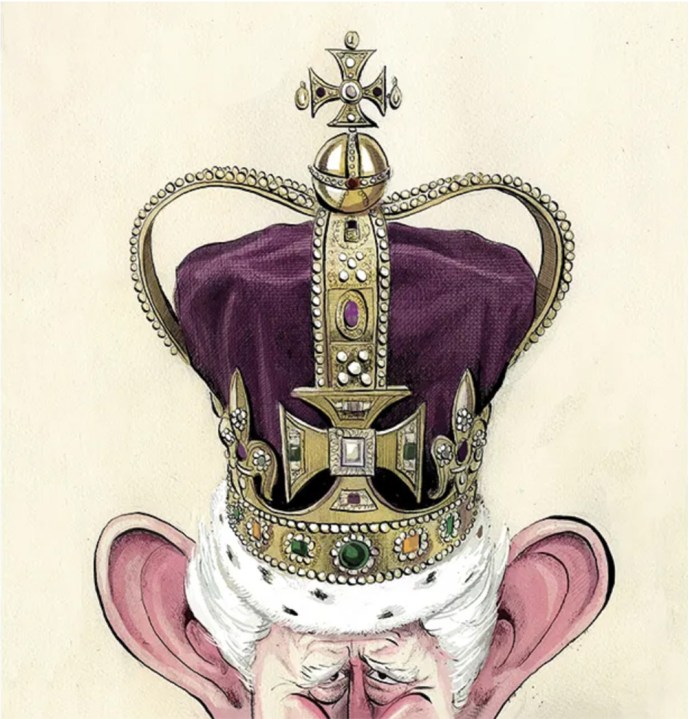


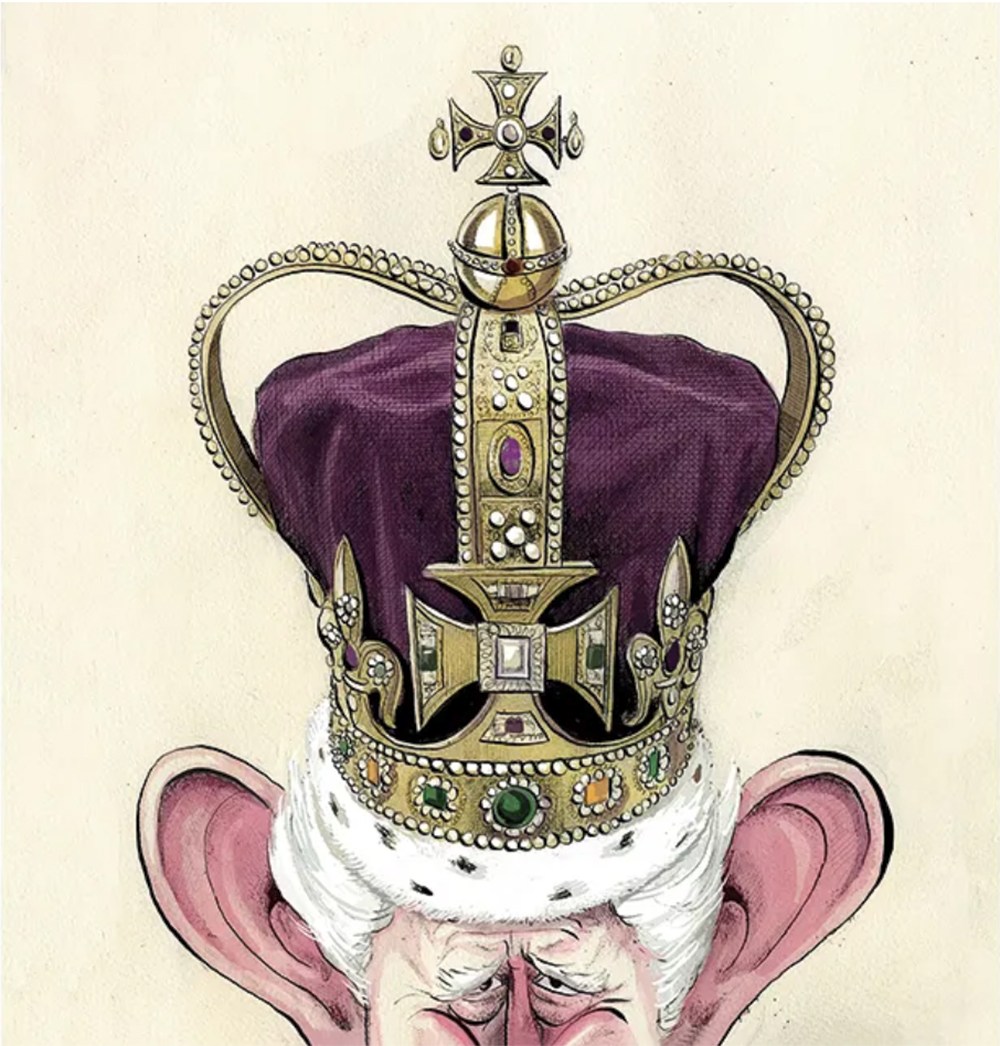
One of the drawbacks of being a Tory peer is that when I’m asked to give a talk or participate in a debate I’m no longer offered a fee. Before I was ennobled, I could expect some honorarium, even if it was a cursory amount. But as a Conservative ‘politician’, I’m supposed to be grateful for any opportunity to thump the tub. So I almost always say no.
But I agreed to speak in a debate at the Edinburgh Union because my youngest son is due to go to the university next year and I thought it would be a good opportunity for a father-and-son trip as well as a chance to introduce him to the city. I also wanted to support the Union, which, in spite of dating back to 1889, stopped prioritising regular debates after becoming the Edinburgh University Students’ Association in the 1970s. The original debating society was revived last year under the motto ‘Discussing What Divides’ and needs support if it’s to re-establish itself at the heart of the student experience.
I was on a hiding to nothing, given that only a minority of youngsters support the monarchy
The motion, which I’d agreed to oppose, was ‘This house would abolish the monarchy’, so I was on a hiding to nothing. Polling evidence suggests only a minority of 18- to 24-year-olds support the institution and I faced two additional disadvantages: this was in Scotland, where some of the locals think they’ve been ‘colonised’ by England, and it was in the same week that Charles Spencer launched his blistering attack on the King. Which may be why my son, having accepted the invitation, asked if he could be excused from the debate so he could meet up with some friends instead. ‘Let’s face it, it isn’t going to be pretty,’ he said. ‘Watching you being humiliated isn’t my idea of a fun night out.’
I insisted, because one of the points of the trip was so he could see the debating society in action. Who knows, he might even want to join? In any event, it would all be over by 9 p.m. so he could meet his pals then. But that inevitably raised the stakes: I now wanted to prove him wrong by holding up my end in the debate.
The lead speaker for the motion was Graham Smith, the CEO of a republican campaign group who was arrested for protesting at the King’s Coronation (although later released without charge); and alongside me was Meghan Gallacher, an MSP and ex-deputy leader of the Scottish Conservatives. There were also student speakers on both sides, and the debate ended with a Q&A. The participants were good-humoured and polite.
I spoke last, which gave me an opportunity to respond to the other side’s arguments. These were fairly predictable: it’s indefensible to have a hereditary rather than elected head of state in a democracy; the monarchy is a symbol of class privilege and in-equality and helps to perpetuate those injustices; the Sovereign Grant costs taxpayers £138 million a year and it’s implausible to claim the Treasury recoups this from tourist revenue; and the royal family has proved itself unworthy of its exalted status by misbehaving, although mercifully no one brought up Spencer’s book.
I did my best to rebut these charges. A democratically elected head of state would inevitably be linked to a political party and struggle to represent the whole country when performing the monarch’s roles as commander-in-chief, head of the Church of England and the font of all honours; there’s no reason to think the UK would become a more equal society if we abolished the monarchy, given that republics (the US, Brazil, Chile, Colombia, Mexico, South Africa) are typically characterised by greater inequality than constitutional monarchies (the UK, Sweden, Norway, Denmark, Belgium, the Netherlands); the Sovereign Grant is 12 per cent of the annual profits handed over to the Treasury by the Crown Estate and there’s no guarantee the land would default to state ownership if the monarchy was abolished; and the great benefit of a constitutional monarchy is that however bad the present incumbent is – and both Meghan and I robustly defended the King – there’s always another waiting in the wings.
My best argument was that we can’t do away with the monarchy without a referendum, and that would have to be followed by a lengthy commission to decide on how to choose a president, what their powers should be, what implications an elected head of state would have for parliamentary sovereignty etc. Given that the country is imperilled on so many fronts, it would make little sense to embark on a protracted and divisive bout of constitutional navel-gazing.
We lost by 65 votes to 23, so not a total rout. As I watched my son dis-appear into the night, I hoped he didn’t feel too ashamed.






Comments