
Dante’s Beach, Ravenna
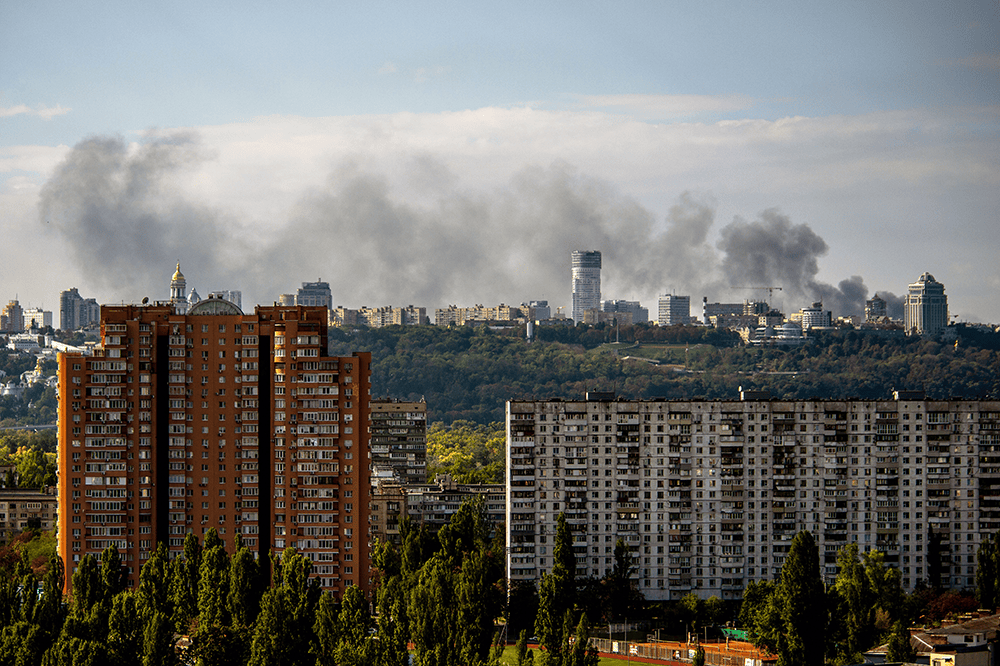
I opened the WhatsApp message and read: ‘Massed missile and drone warning. About eighth since I’ve been here. I’m deep underground.’ It was from my old friend James. ‘They organise camping stools in the metro,’ he added.
He was in Kyiv, where he had first gone in 1997 with his acoustic guitar and electronic keyboard and where he had met his future wife, Svetlana, who lived in distant Kharkiv. Their romance blossomed in Gurzuf on the Black Sea, where Chekhov had a house, and where they met up four times that summer.
They moved first to Bratislava on the Danube where he founded a magazine. They then moved on to a small town just over the border in Austria, where he dabbled in property and they still live. They have three children.
Later that day, he sent me another message: ‘Saturday night – the beautiful people massed in the pavement cafés of Yaroslaviv Val, Kyiv. There’s an ongoing massed drone attack. Do they care! Life is to be lived. Just an extraordinary atmosphere.’
I was at school in Canterbury with James. After university we lived in a squat together off the Walworth Road. He had been a choral scholar at New College, Oxford and I had read history at Gonville & Caius, Cambridge, and yet there we both were like Withnail and I, deep in the heart of nowhere.
Years later, I was his best man when he married Svetlana in Canterbury Cathedral and in my speech at the reception I did my best to shout the traditional Ukrainian wedding toast ‘Гірко!’ which is the order for the bride and groom to kiss and turn what is bitter sweet.
From south London, James went first much further south, to Sienna, and then Madrid, and from there to Toulouse, but found neither love nor success so he changed direction and went east to Kyiv. Back in the 1990s Kyiv was like a frontier town in the old Wild West, where anything was possible. There, he found ‘joy’ perhaps for the first time.
These days James goes back there frequently to hand over medical supplies he has crowd-funded to the resistance against the Russian regime and because he is writing a biography of the mighty Dnieper that cuts through the heart of the country he loves. I edited the first draft and it is bloody good.
Three short bits of writing about his trip this time soon reached me by email. The first described the train journey to Kyiv. His eldest daughter had refused to let him take the usual train across the border from Poland because of the recent drone attack that had narrowly missed the train carrying foreign dignitaries such as Boris Johnson. So he crossed from Slovakia instead. Due to a threatened drone attack, his train stopped just outside Kyiv to wait for the all clear.
He writes: ‘09.00. Everyone in our train abruptly stands up, hands folded in front of them. Over the speaker, an electronic clock chimes the seconds. An image – a lighted candle – appears on my Telegram channel tracking ongoing attacks. Every morning, the whole nation pauses for one minute of silence. We remember the fallen. We honour the victims of this war. Forty minutes later we edge into the central station.’
Incroyable! Such passion, such patriotism. I was also struck by his use of the word ‘we’. I’ve lived in Italy for nearly 30 years and am married to an Italian. But I do not feel Italian. Yet he feels Ukrainian. Then again, wouldn’t I feel Italian if Italy were under similar attack?
In his second piece, he says that once inside his hotel bedroom in central Kyiv, he vows to evacuate to the metro as soon as the next missile/drone attack alert arrives with a ‘ping’ on the dedicated app on his phone.
He writes: ‘PING. I’m out of bed and dressed in 20 seconds, out of the hotel in 45 seconds… On a concealed bench, lovers kissing, entwined. It’s Saturday night – they defy the curfew – they’ll defy the missiles. I make it to the metro, skip down the stairs to the first level of safety – almost no one there – just a cleaner. She indicates to me to descend the escalator.’ He goes back to the hotel and ignores subsequent alerts. ‘I dream through them all, wake up to the ongoing drone attack, but I’m damned if that’s going to stop me going out for a hearty breakfast.’
In his last piece, he describes the death-defying devil-may-care defiance of young Ukrainians as he joins them in the packed pavement bars and restaurants of central Ukraine on a late summer’s Saturday night.‘For now, no one’s checking their Telegram alert channel. What’s the point? There’s an ongoing alert. Only question is: are they drones or missiles? Cruise or ballistic? Whichever way, the young crowd thronging the streets don’t care. Damn the war!’
He wonders why he keeps coming back to this ancient city and answers: ‘Threading through the Saturday evening throng, drones prowling nearby streets, I feel it, the ultimate rush; life in the raw to be lived, loved, treasured, grasped for a fleeting instant like a wild bird trembling, momentarily stilled in flight, then let go.’
But then James fell silent. I began to fear the worst. And so after three days, one evening last week, I rang him on WhatsApp. He answered and I said: ‘Where are you?’ ‘Back in Austria,’ he replied, cool as a cucumber. So we then spent five hours, 32 minutes and 25 seconds talking about this and that with the help of a drink or two.




Comments