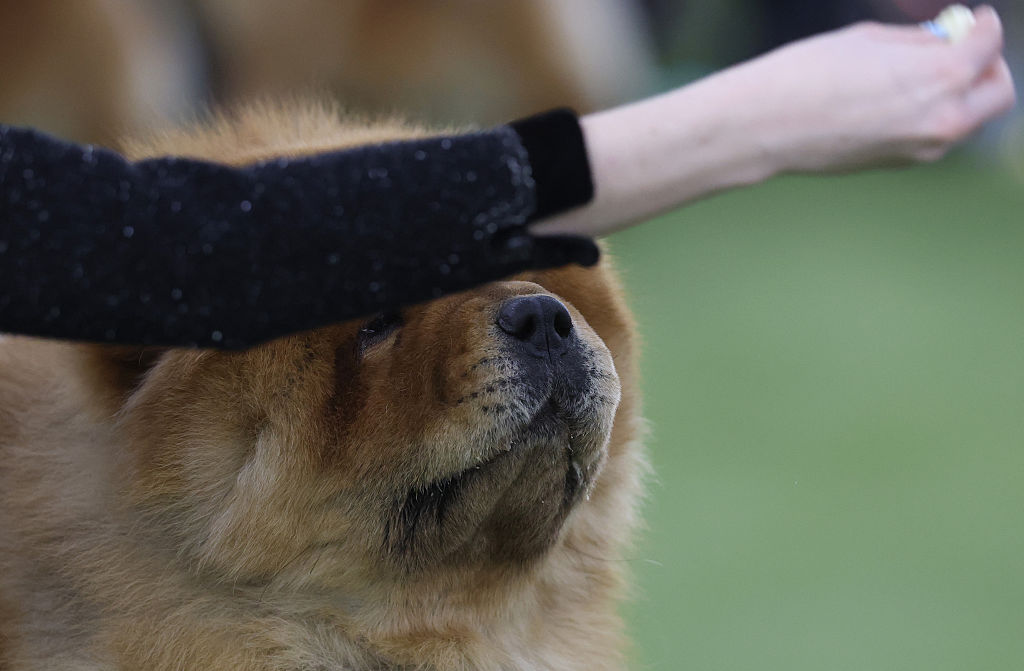

Even if you’re not a dog expert, you probably know enough to laugh at the breed of my resident barn dog.
Chow Chows are not exactly cooperative, and while they are bred as territorial guard dogs, their cat-like laziness makes them, at best, capriciously protective of their owner. These little balls of fur are, however, pretty damn cute. My three-year-old, Winnie, embodies all of these traits – or at least she did as a puppy, with the occasional tendency to regress. But growing up around horses on an unfenced property shaped her more than any innate breed characteristics. Having owned pretty much all the conventional breeds, I can safely say she’s now more or less exactly what you look for in a farm dog.
Chows are effectively oversized cats with an aggressive streak
The prerequisite for any good farm dog is loyal attachment to both the family and the animals. They should stay by your side and prefer your company, and react kindly to any person or animal you show familiarity with. It’s what we call a “front-seat dog,” a first-tier companion who often literally sits shotgun on rides around the farm. The last thing you need is an aloof dog who wanders off; that’s what the cats are for (they at least control the mouse population).
As long as the dog is naturally bonded, there’s nothing you can’t train: dependability and obedience go hand in hand. A farm dog isn’t a show dog, but it does need to know the basics if only for its own safety: it must come when called, stay where put and roam only within given boundaries.
Jack Russells, while great for ratting on a hunt, don’t seem to realize that horses are bigger than them. One of our Jack Russell puppies had a deeply unfortunate run-in with the Irish Warmblood stallion my parents brought back from their honeymoon in Galway. The most trainable farm dogs we ever owned were collies: always by your side, but never underfoot. There was no dog more fun to ride with than our border collie Luke. No matter how far ahead he got, he would circle back when called.
Protectiveness is an important trait as well – but with a caveat. You don’t want a dog that is too aggressive, too excitable or too anxiously attached. Aggression is an obvious liability. The dog must be able to differentiate between threat and friendly stranger. An overly excited or anxious dog might not pose the same liability, but they can be a hassle. Too excitable, and they scare the animals they’re meant to be watching over; too anxious, and you find yourself serving their needs rather than the other way around. You want a dog that is comfortably independent.
My father bred German Shepherds for decades, and they were the only barn dogs we ever had that lived on the farm full-time. My millennial sensibilities could never abide a dog not being allowed in the house but I do admit that the few robbery attempts we experienced over the years would have been much worse if the shepherds were not outside guarding the property. And almost40 years later, my father’s favorite story to tell is still how his prize shepherd, Sly, scared off my sister’s handsy boyfriend behind the barn.
Chows typically possess none of these critical traits. They’re effectively oversized cats with an aggressive streak, showing both affection and protectiveness sparingly and only on their own terms. With Winnie, we did everything right in the early days – socialization in town and country, rigorous obedience training at home and “boot camp.” It never really stuck, and it’s still a miracle if she sits when told to.
And yet, despite all the effort, the best training was just doing nothing at all. Winnie has learned and adapted to farm life on her own terms just by following me around while I learned to relax and trust that nothing terrible would happen. I eventually accepted she’s too lazy to run off anyway. She’ll never be fun to ride with, and I probably wouldn’t trust her to save my life. But she’ll always look cute as hell curled up in the hay while I go about my business.
Comments