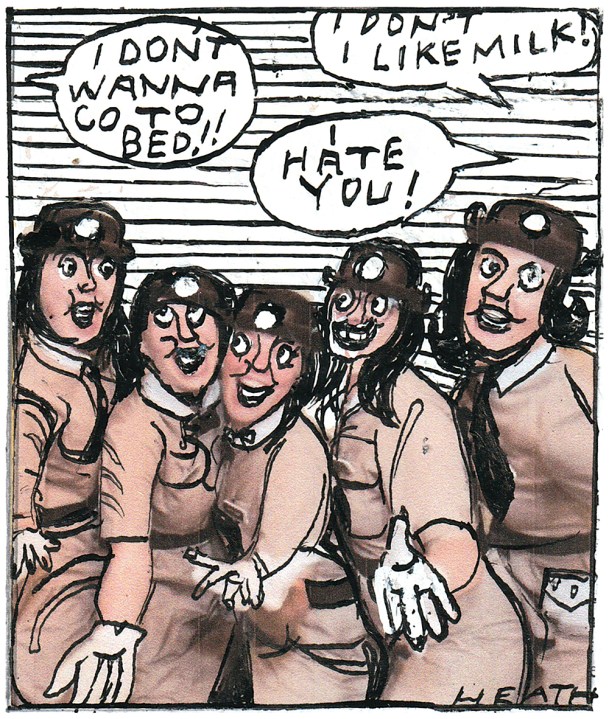


Ah, nannies. Never did a more divisive word exist in the English language, inflected as it is with class, family and the bogeyman of the bad mother. Did you have a kindly nanny as Jacob Rees-Mogg did? Perhaps you lament the loss of the malleable pre-Brexit au pair who flirted while she did the washing-up? Or do you employ one for each child as Boris and Carrie Johnson reputedly do? Whatever your position – and you no doubt have one – someone, somewhere will disagree with it.
Literary nannies of yore – Mary Poppins, Brideshead’s Nanny Hawkins, even Nana the Newfoundland canine iteration in Peter Pan – no longer exist. Instead, contemporary fiction is inhabited by women who probe the murky emotional labour of childcare, such as the nameless narrator in K. Chiucarello’s Nanny Nanny. Real-life nannies of the old school are gone too; Gina Ford is classed as cruel, her books on routine burning in the embers of the nursery grate. Lovely horsey royal nanny Tiggy Legge-Bourke is an anachronism. In the age of ‘intensive parenting’, the nanny as moral barometer of the nuclear household, jokingly teased by Mr Banks as he returns from the office, is redundant. Rather, the modern nanny for our times has morphed from invisibility to visibility, from domestic secret to status symbol.
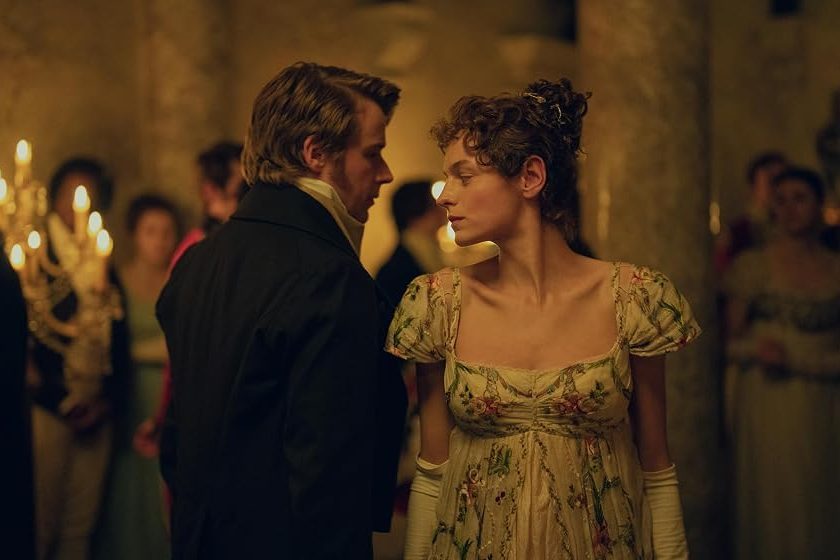
Take any given hedge funder or private equity tycoon who wouldn’t dream of boarding a plane to New York or even going out to lunch without a nanny for each child. Or the nannies who prowl children’s birthday parties, videoing their charges from black Range Rovers to appease their employers. Of course, we have always expected this of the Kardashian class (Ms Kardashian is reputed to have employed five nannies to care for her four children and Beyoncé six for her twins and two for their older child). Cultural creep, however, has set in: the nanny has left the nursery. What is more, she wants you to see her. Employers also want to flaunt their nanny harem. The next time you find yourself in Colbert on Sloane Square or Daylesford in Oxfordshire, examine the seating arrangements of that large group more closely. There are two not-so-adjoining tables manned by young, attractive women for a reason.
Whereas once the nanny was an open secret – the abnegation of maternal responsibility writ large – now she is the ultimate wealth-flex; a sign of care and status investment. And investment is certainly the operative word. In July, the Financial Times reported that the annual cost of hiring a full-time nanny in the Home Counties has reached £60,000 for the first time. Last month, the FT subsequently reported that your ‘nanny annexe’ needs to be up to scratch to get a nanny even to consider your job offer.
All of which raises the very good question of what the nannies, employed at eye-watering expense, are doing all day. Far from what Virginia Woolf might have called the ‘nondescript cotton wool’ of domestic life, the modern nanny is concerned with issues of sensitivity and special needs. Norland Nannies, once the uniformed preserve of the ‘fresh air and an early bedtime’ brigade, are now trained in diversity and inclusion. They must learn Makaton, a sign language deployed to ‘support the development of essential communication skills’ and Brazelton, a method of ‘understanding newborn behaviour’. If that all sounds about as useful as trying to communicate with a panda, then be aware that a Norland Nanny is also trained in self-defence and skid-pan driving lest they find themselves in literal danger, or chased by paparazzi, en route to Monkey Music. Now the world’s first nanny university since September of this year, Norland is cannily responding to a market where the nanny, not the parent, knows best.
Your ‘nanny annexe’ needs to be up to scratch to get a nanny even to consider your job offer
I employed a nanny once. Having paid a large sum of money to a recruitment agency in Oxfordshire, I was sent several applicants keen to flex their diplomas in ‘early years childcare’ and woolier notions of ‘psychology’. When I enquired about the possibility of ironing, loading the dishwasher or dealing with the growing pile of children’s pants in the utility room, I was quickly set straight. Eventually, a middle-aged woman was found through an informal network and so began one of the most stressful years of my life.
Not living in a house the size of Chatsworth where the children and nanny could be consigned to a separate wing, I frequently found myself in the hostage position of listening to my children scream from the playroom while hiding in an upstairs bedroom trying to write. When I went out (usually via a drainpipe so as not to be spotted) long WhatsApp voice notes detailing every indignity of the toddler’s day appeared in alarming banners on my phone while my elder daughter hacked into her father’s iPad to send messages such as ‘COME BACK NOW NAUGHTEE’.
In attempting to clone myself, I had unwittingly entered a trap of my own making. For the versions of ‘Mummy’ were never quite enough. Maybe I simply went wrong at the recruitment stage by demanding only one hologram of myself. Next time, I’ll ask for multiple nannies, and no one will notice me slip off.





Comments