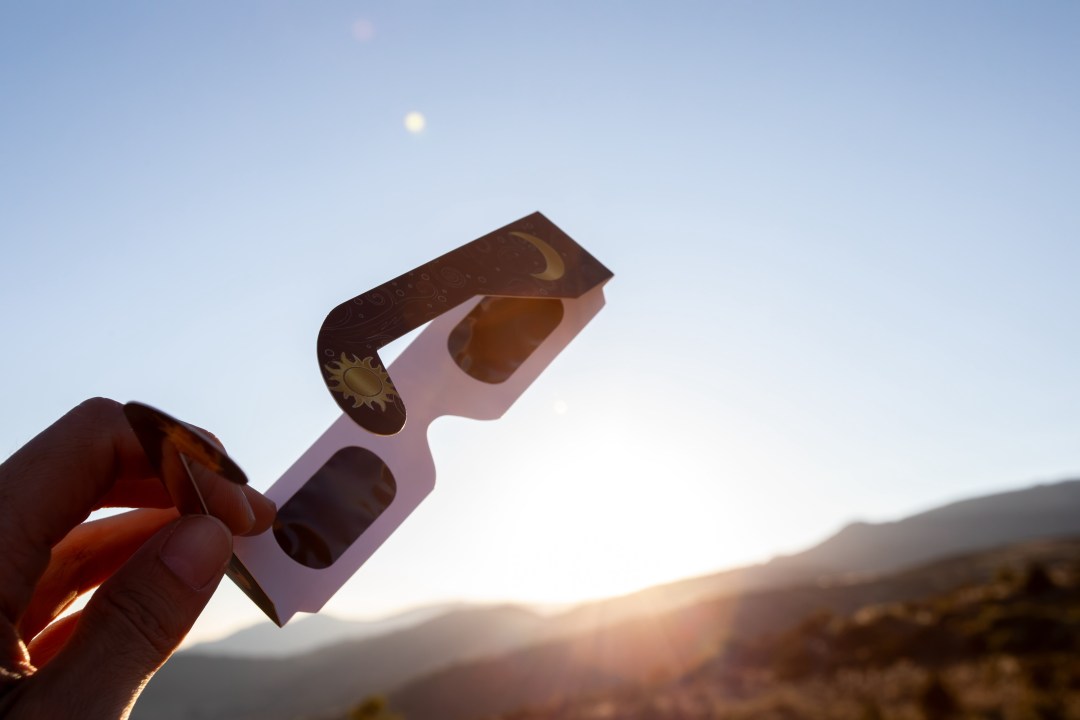
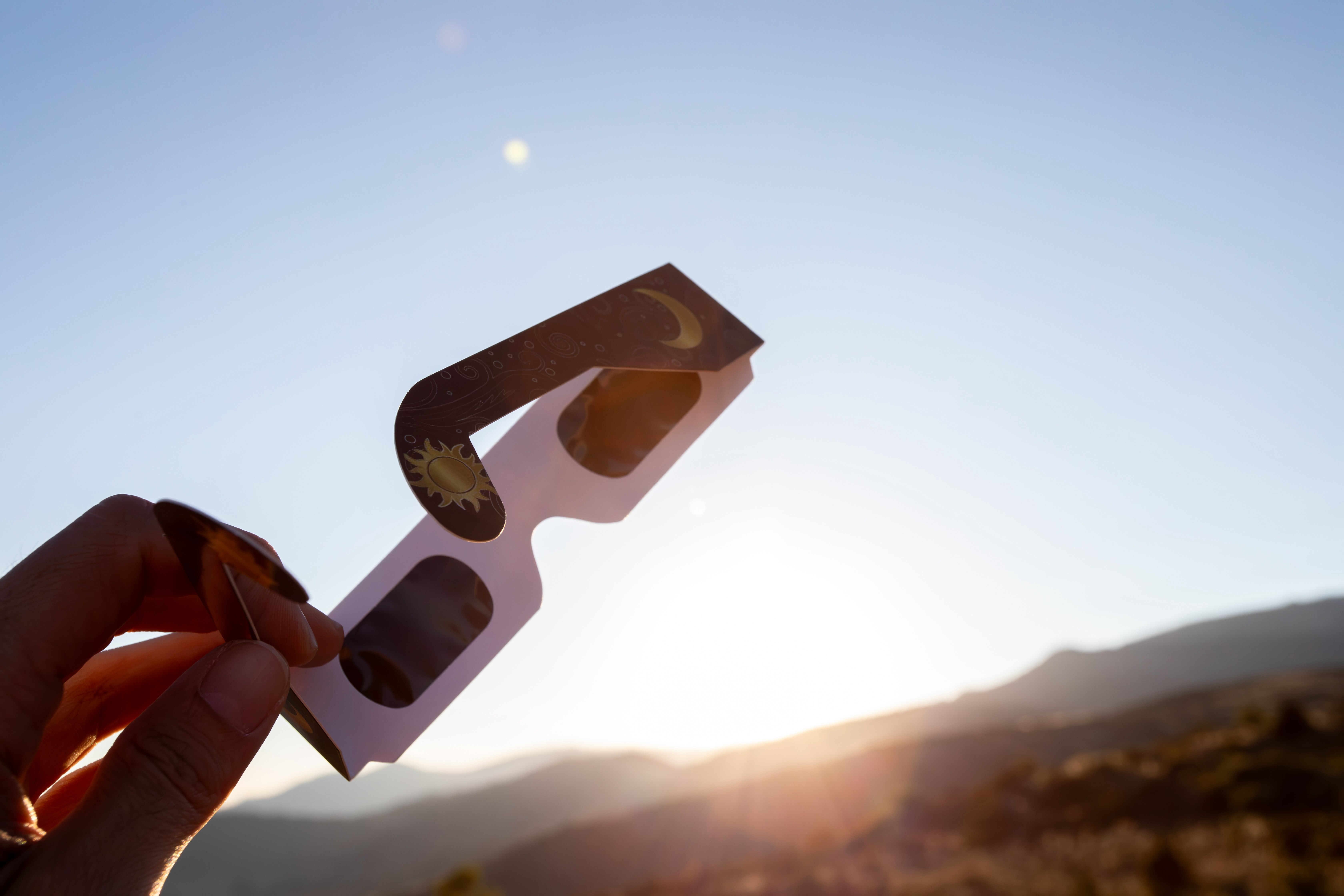
Eclipse chasing is a bizarre hobby, since there is no mystery regarding the whereabouts of the quarry. The date, time, and place for the one this week has been known about for centuries. That didn’t stop busloads of self-pronounced eclipse chasers descending on the small Spanish resort of Peniscola, however. As the day approached, the overriding emotion was relief that we all weren’t in Iceland, (with Spain, the other main site for totality), which was predicted to have a particularly poor day, weatherwise. Clouds are a fatal impediment for a total eclipse.

‘Look at the forecast for Reykjavik,’ said Steve Moss with unalloyed schadenfreude. Moss and his wife Muriel Bouvier were hoping to enjoy their fourth total eclipse and had taken us along for the ride. The couple has enjoyed totality, in France (1999), Oregon (2017) and Montreal (2024).
Which one was best? Do they differ? Moss considered this. ‘Well, we were just curious, the first time,’ interjected Muriel. ‘But once we had experienced the first, we were hooked. It’s like having a fantastic meal. You want to have another one.’ How about travelling the world to see a partial eclipse? ‘I would view a Partial Eclipse as being relatively uninteresting,’ snorted Moss. It’s the Corona or nothing, for proper hunters.
Humans act in odd ways during a solar eclipse. Historically, this includes full nudity, bathing in sacred water or praying to the Inca sun god (as deployed by Hergé for the climactic moment in the Tintin adventure Prisoners of the Sun). These days, the phenomenon calls for mass expression perhaps allied to national character. ‘In Montreal, people clapped,’ said Moss. ‘In Oregon, they shot guns into the air.’ Incidentally, the 2017 eclipse, which streaked across the States, has been the one popularly credited with creating ‘eclipse tourism’. Forget bathing in sacred waters, or even nudity. These days, the activity of the moon, 238,855 miles away is not worshipped but monetised.
Three hours before totality, eclipse experts were nervously gathering in central Peniscola where a large car park had been designated an Official Eclipse Viewing Site. Six young engineers from Montreal (previous eclipses: one) cheerily assured me that although they were fully expecting 20 per cent cloud cover, this was no Iceland. ‘We’ve taken three weeks of vacation in order to have one minute of totality, but hey! This is a bigger thing than us,’ chirped one.
These days, the activity of the moon is not worshipped but monetised
Heidi and Rudi Walker from Freiburg, (previous eclipses: four), were anxiously consulting the CloudSpotter app. They had been to the Official Site the day before and had already marked out the best possible place with a sunset app. ‘The line goes from the sun to the moon, then between that lamppost and that motorbike,’ said Rudi, brandishing a compass and pointing a confident finger. We decided to stand next to them, on the lazy assumption that Germans don’t tend to get measurements wrong. ‘To see the black sun,’ murmured Heidi, shaking her head; ‘when you have done it once you have to do it again.’
Next to them, Josef Janisch, from Graz in Austria was busy organising a professional-looking camera on a tripod. ‘I have waited 26 years for this,’ he said in a quavery voice. He opened a plastic case and produced a special black filter he had made for the moment. ‘I used a 3D printer. Took me about six tries but now I can just pop it on. I will photograph totality.’ His confidence was alarming. But then, here are no second chances with totality.
Beside him, a toothless Frenchman (previous eclipses: three) was standing with a telescope. How did he feel about the impending moment? He shrugged. ‘Angoisse. It is like la fin du monde’ he said. ‘Maybe one will have to lie down on a bed.’ Told you, national character.
And so the terrifying moment approached, at the predicted time. The sun, already partially eclipsed, moved out from the clouds and into a perfectly clear sky. The crowd clapped and cheered, as if to let it know it had justified everyone’s travel expenses, then people started to count down, and gasp as the brightness grew less and less. Then, totality. The moon slotted perfectly in front of the sun. Babies cried. Dogs barked. The wind whistled around.
Everyone threw their solar eclipse glasses to the ground and looked at the black sun unguarded. Two thousand phones were raised in homage. People embraced. Josef popped on his home-made filter. He cried. I cried. He glanced at my husband, then looked at me very formally. ‘May I please hug you?’
The Frenchman looked very happy. ‘Ce n’est pas tous les jours,‘ he opined. As for Steve and Muriel? They’ve already booked up for August 2, 2027, Tunisia. We’re going with them.



Comments