Fire is a leveller
Sir: It was disappointing to read Fin Taylor’s Diary (26 September) in which he reflected upon feeling a ‘tinge of satisfaction’ at the California wildfires. He made the rather sweeping statement that Californians believe they live beyond the laws of nature, and that those affected are so rich that it is of no consequence.
In fact, the fires at Pacific Palisades affected the whole community. Near to us, a children’s day centre, largely used by low-income families, was completely lost. Our local Ralph’s supermarket burned to the ground with dozens of jobs lost. Landscapers, gardeners, waiters, domestic workers all lost their livelihoods. Whether a billionaire or working for $20 an hour, the merciless devastation touched everyone.
Terence Dackombe
Topanga, CA
Canadian friends
Sir: It was touching to read of Peter Hitchens’s affection for Canada following his disenchantment with the USA (‘Swing state’, 19 September). But he is far from being the first Brit to make this particular North American journey. In the wake of America’s War of Independence, the former colonies were no place for ‘loyalists’ – the term then used for settlers who backed the Crown between 1775 and 1783. As well as suffering political isolation, loyalists had their property confiscated and lives threatened by victorious and vengeful rebels. As a result, thousands of persecuted Anglophiles sought asylum in the new northern settlements of Nova Scotia, New Brunswick and Prince Edward Island.
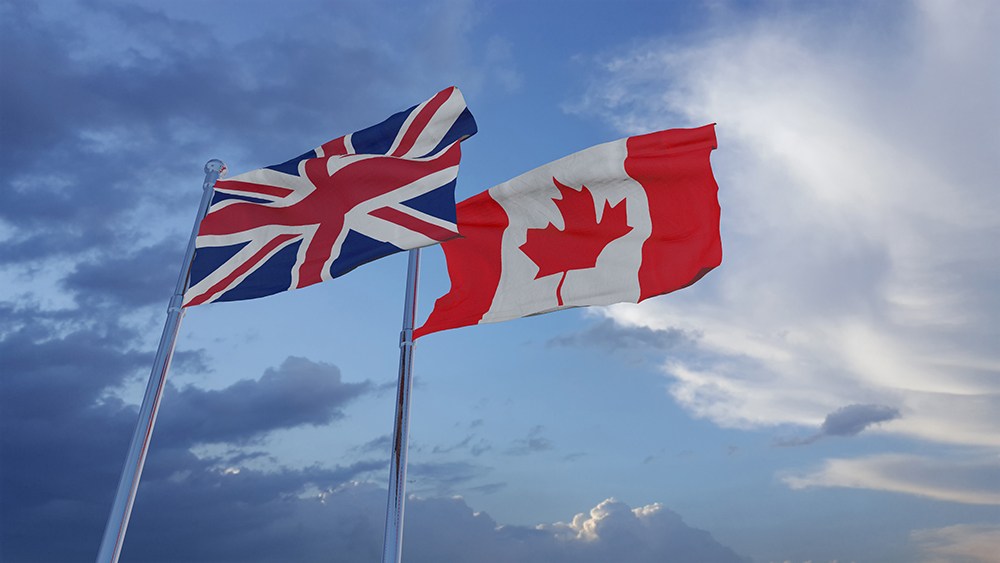
Throughout eastern Canada, these refugees are still referenced and lauded by ‘loyalist’ parks, plaques and street names. Likewise, in the many memorials marking two world wars, Canada’s contribution to Britain’s armed forces is proudly acknowledged: in even the remotest villages of Newfoundland, the Maple Leaf and Union Jack fly alongside cenotaphs and statues. So Hitchens is right to feel more at home in Canada; and Anglo-Canadians are right to be distrustful of their southern neighbour.
Richard Kelly
Nant Mawr, Flintshire
The Reading tapestry
Sir: In his Notes of 19 September, Charles Moore laments that people are forced to move quickly along the length of the Bayeux tapestry due to the huge numbers wanting to see it. Could I point out that, for those who want to avoid this hassle, there is a full-size copy of it (made in 1885 by ladies in Leek, Staffordshire) on permanent display here in Reading, Berks? Located in Reading museum, it is only a five-minute walk from the main station (now connected to London on the Elizabeth line). Worth visiting not just for the tapestry but also to see a place about which the late Sir John Betjeman said ‘few towns better repay exploration’.
James Halls
Reading, Berkshire
Finally, brethren
Sir: I must reply to David Wood’s letter (26 September) because he invokes my late brother in support of his dismissal of the importance of Bible knowledge. I gained the strong impression that Christopher eventually wished he hadn’t given his anti-God book the subtitle How Religion Poisons Everything, because it is so obviously untrue. Religion doesn’t poison the art, architecture, literature and music which it has inspired. Nor does it poison the hospitals and other charitable benefactions which it stimulates. As for the Bible, my brother was on record, more than once, praising the power and beauty of scripture. In one essay, ‘When the King Saved God’ in 2011, he wrote ‘A culture that does not possess this common store of image and allegory will be a perilously thin one.’ I can personally bear witness that, at our father’s funeral, he chose to read the following passage from St Paul’s Epistle to the Philippians: ‘Finally, brethren, whatsoever things are true, whatsoever things are honest, whatsoever things are just, whatsoever things are pure, whatsoever things are lovely, whatsoever things are of good report; if there be any virtue, and if there be any praise, think on these things.’ Far too soon afterwards, I read the same verses at his memorial gathering.
Peter Hitchens
London W8
Call that cricket?
Sir: Jim Lawley’s entertaining review of 1864: The Year That Changed Cricket,with its instances of archaic eccentricities (Books, 22 September), reminds me of a slightly unusual match I once took part in between a local team and members of my English Civil War re-enactment group. We used a curved bat, such as I have seen in the Long Room at Lord’s, and two stumps rather than three. The locals wore cricket whites, boots and club caps; we had knee-length breeches, flat-toed latchet shoes, Montero caps and in one instance a lobster-pot helmet. They followed MCC laws, we the rules of 17th-century engagement; I shall never forget the surprise on the face of their opening batsman when, going for his first run, our corporal rugby-tackled him to the ground.
Tom Stubbs
Surbiton, Surrey
Remembering Frestonia
Sir: Patrick West’s piece on Micronations (Notes on…, 26 September) and his mention of Piddington’s independence bid brought to mind the precedent set by Heathcote Williams’s and David Rappaport’s Free and Independent Republic of Frestonia in west London in 1977. With its own flag and stamps, it was supported by various luminaries including Sir Geoffrey Howe. Its purpose was a serious one: to find permanent social housing for the homeless in the area, in which it succeeded.
Neil McArthur
Hastings
Not a scratch
Sir: Rupert Hawksley’s article ‘All bets are off’ (26 September) makes no mention of the National Lottery or the extraordinary expansion of its scratch cards. When the Lottery was introduced, these were highly controversial, yet parliament permitted them within the established framework. They have since become ubiquitous, available in virtually every convenience store. It is curious that, while Labour’s proposed restrictions on traditional bookmakers are being scrutinised, scratch cards receive no attention whatsoever. If the concern is the accessibility and normalisation of gambling, why is the National Lottery apparently exempt from the discussion?
Alan Pedder
Bury, Manchester
The dog in the night-time
Sir: In response to Keith Johnson’s Notes on… Dogs barking in the distance (19 September), the most chilling polar opposite must be from Sir Arthur Conan Doyle in Silver Blaze, with the dog in the night-time remaining silent.
Geoff Pratt
Nuneaton, Warwickshire
Whim-woms again
Sir: My dear late mother-in-law, when asked what was for dinner, always replied ‘whim-woms with gooses’ bridles’ (Letters, 26 September). Never did find out what she meant.
Sue Mason
Long Sutton, Lincs





Comments