They say that interests and trends in education come and go in cycles: the faddish focus on ‘learning styles’; the debate between phonics versus whole language reading; the pendulum swing between flipped learning and personalised devices and more traditional, analogue instruction; the endless recurring discussions around diversifying the curriculum or whether to bring back coursework.
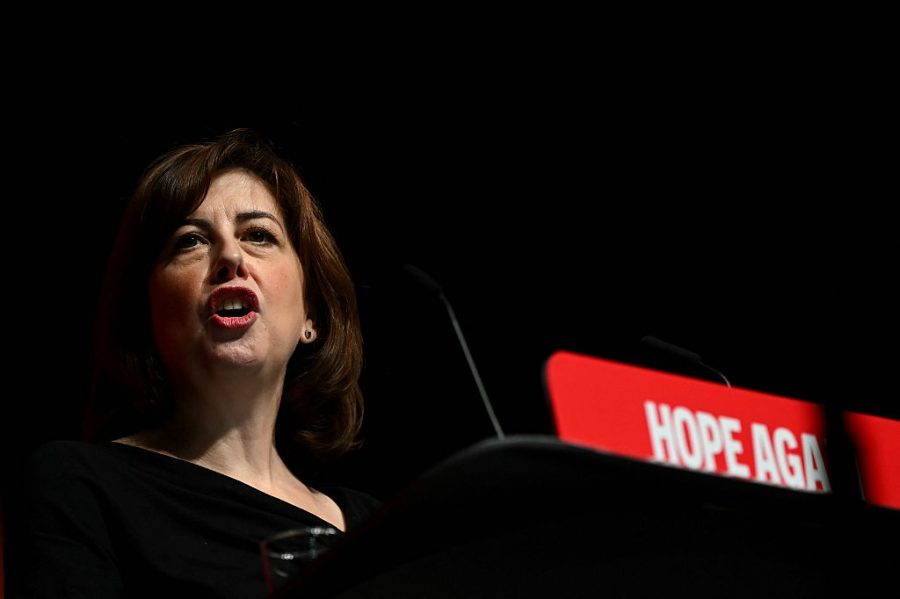
The latest hot topic seems to be on the importance of ‘oracy’ in schools. In 2023, Keir Starmer promised to make oracy a priority, stating that the ability to speak clearly and argue cogently ‘opens up a lifetime of empowerment’ for students: ‘confident speaking gives you a steely core, and an inner belief to make your case in any environment.’ Now it’s back on Labour’s agenda. Education Secretary Lucy Powell has announced that oracy needs to be ‘hardwired’ into a revised national curriculum and assessed as part of GCSE exams, on a par with reading and writing. She also wants to reduce the amount of academic ‘desktop’ work and assessment that pupils take in certain subjects (such as Drama, PE and Music) and move to more ‘practical’ assessments.
Labour is right that oracy skills have been overlooked for too long: there are minimal spoken language requirements for children aged 11 to 14 (even in humanities subjects like Geography and History they are non-existent). The GCSE Spoken Language Endorsement has now also been separated from GCSE English Language and reduced to somewhat of a box-ticking exercise (students are graded on a single pre-prepared presentation). Labour is also right that high-quality talk can support learning, thinking, knowledge building, personal confidence, wellbeing and critical thinking – when done right.

However, there are three problems that Labour need to address in order to ensure that ‘oracy’ doesn’t become yet another pedagogical buzzword with little practical impact.
The first is overlooking the formative importance of primary education. 89 per cent of primary teachers report that children’s speech and language skills have declined since the pandemic, with an estimated 40 per cent of children struggling to meet age-related expectations in this area.
In 1995, Hart and Risley’s landmark study found a ‘30 million word gap’ between the children of professional home settings and those in the most deprived communities. Thirty years later, and this disparity is only exacerbated by excessive screen time: one study found that three-year-olds who are exposed to three hours of screen time a day could be missing out on 1,000 words and 194 conversational turns per day. Spoken language skills therefore need to be embedded into the curriculum far earlier than GCSE.
The second is assuming that oracy is some sort of silver bullet against AI. Whilst ‘human’ skills like communication and self-expression will remain important (a regular complaint of today’s employers is that applicants for jobs lack basic social skills like being able to answer the phone), the best defence against the cognitive offloading of AI is deep subject expertise.
A knowledge-rich education will not only ensure that students’ rhetoric doesn’t fall flat but that they have the ability to be discerning, critical thinkers. AI has not made general knowledge obsolete, but quite the opposite: the better AI becomes at producing convincing answers, the more important it becomes for us to understand the subject fully enough to disagree with it (as Stephen Hawking said, ‘the greatest enemy of knowledge is not ignorance, it is the illusion of knowledge.’).
Of course, a machine can now tell us which element has the atomic number 79 or the distance between the earth and the moon, but that doesn’t make facts obsolete: context, connections and comprehension still matter. If pupils lack the content knowledge to engage meaningfully with philosophical or scientific questions, then discussions can quickly become superficial: all style, no substance. It would be a mistake therefore to jeopardise the progress we have made in academic standards over the last two decades in favour of a softer, more skills-based approach as they have in Scotland and Wales.
Finally, schools need clarity in how ‘oracy’ is actually defined: is it speaking and listening, academic talk, dialogic talk, reasoning, group work, talk for learning? With different definitions comes different understanding and different expectations. A focus on ‘communication skills’ might seem well-suited to the modern world but it is fairly vacuous unless schools can agree upon what is being assessed and how (classroom discussion? Presentations? Debates?) Too often oracy is left to occasional activities, unstructured sessions or treated as identical to writing (for example, asking students to talk in full sentences or explain their answers as a PEA paragraph), which all risk becoming a nice-to-have rather than a powerful tool for teaching and learning.
Labour have an opportunity here to do something genuinely innovative, but they need to find the balance of ensuring that every child – both primary and secondary – can learn to read, write, reason, acquire knowledge and communicate. The government will need to be clear with schools about exactly what it expects and build the evidence base so that schools feel empowered to achieve this ambition – otherwise, once again, promises of ‘oracy’ will just be all talk.





Comments