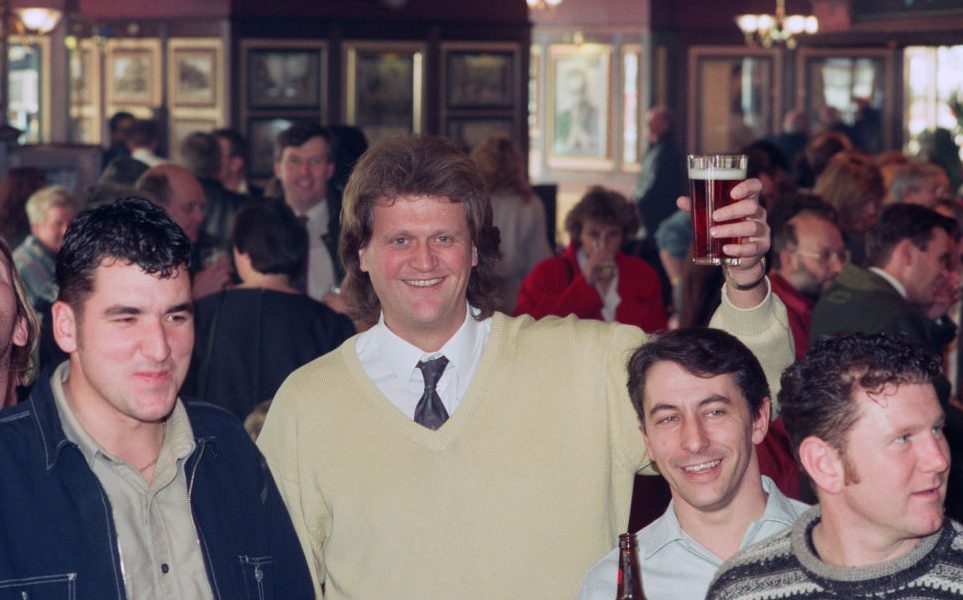
The much-loved – in some quarters – Wetherspoon pub chain is associated with many things. For their supporters, who include this writer, they supply a range of interesting, well-chosen drinks at reasonable prices, often in buildings of historic or architectural interest that would otherwise have been demolished or turned into luxury flats. To their detractors, they are bilious, low-rent establishments that have caricatured the great British pub beyond recognition. Not for nothing have several taken their names from The Moon Under Water, George Orwell’s fantasia of what an alehouse should be, in what might be seen as either affectionate homage or opportunistic hijacking.
Pubs should be fun, convivial and welcoming places
Yet what Wetherspoon establishments do not offer is quiet. To be sure, there are times, usually in the morning shift, when the only sounds that you can hear are the gentle chink of fork on plate as generous-sized breakfasts are consumed, and slurping as their clientele sip either a cup of tea or coffee (complete with free refills all day) or something stronger.
But when they are in full swing, especially at weekends and in the evenings, they are a raucous, Hogarthian affair, in which people from all walks of life can be seen taking full advantage of the opportunities for bacchanal that they offer, courtesy of Sir Tim Martin, their twinkly founder.
However, Martin has also taken a tip from one of his rivals, Sam Smith, the recently deceased publican and brewer, and has decided that his pubs are too noisy. Already, they have banned piped music. Now it has been decreed that playing music from phones or taking calls on loudspeaker mode is to be outlawed too. According to a spokesperson for the group, ‘Following complaints from customers, who are being driven nuts by other people’s videos and amplified phone conversations, Wetherspoon has asked customers to switch their phones to silent or to use earphones.’
Martin himself, perhaps tongue in cheek, suggested, ‘In a world dominated by other people’s music and amplified sound, Wetherspoon pubs are an oasis of tranquillity and contemplation. In order to avoid customers being driven chicken jalfrezi by a cacophony of sound, we are kindly asking phone users to pipe down.’ At first glance, this seems fair enough. Few people wish to hear others’ music being played at ear-splitting volume, any more than they need to hear both sides of a phone call. In any case, a pub -especially a Wetherspoon – is hardly the place to conduct a conversation that needs any kind of delicacy or close attention.
Yet the idea that The Moon Under Water and its stablemates really are oases of tranquillity and contemplation is absurd. One does not head to a Wetherspoon pub to soak up the calming vibes of a monastery or a spa. If you are expecting gong baths and aromatherapy, or silent prayer, you have come to the wrong place and should consult your Google Maps pronto.

If, however, you are in for a wallet-friendly good time, step right up, order a jug of cocktails and see how the evening goes. Chances are that it might be somewhat at odds with tranquillity and contemplation, but when you are lying in the gutter several hours later, you may, at least, be gazing contemplatively at the stars.
Pubs in Britain are increasingly beleaguered institutions. For all of Andy Burnham’s man-of-the-people talk about lowering the cost of a pint and keeping the alehouse in its central place in the community, a combination of soaring rents, punitive alcohol duty and an increasing reluctance on the part of younger people either to drink at all or to drink outside of their homes has meant that publicans must find increasingly desperate measures in order for their businesses to survive.
In the case of the late Sam Smith, he operated a simple, draconian system. Legend has it that when he headed down to London one day and saw that his establishments were charging half the price of neighbouring pubs – adopting Yorkshire prices rather than metropolitan ones – he simply doubled them all overnight to bring them in line with the competition.
Smith, too, banned all noise from his establishments, and patrons could be evicted for swearing, looking at their telephones, kissing or generally doing anything he disliked. He extended this to the managers of his pubs, too: one landlord was deprived of his livelihood because Smith was unable to have his favourite chocolate fondant dessert the day that he visited on a spot check.
Thankfully, Martin is nothing like Smith when it comes to laying down the law. His pubs are all the better for it. Yet I wonder if there is any kind of compromise that can be reached between his vision for his locals as civilised, comfortable places and the Hieronymus Bosch-esque chaos that ensues at chucking-out time in a busy city centre Wetherspoons on a Saturday night.
Pubs should be fun, convivial and welcoming places for everyone – hence their long-cherished standing as the ‘public house’ – and any threat to their existence should be vigorously contested. So while I am unsure that my local Spoons really will be a tranquil, contemplative oasis thanks to Martin’s edict, I can only salute the impulse that has led him to make it – and wish him well in making it happen, too.






Comments