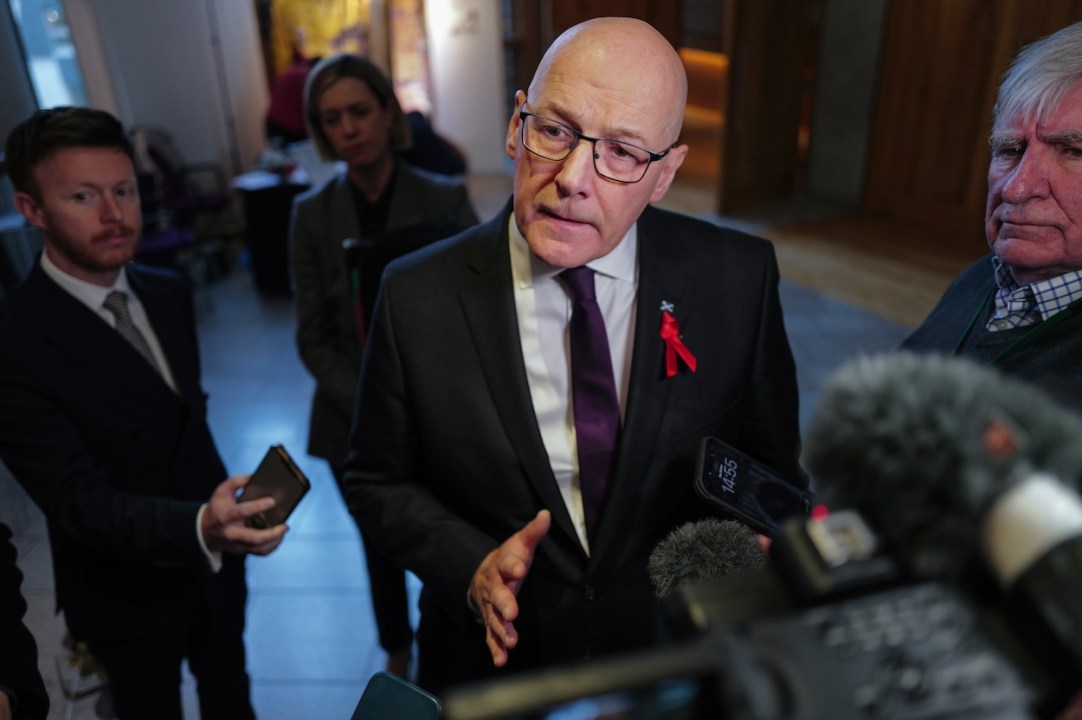
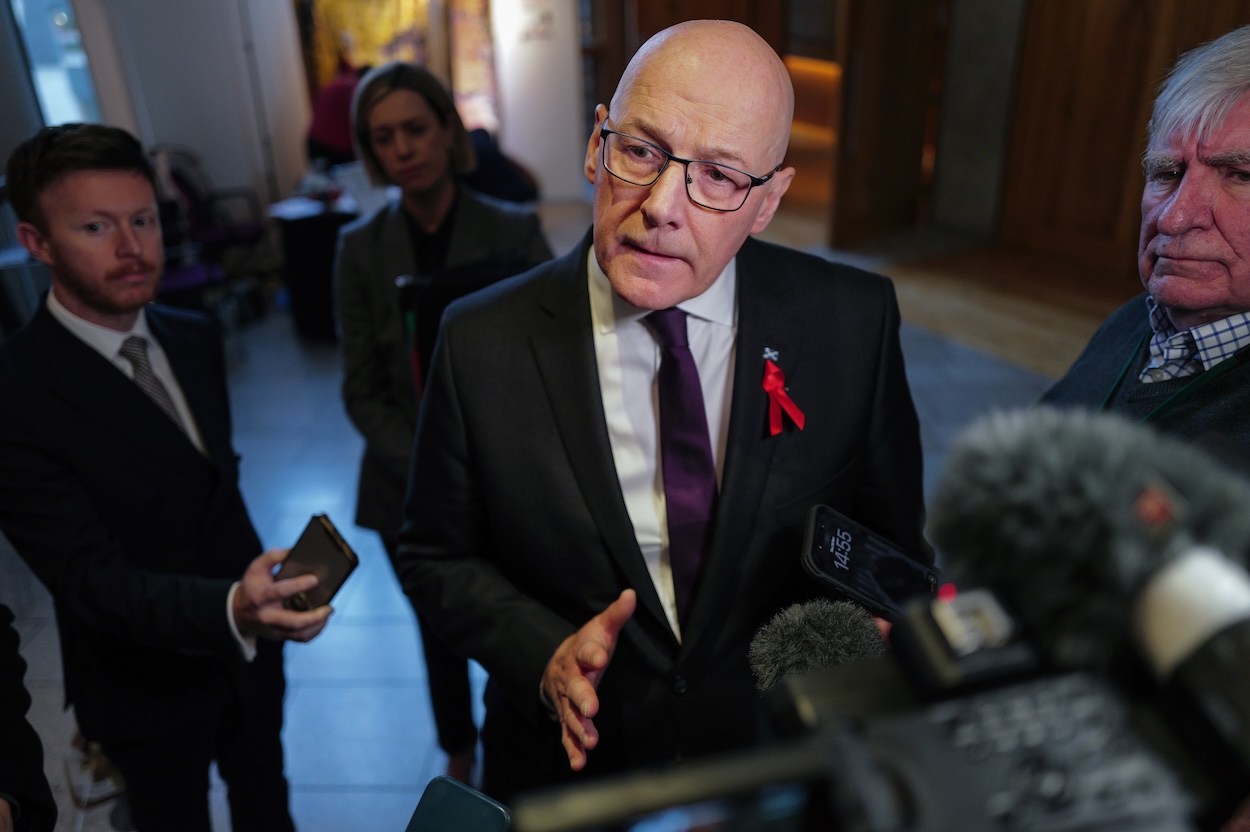
John Swinney has been named Scottish politician of the year, and given he is currently embroiled in an NHS surgery scandal that killed 19 people, you have to feel sorry for the runner-up.
The SNP leader and Holyrood first minister was feted in a ceremony held on Thursday night at the five-star Prestonfield House Hotel in Edinburgh. It is the second year in a row for Swinney and his third overall victory at the Scottish Politician of the Year Awards, organised by the Herald newspaper.
Yet mere hours before collecting his gong, Swinney was accepting the resignation of his chief medical officer Gregor Smith, the most senior figure to be forced out over the hospital deaths firestorm. A 2022 review by NHS Grampian found that 19 out of 31 deaths during hepatobiliary (liver, pancreas, and gallbladder) surgery at the Aberdeen Royal Infirmary (ARI) were avoidable.
The findings of the review were buried; neither the health board nor the Scottish government saw fit to publish them. The fact that such a high rate (61 per cent) of operating-room deaths were avoidable was simply kept secret from the public. That is until last week when Dr Mohammed Habib, a consultant surgeon at the ARI, leaked the report.
Dr Habib says he wrote personally to Swinney on three occasions but to no avail. (Questioned on this correspondence at last week’s session of First Minister’s Questions, Swinney said he had seen none of it.) There is now a review into the ARI deaths and a separate review into the Scottish Government’s handling of correspondence.
Swinney is a capable political operator. He rebuilt the SNP from the twin calamities of Campervan-gate and Humza Yousaf’s brief (but not brief enough) leadership. He went on to secure a historic fifth consecutive term in devolved government for the party this May. But proclaiming him politician of the year in the current circumstances is tone deaf and not a little distasteful. If you lost a loved one needlessly on an ARI operating table, you might have been surprised to open Friday morning’s Herald to be told that the man who missed three warning letters about the hospital had been given an award for doing his job so well.
The very concept of awards for politicians – the honouring of a dishonourable profession – is perverse. Imagine if we held awards ceremonies for other disreputable and destructive activities, like loansharking or multi-level marketing or journalism. Incentivise wrong’uns and you’ll only get more of them.
Yes, I’m well aware The Spectator runs its own political awards, and if you must hold a prize-giving ceremony for narcissistic sociopaths The Spectator’s is the best approach. Gongs tend to go to mavericks, trouble-makers and tormentors of party whips; winners are encouraged to be self-deprecating, with Andy Burnham accepting via TikTok-style video; and the most esteemed category is not Politician of the Year but Parliamentarian of the Year, because while party hacks are ten a penny, stalwarts of the Commons are a rarer breed. The whole thing is approached with that air of irony and impishness for which The Spectator is known.
Scottish Politician of the Year, on the other hand, is grimly sincere, an annual backslapping circle for the governing elite of a chronically misgoverned nation. A nation where the intimacy and cliquishness of the powerful is seldom interrupted by anything as unruly as a dissenting idea or outside opinion. With Scotland’s press continuing to shrink and remaining, in places, too timid in its scrutiny of the SNP and unwilling to confront the failings of devolution, there are the unfortunate outlines of a metaphor in newspapers handing out laurels to senior politicians.
The awards, which have been running since 1999, are sometimes billed as ‘the Oscars of Scottish politics’, which is surely the ‘we’re big in Japan’ of PR hype. The only parliamentarian with the right attitude towards the Scottish Politician of the Year Awards was Lord Watson of Invergowrie. (He set the place on fire.) Look back through past winners and, with a few exceptions, it is a roll-call of the hardly adequate and the barely memorable, a reminder of just how impoverished the Scottish political talent pool has become. You don’t need an awards ceremony to identify the giants of the devolution era, you need a microscope.
Nothing I could say – or Mike Watson could set ablaze – is as damning of these awards as the calibre of the winners. When a country’s political leadership is this meagre it should be a matter not for celebration but private grief. If John Swinney is the Scottish politician of the year, he ought to be the last.


Comments