Of all the months to choose for abstinence, January seems the strangest. May is intoxicating by itself; winter, when life feels threatened by the silent ministry of frost, needs cheer. Christmas and New Year are past, the birds are already singing loudly in the early mornings, snowdrops push up their green fuses, hellebores grow fresh leaves, and the magnolia buds swell. They will bloom on sunny but cold days and look perfect for a moment, before frost burns their scarlet and white edges to brown. Spring is coming, but winter retains its hold. January is the time to drink port.

Dickens understood this. He mentioned drinks of all kinds a great deal, and port more than any other wine. In Bleak House, Tulkinghorn ‘pours a radiant nectar, two score and ten years old, that blushes in the glass to find itself so famous and fills the whole room with the fragrance of southern grapes.’
British winters need that sort of lift, that reminder that summer has always returned. Port’s strength encourages over-consumption, particularly when it arrives at the end of a meal, and it has undeservedly acquired an air of snobbery. But Dickens, like Trollope, loved port, and relished the social role it played – how it loosened tongues, sealed bargains, shifted formality to fellowship, softened sorrows and sanity alike.
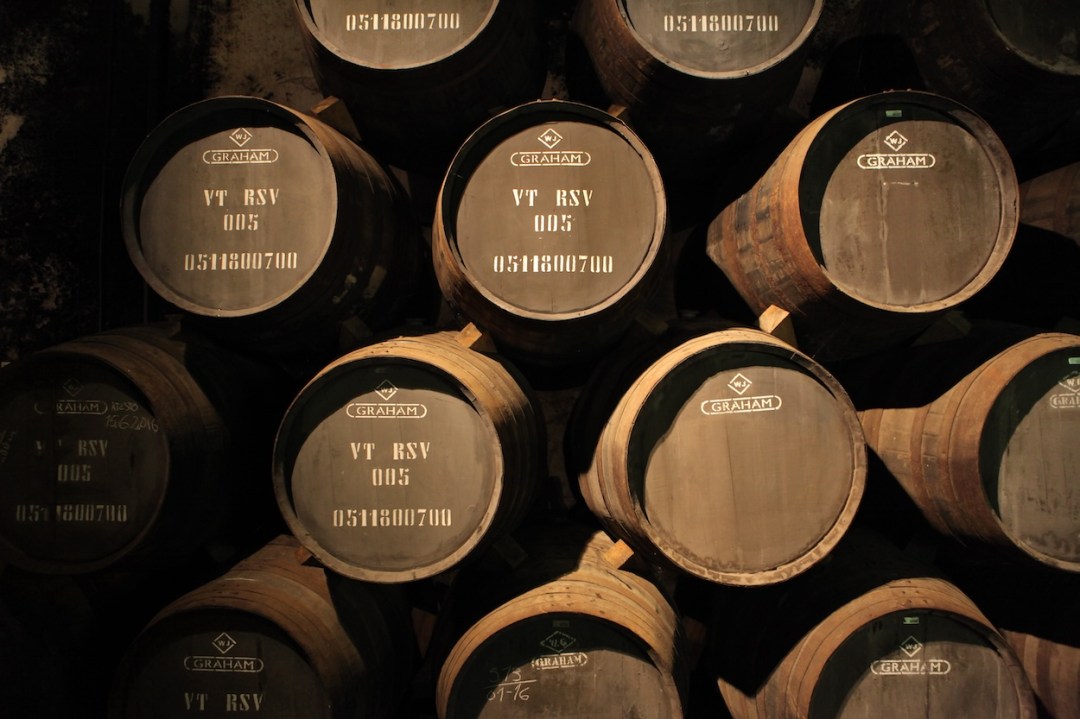
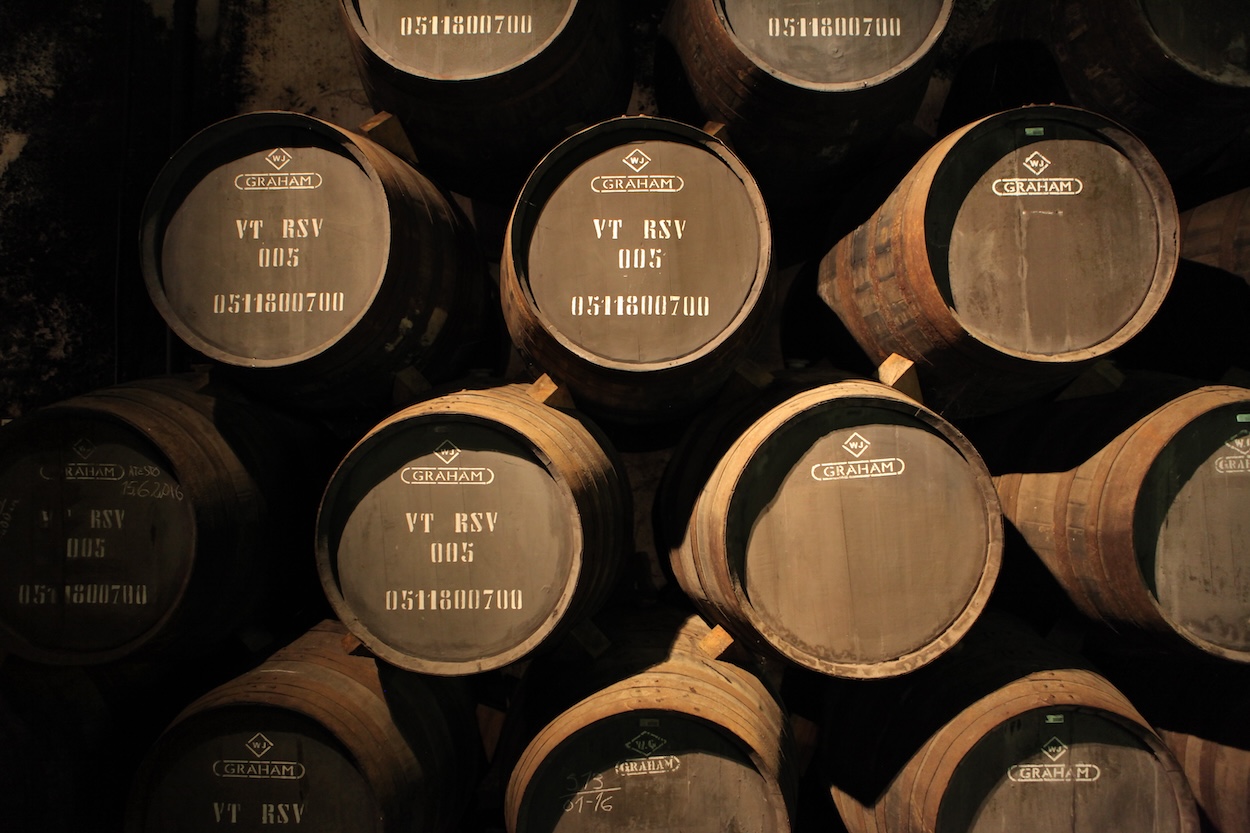
Port comes from northern Portugal, from the Douro valley where the city of Oporto sits at the river’s mouth. Fortified with grape spirit, which began as a way of preserving the wine and became the method of making it what it is, port is often aged in oak or in bottle for a considerable time. Rich, sweet, fragrant, at its best it keeps those qualities while becoming weightless and savoury.
Uninterested in wine of any kind, I had a chance to buy an old port at a good price, and brought it home for my wine-loving stepfather. Decanted and drunk over a few days that Christmas, it was a revelation: my first conscious experience of a drink being a sensuous and sociable experience, glinting in a decanter with the sense that it had done so in a thousand others, in other homes and other times. Impossible, after that, not to take an interest in the history, the residue of centuries of civilisation that filled our Birmingham home with the fragrance of southern grapes.
Portugal is our country’s oldest ally, a partnership already old in 1386 when it was formalised with the Treaty of Windsor. The Douro was where I proposed to my wife, among the steep and sun-baked beauty of those hills, a world away from my early experiences of port, knocking it back as a student long after drinking should have ceased.
British winters need that sort of lift, that reminder that summer has always returned
Pubs used to do a good trade in port and lemon, but the custom has not survived the way vintage port has at the end of formal dinners. There is tremendous pleasure to be had from low-end supermarket port, as from its grander cousins. Despite that, there are ever fewer buyers. I drink only a few bottles a year, but each is a reminder that what is old-fashioned is often worth preserving. Opening one is a refusal to let the best of the past vanish. Port, with its air of archaic British culture, offers a taste known to our forefathers, and it is worth pursuing. ‘Beowulf’, that most Anglo-Saxon of poems, is partly a meditation on what endures in our lands, and what is lost:
… these mail shirts, worn
In battle, once, while swords crashed
And blades bit into shields and men,
Will rust away like the warriors who owned them.
None of these treasures will travel to distant
Lands, following their lords. The harp’s
Bright song, the hawk crossing through the hall
On its swift wings, the stallion tramping
In the courtyard – all gone, creatures of every
Kind, and their masters, hurled to the grave.
Time hurls all to the grave, but port is a treasure where bottles can outlive their owners and tradition outlast dynasties. I laid bottles down for my late son, from his birth year. I hope in time to drink them and to think of him, although it is hard to imagine in these winter days. I have far more for his sister, born in a grander vintage, and they make for easier hopes.
Winter is not the time for abstinence. These are days to remember that courage and curiosity and companionship are passed down to us. Port is part of the history we are heir to, a reminder that warm days will come again, a drink that helps us to remember, and to forget.



Comments