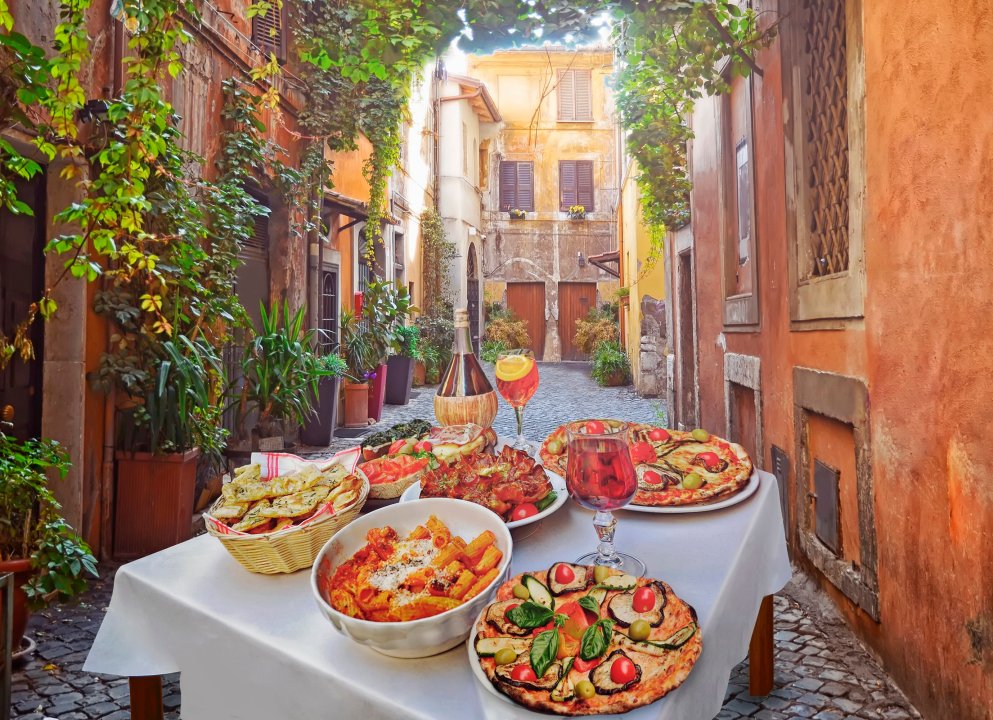
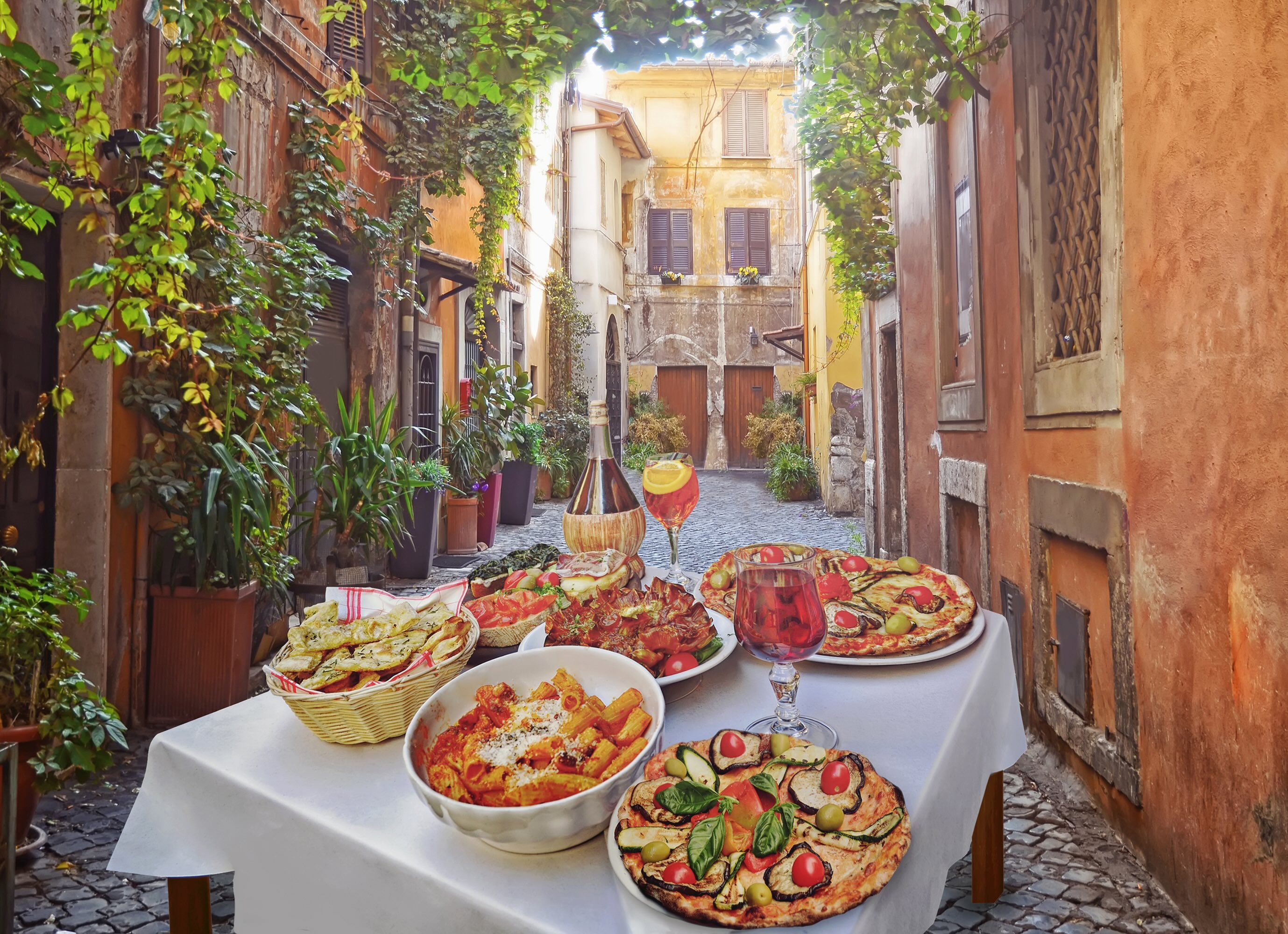
About a week into an open-ended early pandemic stay in Ortigia, the antique, tourist-beloved spit off Siracusa on Sicily’s eastern coast, I had an epiphany. I hated the food. I’d just had a few bites of a clammy aubergine parmigiana, and a plate of oily tuna steak dressed with a bit of lemon was on its way to me. I felt sick and couldn’t face another bite – and yet, supposedly, I was right in the heartlands of the finest continental gastronomy.
This, at least, is the orthodoxy of the world, of tourists low- and high-end and home cooks everywhere – and especially in Italy itself. And now their devotion to the deep-fried rice ball, the breadstick, the sickly spicy sausage paste, the bloodless tomato carpaccio and the watery cream-topped bun has paid off: last month Unesco awarded Italian cuisine ‘special cultural heritage status’. Giorgia Meloni is satisfied, having campaigned for this honour since her election. ‘For us Italians, cuisine is not just food or a collection of recipes,’ she said. ‘It is so much more: it is culture, tradition, work, wealth.’
She’s all too right about the last two: Italy’s dependence on a menu of unchanging greatest hits speaks to the relative poverty and economic hopelessness of the swathes of the country whose food is most famous, particularly south of Rome. I happened to be in Sicily as the notorious second Italian lockdown came into force in November 2020, and it was sad seeing not just the cafes and restaurants but the whole economy dying without the ability to sell tourists plates of prosciutto and pizza after 6 p.m.
Every country has a cuisine, but the best ones – American, Israeli, Greek, even French – allow for a little cultural importation, a little change; new spices, textures, combinations. But the Italians clearly know that they must guard the provinciality of their fare at all costs, and have perfected the savvy use and marketing of cheap ingredients to starry-eyed foreigners desperate to try pizza margherita and pasta alla norma under Caesar’s skies. It’s a formula that works and works and works, and can be translated to suit all segments of the market.
But that September evening in that highly-regarded Ortigia restaurant, it felt to me that this cuisine seemed to always be fundamentally composed of clammy, cloying ingredients, all the wrong textures, all the wrong flavours, all the wrong ingredients, unwholesome, overpriced. I like tomatoes and aubergines, I just don’t like them shivering and oily on a plate together – and the Italian custom for bone-dry bits of bread, either in stick form or of stale loaves, does little to save the day. In short, Italian food is wildly overrated.
Rejecting the most-vaunted cuisine on Earth was incredibly freeing. No more overspending on fatty food for simpletons and tourists! I shopped in the local Spa and ate fennel, yoghurt and fruit (though most supermarket fruit in Italy is appalling), feeling richer, thinner and entirely less sick.
The best national cuisines – American, Israeli, Greek, even French – allow for a little cultural importation, a little change; new spices, textures, combinations
Coming to my decision about Italian food wasn’t a quick process, though. For all the bad experiences – including begging a wine bar in Trieste to find me just one single vegetable (they eventually found two sundried tomatoes at the bottom of a jar) – there were some less terrible ones. In Ragusa, following in Inspector Montalbano’s footsteps, I went to a Michelin-starred restaurant for lunch one dreary October day and had a nutty green pasta (nice) and, admittedly, some very tender duck. On another trip, in Bologna, I dutifully found out the trattorias most beloved of local foodies, walking far outside the centre in the broiling heat to try the tagliatelle al ragu famous in the city, and, another night, met my Italian-speaking cousin for a repast of local mortadella and tortellini in broth. It was all fine, and even impressive in that way that the Italian restaurant experience can be. But it was not a patch, food-wise, on the delicious and exciting type of meal you can have in a good Melbourne, Bangkok, Jerusalem, London or Mumbai eatery.
Italian food is a fundamentally static cuisine, toggling between unchanging family recipes and eternal crowd-pleaser fare. In a sense it’s a victim of its own success, which has made it afraid of change that would be as bad for business as for Italy’s sense of cultural identity. In this sense, the Unesco award fits perfectly, as it does for ancient, crumbling structures that stay above ground for hundreds and thousands of years.
What the world laps up is the fantasy of Italy – land of Romans, mafia, beautiful babes, gangsters, romantics, Romeo and Juliet. The food doesn’t matter, not really – it’s just part of the stage-set. At least, this would be the honest view of anyone – sufficiently liberated from pro-Italian mythology – who has sampled well-made dishes from almost any other, superior, cuisine.






Comments