If the published details regarding the Memorandum of Understanding (MoU) reached between the US and Iran prove accurate, then there is much cause for concern. The MoU, as it stands, appears in essence to offer Iran a return to the status quo ante bellum in return for the swift reopening of the Strait of Hormuz. Further issues will be discussed in a 60-day negotiation period to commence once the memorandum is signed. In addition, at least according to the version published by the Iranian regime-linked news agency Mehr, Iran stands to gain access to $24 billion (£17.9 billion) in frozen funds, with $12 billion (£9 billion) to be made available at the commencement of the negotiations.
Israel and the US have worked together with unprecedented closeness over the last three years of war. The current MoU, however, appears to signal the US desire to quit the fight.
The US and Israel re-commenced the war against Iran on 28 February amid a general belief that the regime was teetering on the brink and stood a good chance of falling should additional pressure be applied. Published reports suggest, however, that an intricate and ambitious plan presented by David Barnea, head of Mossad, to Donald Trump on 12 February was not adopted or implemented.
This is a job which, for the sake of the basic security of Israel’s citizens, needs to continue
Rather, Trump chose the more limited option suggested by his Secretary of State Marco Rubio: a massive bombing campaign that would inflict huge damage but avoid committing the US to a prolonged effort to reshape Iran’s internal governance. Then having chosen this limited option, the administration in its public messaging appeared to sign up to the maximum goal anyway. ‘The hour of your freedom is at hand,’ the US president signalled to the Iranian people as the bombing started. ‘There will be no deal with Iran except UNCONDITIONAL SURRENDER!’ he declared on 6 March.

Once the regime didn’t fall, it appears that there was no Plan B. Worse, the Trump administration doesn’t seem to have reckoned with the possibility that the Iranian regime might seize the Strait of Hormuz. Once that seizure took place, and the US determined that the cost in blood and treasure of reopening Hormuz by force wasn’t worth paying, it was only a matter of time before something resembling the current MoU was bound to arrive.
This represents a considerable achievement for Tehran. Faced with the ferocious and overwhelming capacities of US and Israeli air power, the regime has not fallen and hasn’t buckled. It has suffered very considerable damage, but nothing which cannot be repaired over time. The old clerical leadership was wiped out in the bombing. But the group taking its place is younger, more impatient and militant, centred on an alliance between top figures in the Islamic Revolutionary Guards Corps and Mojtaba Khamenei, son of the slain Supreme Leader.
If the reports are true that the US has agreed that the 440kg of enriched uranium in Iranian hands will be diluted on Iranian soil, that enrichment to a lower point may continue, and that there will be no new inspections arrangement, this represents a further gain for the regime. It means that its long, clandestine advance toward nuclear weapons capacity is set to continue.
For Israel, the implications of the latest developments are deeply problematic. The Iranian regime is committed to the advance of its power and influence across the region. Its proxy array has brought it to effective control of three Arab capitals – Beirut, Baghdad and Sana’a. Its alliance with Hamas has gained it access to the Palestinian arena, with the propaganda echo that this brings.
The Iranian regime has been committed to Israel’s destruction since the Islamic Revolution in 1979 and has been working towards this goal. The MoU, at least according to what has been made publicly available, envisages the ending of combat on all fronts, including Lebanon. Israel is currently engaged in seeking to re-establish deterrence against the Iranian proxy Hezbollah organisation in Lebanon.
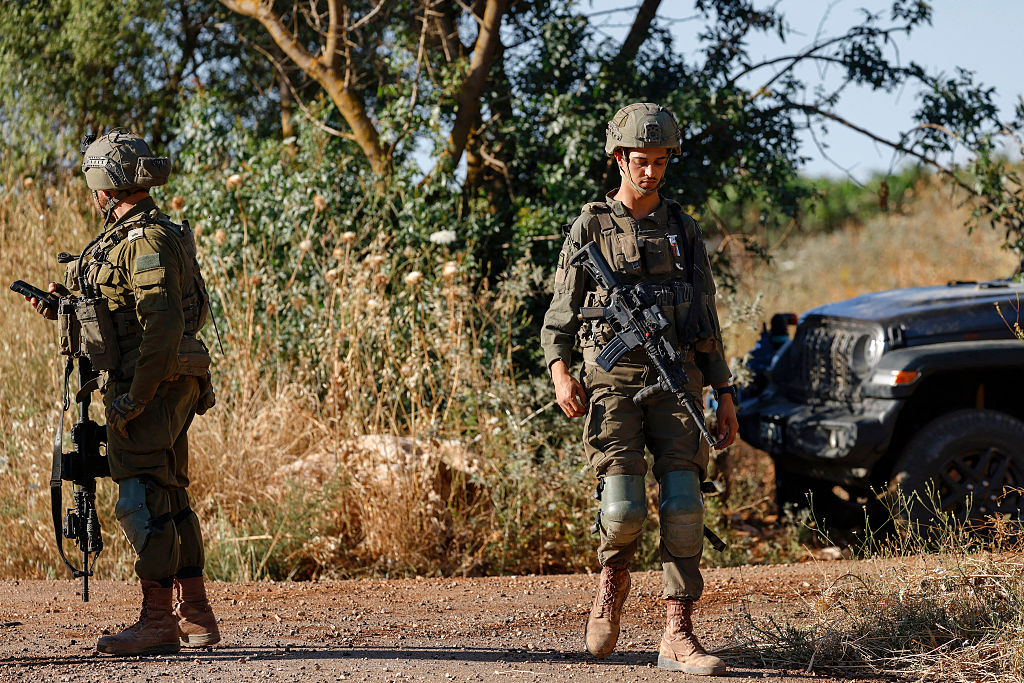
Hezbollah chose to re-enter the fighting on 2 March. Israel’s northern border communities are depopulated as a result of the attacks. The IDF is engaged in operations as far north as the Litani River and beyond it in ongoing efforts to degrade the group’s capabilities. This is a job which, for the sake of the basic security of Israel’s citizens, needs to continue. If the MoU turns out to be an obstacle to this, the choice facing Israel will be to defy US wishes or to acquiesce to a reality in which Iran will have succeeded in imposing its will not only in Hormuz but also on the Israel-Lebanon border. This choice lies ahead.
More broadly, the events of the last three and a half months confirm the survival of the Iranian regime and, therefore, the continuation of its war against Israel and against other western allies in the region. Israel has demonstrated that it is far from helpless in this contest – in its air power, the resilience of its civil population under fire, its deployment of forces in the UAE and Azerbaijan, and the structures it has established inside Iran itself and with Tehran’s opponents on its borders.
The task facing Israel now will be to continue and increase these efforts in the awareness that it is fighting a war the implications and the seriousness of which are not yet understood in western capitals. They will yet be understood. The Islamic Republic of Iran and its allies have been engaged, as is now known, in a campaign of terror across seven different European countries in the last months, with the UK a particular focus of activity. The continued activities of Iran and its clients and proxies across the region preclude any possibility for successful and peaceful development in the Middle East. The IRGC, which dominates the new power arrangement in Iran, is an organisation which attacks Iranian dissidents in London’s streets and whose hirelings burn synagogues and assault UK citizens.
Israel, targeted for destruction by this regime, has no choice but to continue fighting it. But the exit of the US from this engagement, as apparently represented by the latest MoU, means that Israel is set to bear the brunt of this struggle for now largely alone.





Comments