
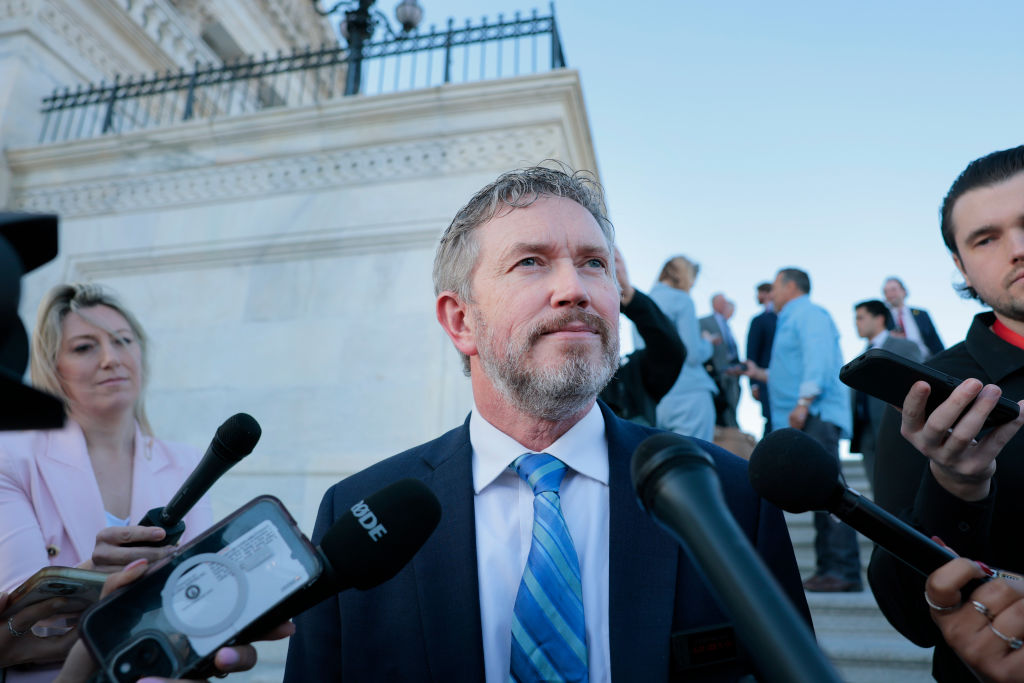
Thomas Massie’s predicament, as he fends off a Trump-backed challenger – and Trump himself – in the Republican primary for his seat in Congress, is symbolic of the vexed relationship libertarians have with the right these days. Massie was not only a Tea Party Republican when he was first elected in 2012, he was a Ron Paul Republican, inspired by the longtime, philosophically libertarian Texas congressman who made his second bid for the GOP presidential nomination that year. The Commonwealth of Kentucky had sent Paul’s son, Rand, to the US Senate two years before, and its 4th congressional district put Massie in the House.
Libertarians are natural junior partners in someone else’s enterprise
Now Trump is trying to take him out. He and Massie have been feuding almost from the moment Trump came back to the White House, and their relationship was often strained even during Trump’s first term. This time the president is going all-out to defeat Massie, even campaigning personally in Massie’s district alongside his primary opponent, Ed Gallrein. An enmity that began with Trump’s frustration at Massie’s willingness to stand on libertarian principle against legislation that adds to the national debt – even when doing so risks inflicting a disaster on the administration, such as the expiration of Trump’s tax cuts – has sharply intensified as Massie became the leading Republican pushing for the release of the Epstein files and Trump began targeting Massie’s wife in his diatribes against the congressman.
Trump’s relations with Senator Paul are not warm, either, though they’re nothing like as acrimonious as the quarrel with Massie. If Massie does lose his seat because of Trump, he won’t be the first libertarian-leaning congressman to do so. Justin Amash was a Michigan congressman first elected in the Tea Party banner year of 2010. He left the GOP to become an independent (and later an actual Libertarian party member) in 2019 and became the only House member who wasn’t a Democrat to vote for Trump’s first impeachment. With little hope of winning another race in his district, Amash chose not to seek re-election and left Congress in 2021.
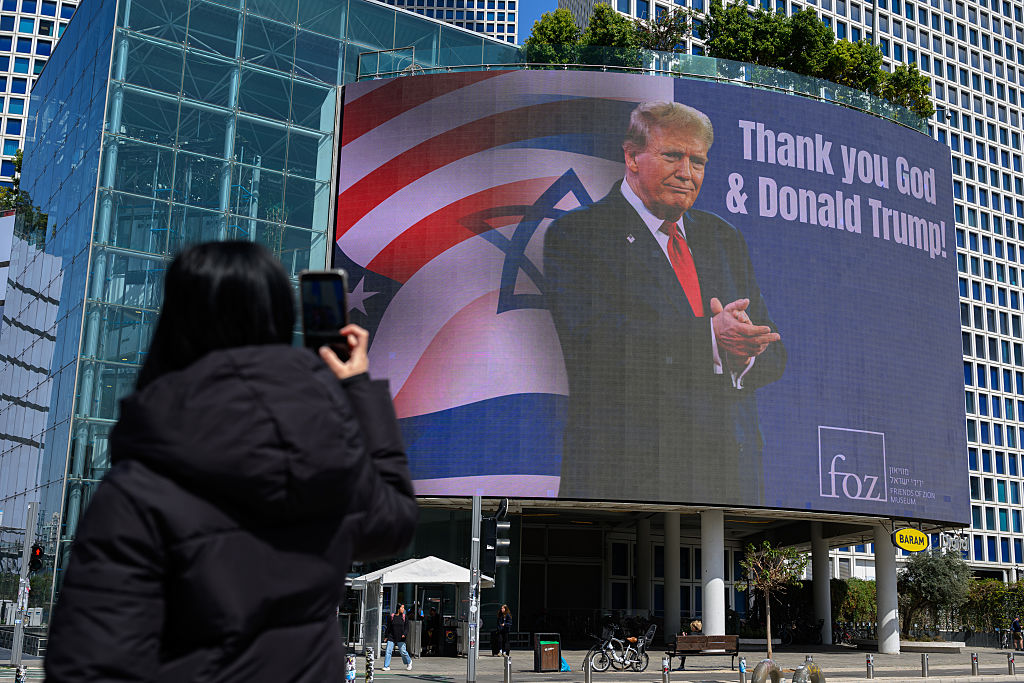
Yet as hostile an environment as Trump’s Republican party might be for ideological libertarians, the national mood is changing in ways that could make their views salient again. Ron Paul had in fact field-tested in 2008 and 2012 some of the campaign themes that Trump would capitalize on in 2016 and subsequently – notably opposition to “forever wars” in the Middle East and Afghanistan. Now that Trump is waging a large-scale Middle East war of his own, the space is open for someone else to take up the cause that did so much to make Paul and then Trump stand apart from their Republican presidential rivals.
Trump’s trade agenda was distinctly at odds with the free-trade principles libertarians cherish, although there is a surprising twist to the tale: Ron Paul himself was a critic of trade deals like NAFTA for their transnational regulatory components. The pure libertarian position staked out by the anarcho-capitalist thinker Murray Rothbard, who before his death in 1995 was a key ally of Paul’s, calls for unilateral free trade, not multilateral agreements. Rothbard and Paul also had criticisms of mass immigration, as it happens, although the modal libertarian, such as those at the Cato Institute, is typically in favor of trade deals and de facto (or indeed de jure) open borders.
Trump’s positions on trade and immigration have lately been more politically potent than libertarians’. But the Supreme Court has thrown America’s trade policy into confusion by ruling against the administration’s use of the International Emergency Economic Powers Act to set tariffs. The administration is using different legal grounds for its tariffs now, but thanks to the Court there’s great uncertainty about what measures will survive further challenges. And that uncertainty makes the negotiations with foreign nations that are essential to Trump’s trade strategy much more difficult. Public opinion was already tilting against the tariffs, which need time to succeed on their own terms. The Court had denied the administration the chance to pursue its strategy, and all the uncertainties arising from that make the political task of persuading Americans to give tariffs a fair test significantly harder. That grants an advantage to libertarians and the politicians aligned with them. The less popular tariffs are, the more popularity libertarians stand to gain by making the case against them.
Americans still want immigration laws to be enforced, but the Immigration and Customs Enforcement agency is controversial, with polls showing about two-thirds of the public thinks ICE should be reined in. Is that another opening for libertarians? Republicans with libertarian leanings have tried to strike a careful balance in choosing what enforcement to support, not favoring measures as strong as the Trump administrations prefers, but giving in to open-borders radicalism, either. A measured approach seems like what the American public really wants.
On foreign policy, trade, and immigration, libertarians today are primed for the “moment” that didn’t arrive in 2016, when the rise of Trumpian populism overwhelmed the burgeoning right-coded libertarianism of the Tea Party and the Ron Paul insurgencies.
And yet this is all an illusion. Massie might survive his primary, but in presidential politics immigration will remain for a long time yet an issue that GOP voters expect to be dealt with firmly. Tariff policy may be unsettled, and tariffs might not poll well, but free-market fundamentalism hasn’t suddenly become a formula for winning battleground Rust Belt states like Pennsylvania, Wisconsin, or Michigan. And Trump’s success in campaigning on foreign policy was based on his uncanny ability to present himself as a hawk and dove at the same time. Libertarians are dovish on principle, which wins them an audience when wars go awry but doesn’t appeal to Americans who believe that force does have to be used to advance our interests, not just to repel an invasion.
Ironically for adherents of such an uncompromising philosophy, libertarians need the disciplining compromises of a major political party or coalition to do anything more than criticize. They are natural junior partners in someone else’s enterprise – Trump’s, for example.




Comments