Tea party

Where Thomas Massie went wrong

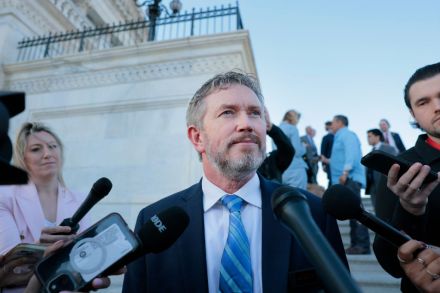
What happens when a Republican congressman turns his primary election into a referendum on Donald Trump? What happens when he turns it into a referendum on Israel? The answer to those questions should be stunningly obvious. There was never a reason to expect Kentucky to return a different verdict than anywhere else. Quite the contrary – it’s a staunchly red state. Asked to choose between Trump and a congressman who’d lately been garnering favorable coverage in the New Yorker, the Atlantic, the New York Times, Republican voters were not about to abandon the president. The very things Thomas Massie’s newfound friends liked about him made him unacceptable to the people who actually vote in Republican primaries.

Massie

The problem with Thomas Massie

Thomas Massie’s predicament, as he fends off a Trump-backed challenger – and Trump himself – in the Republican primary for his seat in Congress, is symbolic of the vexed relationship libertarians have with the right these days. Massie was not only a Tea Party Republican when he was first elected in 2012, he was a Ron Paul Republican, inspired by the longtime, philosophically libertarian Texas congressman who made his second bid for the GOP presidential nomination that year. The Commonwealth of Kentucky had sent Paul’s son, Rand, to the US Senate two years before, and its 4th congressional district put Massie in the House. Libertarians are natural junior partners in someone else’s enterprise ​Now Trump is trying to take him out.

Thomas Massie

Trump, Soros and a weaponized DoJ

In 2013, the IRS targeted the Tea Party and other conservative organizations for special scrutiny. Four years later, the federal government reached a settlement and the IRS apologized. Is it about to be déjà vu all over again? The Trump administration is embarking upon a major campaign against leading liberal organizations. The first shot came in late August when President Trump demanded that the liberal billionaire George Soros and his son, Alex, be charged under the federal Racketeer Influenced and Corrupt Organizations Act for supporting violent protests across America. The libertarian CATO Institute, a redoubt for decades of free speech advocates, promptly observed that “the call to prosecute may be bluster.” Wrong.

Donald Trump

Joe Biden gives in to the Squad

Welcome to Thunderdome. It’s been clear since day one that Joe Biden was more scared of the progressive left than anyone else. His White House was incredibly fearful of a challenge from Bernie Sanders or a Squad member within the 2024 primary and the damage it would do to the Democratic coalition and his own re-election hopes. So the White House swung left — not just on economic policy, where he threw everything behind massive expenditures that pleased leftist politicians, pundits and people who have shrines to FDR in their houses, but on social policy as well, where he embraced the culture war issues of abortion and the trans agenda and hung on tight.

Where the Tea Party went wrong

In the world of American politics, 2010 feels like a very long time ago. The wave of Tea Party candidates swept into office in response to the overreach of Barack Obama belonged to a party that had as its champions the likes of George W. Bush, John McCain and Mitt Romney — all people who would ultimately be rejected by its nominee in 2016. The Republican Party of 2010 nominated and elected a swath of candidates bent on changing Washington. They were elected in states as diverse as Kentucky, Florida, Wisconsin and Utah. And they represented a push designed to shift the party, to transform what it did in the capital. They advocated for change that would be long-standing, not just a brief change in personnel.

tea

Justin Amash: a study in vanity

Every Democrat’s favorite ex-Republican has just announced he’s going to seek the Libertarian Party nomination for president. If he gets it, Justin Amash will be the third ex-Republican in a row to be the LP’s standard bearer, tracing the footsteps of former Georgia Rep. Bob Barr (2008) and former New Mexico Gov. Gary Johnson (2012 and 2016). Neither of those two had an appreciable impact on the Obama-McCain, Obama-Romney, or Clinton-Trump contests, and the odds are not good that Amash will be any more significant. So why is he running? The immediate explanation is probably that he concluded he couldn’t win his race for re-election to Congress.

justin amash

Where Ukip went wrong

From our UK edition

[audioplayer src="http://rss.acast.com/viewfrom22/angelamerkel-sburden/media.mp3" title="Freddy Gray, Sebastian Payne and Owen Bennett discuss where Ukip went wrong" startat=685] Listen [/audioplayer]What’s happened to poor Ukip? Not so long ago, they seemed unstoppable. They were revolting on the right, terrifying the left and shaking up Westminster. The established parties tried sneering at them, smearing them, even copying them. Nothing worked. Then came the general election, the centre held, and Ukip seemed to fall apart. Farage failed to win his target seat in South Thanet, the focus of his whole campaign. He resigned, then farcically unresigned, three days later.

Is Nigel Farage becoming Ron Paul?

From our UK edition

I think I have seen Nigel Farage’s future, and it is not pretty. A copy of Farage’s The Purple Revolution reached my desk today. The cover instantly reminded me of a cover manifesto for Ron Paul, the once inspiring libertarian radical who has turned into something of a crank. On Farage’s book, the word LOVE has been mirrored on to the word Revolution. Ron Paul posters used to employ the same silly trick. As did Russell Brand. It is becoming a sort of logo for anti-establishment feeling. It is also hilariously crap. 'Every great cause begins as a movement, becomes a business, and eventually degenerates into a racket,' said Eric Hoffer.

How America’s right wing is becoming a lot more like Britain’s

From our UK edition

   Washington DC [audioplayer src="http://traffic.libsyn.com/spectator/TheViewFrom22_20_Nov_2014_v4.mp3" title="Michael Lind and Sebastian Payne discuss the growing similarities of the Britain and American right" startat=1350] Listen [/audioplayer]Amid all the commentary about the Republican party’s triumph in America’s midterm elections, a remarkable fact was ignored: in style and substance, the American right is rapidly becoming a lot more like Britain’s. And that might be the key to its success. In the last generation, American right-wingers have stood proudly apart from their counterparts in Europe, Britain, Canada and Australia. They were more religious, and more supportive of mass immigration. But that is changing.

With a hangover like this, my soul is ready to be saved

From our UK edition

 Island of Rhodes When I’m on the water, I feel I was born to it. Yachting has always been a way to enjoy the sea and the nature associated with it. The motion through water, the breeze and spray on the face, the looking forward to a landfall, the sheer beauty of leaning into the wind and watching the bowsprit plunge in and then emerge shaking water off itself like a puppy. These are some of the pleasures. Well, I’m on a gin palace, and none of the above is happening. I’m a guest of John and Darcy Rigas, whose chartered megayacht accommodates 16 in pasha-like comfort, and to my eternal shame I’m having the time of my life.

Boehner’s concession exposes the GOP’s divisions

From our UK edition

The New York Times reports that House Speaker John Boehner has urged his colleagues to reach a deal with President Obama over raising the ceiling on the national debt. So far, Republicans have been resisting Obama, fearful that tax rises and compromise would damage the party’s chances in next year’s election, which is expected to hinge on restoring America’s public finances. Boehner’s retreat has incited the presidential candidates, who have been campaigning this weekend. The New York Times has the full details, but here's a brief summary. Michelle Bachmann and Tim Pawlenty averred their opposition to raising the debt ceiling; a stance designed to court the party’s purists. Predictably, Mitt Romney adopted a more conciliatory position.

America’s right still hates Hillary Clinton. And it still can’t stop her

From our UK edition

 Atlanta, Georgia Who thinks Hillary Clinton is the nastiest woman in the world? The American Spectator once called her ‘the Lady Macbeth of Arkansas’ while US News and World Report described her as ‘the overbearing yuppie wife from hell’. But that was back in the nineties. Surely such vitriol is a thing of the past? No. The founders of ‘StopHillaryPAC’ say on their website that they want to ‘save America from the destructive far-left liberal cancer’ that Mrs Clinton represents. Do they wish her actual harm? Well, they plan to ‘STOP Hillary dead in her tracks’ but, you know… just politically. They’re not the only ones.

Nixon’s lessons for today’s Republicans

From our UK edition

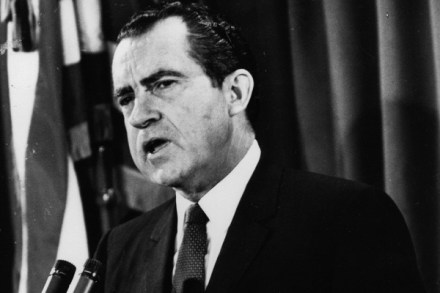
If the past few weeks are any indication, conservative Republicans learned very little from the 2012 election. While the party’s establishment tries to claw its way back from defeat, tea partiers and neoconservatives have decided to double-down on obstructionism. Less than a week after nearly derailing the fiscal cliff negotiations, tea partiers threaten to drive the U.S. into default in the coming debt-ceiling showdown. Meanwhile, neoconservatives are sharpening their knives over foreign policy realist Chuck Hagel, whom President Obama nominated this week for Secretary of Defence. Mired in ideological infighting, how can the Republican Party rescue itself? The answer, surprisingly enough, is Richard Milhous Nixon.

The Tea Party claims another scalp

From our UK edition

They may have failed to install one of their candidates as the Republican's presidential nominee, but the Tea Party is having better luck in other elections. Last night, Ted Cruz — backed by Sarah Palin, Rick Santorum and Ron Paul — beat Lieutenant Governor David Dewhurst 57-43 in the Republican primary for Texas's senate election in November. Despite being outspent nearly three-to-one, Cruz — who has never run for office before — achieved a remarkable turnaround. In the first round of the primary just nine weeks ago, Dewhurst beat him 45-34 (as neither got more than 50 per cent it went down to last night's run-off). In the second round, Cruz received 149,000 more votes than he had in May, while Dewhurst's count dropped by 146,000.

Romney stretches his lead in endorsements

From our UK edition

He may be trailing Newt Gingrich in the national polls, but there's one metric by which Mitt Romney is dominating the 2012 Republican field: endorsements. He's already bagged the two biggest ones announced so far: Chris Christie and Tim Pawlenty. He also has the backing of several key Republicans in New Hampshire, including current Senator Kelly Ayotte and two former Governors. And yesterday he added another big name from another early state to his list: South Carolina Governor Nikki Haley. Haley's support for Romney is not wholly unexpected: she backed him in 2008 and he endorsed her early in her campaign for Governor last year.

Newsflash: Americans and Europeans like each other

From our UK edition

A decade has passed since the attacks of 9/11 and so much water has flown under the proverbial bridge. Today, ordinary Americans don't want to have a leadership role in the world, and Europeans aren't too keen on it either. And having dithered over what to do about Guantanamo Bay, most people in the US and Europe don't trust President Obama's counter-terrorist policies. Right? No, actually wrong. According to the tenth-annual public opinion survey of the general public in the United States, Turkey, and 12 European Union member states – the Transatlantic Trends – 54 per cent of respondents from European countries surveyed want the United States to show strong leadership in world affairs. That’s a switch from the Bush years.

An open letter to Will Straw about deficit reduction…

From our UK edition

…or why the US cuts are actually faster than, and just as deep as, ours. Dear Will, We hope you don't mind us writing a letter-form response to your latest post on Left Foot Forward, which argues that the "coalition government's cuts are deeper and faster than the Tea Party's". But, as we see it, there are several problems with your figures which are easier to explain in a conversational format. Here they are, as best as we can express them: i) The first obvious problem comes when you say that Obama set out $83 billion of deficit reduction for 2012 in his March Budget. Actually, he didn't.

Department of Bad Ideas: Polly Toynbee Writes About American Politics

From our UK edition

Surprise! Polly Toynbee's column on the Tea Party today is a mess. You wouldn't expect La Doyenne to agree with the Tea Party's thirst for deficit reduction, nor with its willingness to take the United States to the edge of a technical default. That's fine. Equally, there's certainly a strain of conservative thinking immune to logic or reason. But much the same could be said of certain classes of Guardian readers too. This, however, is dreadful or, at best, simply lazy: The founding fathers built a constitution of checks and balances believing reasonable men would agree; how could they foresee Sarah Palin, Michele Bachmann or Glenn Beck? To the British eye, America was always dangerously prone to waves of populism and McCarthyite panics.

Meanwhile, in America…

From our UK edition

We really oughtn't let the weekend pass without some mention of political events across the Atlantic. As you've probably heard, a US government shutdown was avoided on Friday evening, and all thanks to a budget compromise which saw Barack Obama slash a cool $38 billion from his spending plans. Although the debate over who has credited or discredited themselves is still ongoing, it's striking that the Republicans — urged on by the Tea Party corps — achieved around two-thirds of the cuts that they demanded. Yet disaster, or at least the prospect of it, has still not been averted. The Tea Party has already claimed several fiscal scalps along the way — and the next target for their administrations is the impending debate over America's debt ceiling.

In this week’s Spectator

From our UK edition

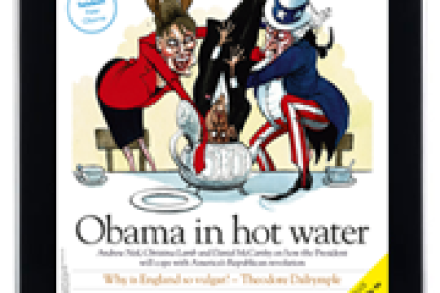
The latest edition of The Spectator is now out on iPad (click here for more info) and the newsagents (or £2, posted direct today). I thought CoffeeHousers may be interested in a small selection of the goodies we have in store.   1.  Andrew Neil on the conservative comeback in America. He spent the summer shadowing the Tea Party, and gives the best analysis you’ll read on what just happened - and what lies ahead. (You can read it here.) The Sunday Times’ Christina Lamb travelled across Nevada and California with the Tea Partiers, and tells tales from the campaign bus (one being that they only serve coffee). And Daniel McCarthy, editor of The American Conservative magazine, profiles yesterday’s big winner Rand Paul (“Mr Tea”) 2.