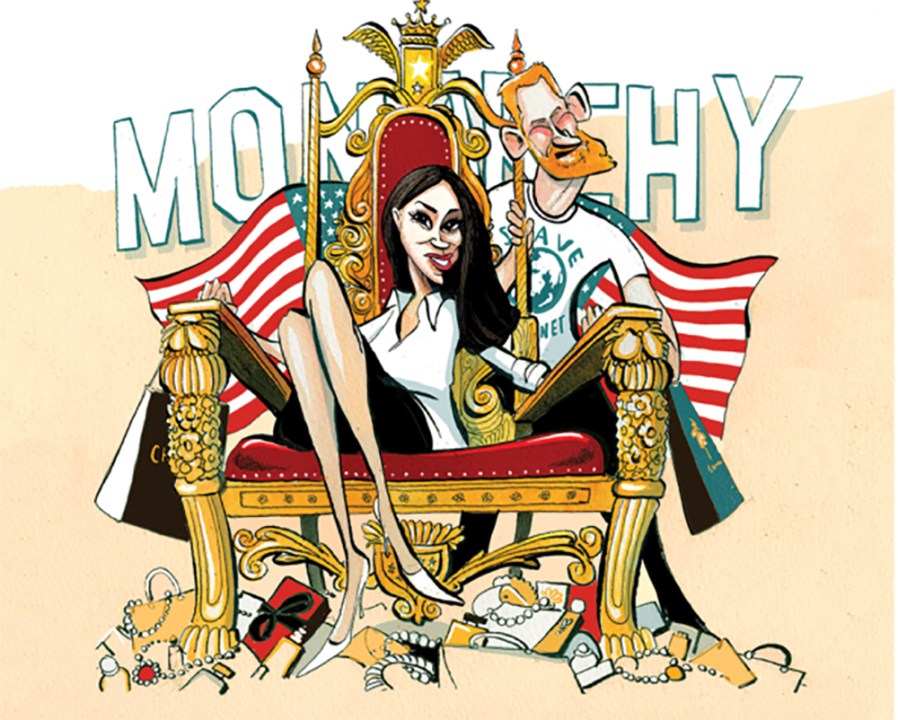
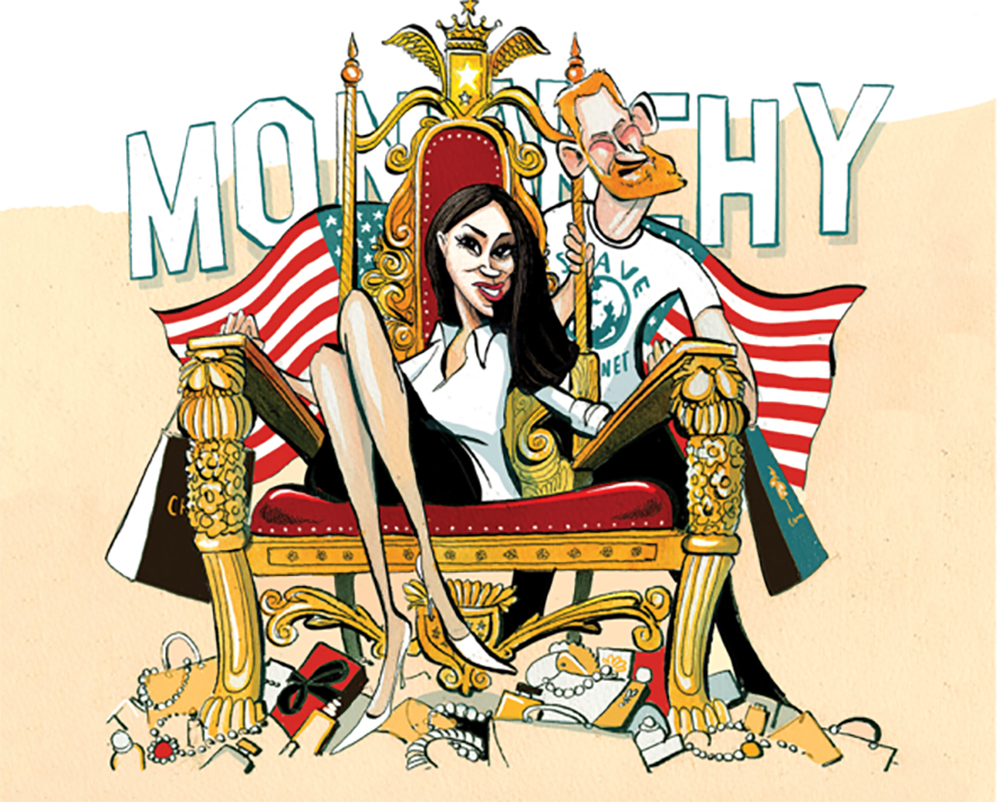
‘Deranged conspiracy’. That’s the Sussexes’ verdict of Betrayal, my second blast at Harry and Meghan, after the serialisation was in the papers at the weekend. Naturally, I’m grateful. The book now ranks No. 1 on Amazon. My biography of Robert Maxwell also benefited from his endless writs. Similarly, Richard Branson sued twice to prevent publication. He lost and was denied the licence to run the National Lottery. The tycoon Tiny Rowland was more subtle and effective. ‘Bower’s book,’ he announced, ‘is boring. He’s missed all the good bits.’ That hurt.
My new book exposes the vainglorious Duke and Duchess’s downwards spiral over the past five years towards an inglorious endgame. Dwindling fame and fortune is forcing them to revalidate their royal status. If they were able to return to Britain to stand in public alongside King Charles, that would be their ideal photo opportunity. But Harry’s plot for public reconciliation at the Invictus Games in Birmingham next July is already beset by a big problem. Injured Israeli soldiers, fresh from Gaza, will be competing and Birmingham’s Islamists are certain to protest. Will the King want to be associated with the inevitable violence? And after Meghan’s monetisation of her royalty – her most recent wheeze is appearing at a £1,700 a head ‘ultimate girls weekend’ Australian health retreat – will he really want to support the Sussexes? Inevitably, Prince William will block any reunion anyway.
‘Do you want to be prime minister?’ I asked Nigel Farage as we flew recently on a private jet from Manchester to Biggin Hill. His reply was modest. Something along the lines of: ‘I’d like to give it a shot.’ Farage is the Joker in Britain’s fate – ‘Saviour or Scaremonger?’ is the theme of my next book. Seeing a skilled politician campaigning close-up is the stuff of dreams. Ever since I inveigled myself in 1969 to travel with Willy Brandt on his election train criss-crossing West Germany, I learnt to judge politicians by their supporters. Farage’s cronies are men whose loyalty to him has been proven over the past 20 years. They speak to each other in shorthand and serious conversations are speckled with laughter.
Watching Farage joking with strangers on their doorstep and greeting voters at packed meetings sharply contrasts with Keir Starmer. While the unpatriotic Prime Minister recites from a script and treats his audience as idiots, Farage’s performance as a sincere Englishman plays well – the instinctive fighter speaking without notes. Angered by the ‘progressives’ preaching white guilt and anti-Britishness, Farage’s pack equally hate the One Nation Tories for betraying traditional values. Farage fuels their passion to become unapologetic heroes in their own country. Acknowledging his audience’s fervour last week in Swindon, Farage has been defeated in elections too often to be moved by adoration. He’s gambling on the May elections, when he must win over voters like my friend, a deeply disillusioned Tory farmer: ‘Farage needs to offer a convincing message about creating a small, low-tax state serving a well-educated, properly housed, healthy population.’ Gimmicks about fuel taxes won’t meet that challenge.
Having worked for 26 years at the BBC, I welcome the demise of the hapless ex-Pepsi salesman Tim Davie as the director-general. Not least because he failed to eradicate the BBC’s institutionalised anti-Semitism and improve its dire news output. Speculation that a former Google executive could be his successor shows that Davie’s fatal handicaps are being ignored. Only an experienced programme-maker with a journalistic background can, as DG, pull the BBC out of the gutters to guarantee its survival and revival. Sadly, today’s Britain lacks qualified candidates.
I first went to Venice in 1951 when I was five. Back then, pigeons rather than tourists filled St Mark’s Square. I now visit annually and I’m always amazed by how every trip reveals another forgotten church, a breathtaking masterpiece I’ve somehow never seen before, or a new restaurant. Last weekend, I relied on Martin Gayford’s book, Venice, City of Pictures. Thanks to Gayford, I better appreciate how centuries of culture, intrigue, corruption and scandalous relationships flourished along the canals. It’s a delicious history for a journalist still excited by the chase, burrowing into the secrets of powerbrokers at the top of politics. The new restaurant, by the way, was Trattoria del Local in Arsenale.




Comments