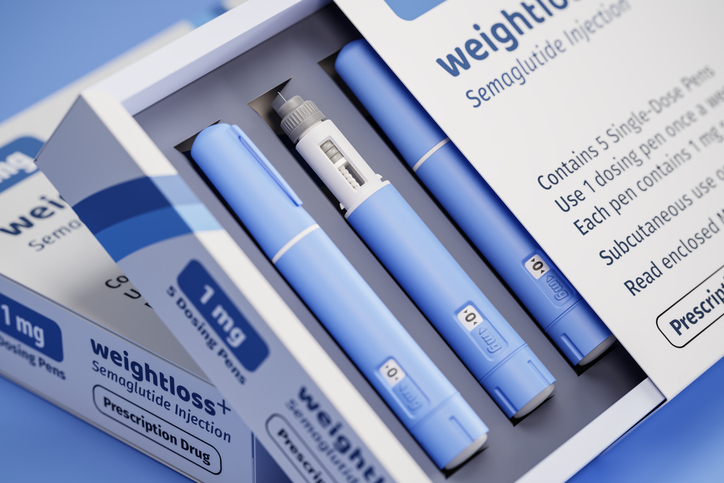
New research reveals a startling truth about the people paying thousands for weight-loss drugs: they’re mostly middle-aged, wealthy women. In other news, February is cold and the snowdrops are here.
The Health Foundation, a British health charity backed by a billion-pound endowment, confirmed today what most people would have guessed: those paying thousands of pounds a year for these drugs are not the poorest and most deprived, nor the fattest, nor the most in need:
People living in deprived areas already face poorer health outcomes than those in more affluent areas, and men experience worse health outcomes than women. Yet these are the groups that have the lowest uptake of GLP-1 treatments.
GLP-1 agonists are in the news so much because they work. At low doses, drugs like Ozempic help treat diabetes. Sugar levels in the blood are kept down, the risk of heart attack and stroke is reduced. At higher doses the effect is weight loss, and the trade names are different: Wegovy and Mounjaro. Keep taking them and you can trim your weight by a quarter.
How the NHS deals with weight loss drugs needs sorting
The benefits for your health may well be substantial but most people aren’t trying to optimise their long-term cardiovascular risk. That’s emphasised by the data from this new study. Four-fifths of people paying privately for weight loss drugs are women, whose cardiovascular risk is lower than men’s to begin with. And the drugs are most popular in the 30-39 age group. Chest pain at that age may be more likely to be the result of cocaine than heart disease.
The study, and the way it has been reported, asks us to be shocked that free choice is having its entirely predictable effect. Deprivation is associated with obesity; no surprise it’s also associated with being less likely to have money to get weight loss drugs privately. Nor is it shocking that people are motivated by wanting to look good.

This is the usual pattern of health pressure groups using the media to spin unsurprising data as news that nudges ministers. ‘Focus should be on tackling the causes of obesity, through low-agency, population-level interventions,’ says the Health Foundation, ‘such as taxation, advertising restrictions, reformulation and planning controls that benefit everyone.’ They conclude that ‘it’s more important than ever that government retains focus on making the changes to our food environment that could prevent obesity occurring in the first place.’
I’m in favour of sugar taxes because their minor effects are enough to satisfy my medical puritanism. They’re not great, and they’re about as good as it gets. Whitehall can make food healthier (the amount of salt in ready meals is a good target) but it cannot make us thin. Behind the credulous churn of pressure-group PR, though, are interesting issues.
First, modern weight loss medications are remarkable. Society has been looking for slimming drugs since before we invented the test tube, and for millennia we’ve failed – with the possible exceptions of amphetamines and tapeworms. Our new drugs are triumphs unimaginable a few years ago. We are only at the very start of them transforming our lives, for better and worse. A friend spoke of Wegovy eliminating the ‘noise’ of thinking about food. Personally – and I write this as lunchtime murmurs its approach – it’s my favourite music.
I can afford to listen. My genes dealt me a forgiving BMI, and I was blessed by never having looks that made me vain. Others prefer silence. Because these drugs are so powerful, we need ever more data about their long-term impact. The side effects are already known to be significant, and people will reasonably want to understand them better. Some of the long-term side effects are likely to be beneficial – fewer heart attacks, fewer strokes, longer lives – and we need to measure those as precisely as we measure the gastrointestinal upsets (from irritating to life-threatening) and the other harms these drugs can cause. Many studies are underway; more are needed.
In the short term, problems with access to GLP-1 agonists highlight practical issues. There’s a global shortage of these drugs. Despite almost unlimited potential for investment, we can’t produce them fast enough. Part of that stems from practical difficulties – this is not garden-shed technology – and part from the regulatory environment of drug manufacturing, which slows down new factories even when capital is unlimited. Peptide plants should not be as hard to build as HS2.
How the NHS deals with weight loss drugs also needs sorting. At the moment there’s a postcode lottery instead of a national strategy. The reason they’re so popular privately is that they’re so hard to get hold of on the NHS – and not just for the middle class and middle-aged who wish to stay svelte, but for the obese who want to stay alive. Where I work in Oxfordshire, the secondary care referral options for weight loss used to be limited. Now they’ve simply vanished. Unless they have money, patients are abandoned. Demanding government alters our food environment to eliminate obesity is virtuous hand-waving. Demanding it has a central strategy for weight loss drugs isn’t.
The Health Foundation isn’t wrong to worry about equity. Taking a drug to improve your aesthetics should be a matter for the free market; supplying those that save your life is part of the duty of the state. Where the lines should be drawn for new weight loss drugs is difficult, because they do both. Currently the free market is picking off what’s easy, and the state is hiding from what’s hard.




Comments