

If Andy Burnham has a golden rule, it seems to be this: do the opposite of Keir Starmer. The new Prime Minister has made a habit of differentiating himself from his predecessor. He has backed away from assisted dying and changes to the jury system, purged Starmer loyalists and swapped Eeyoreish despair for Tiggerish hope.
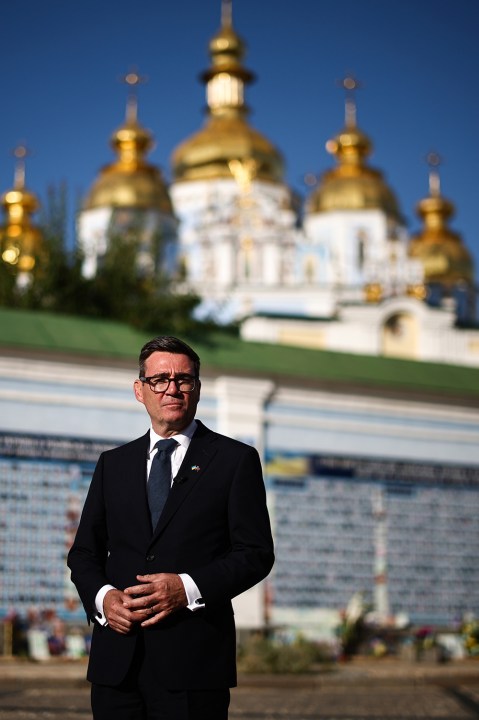
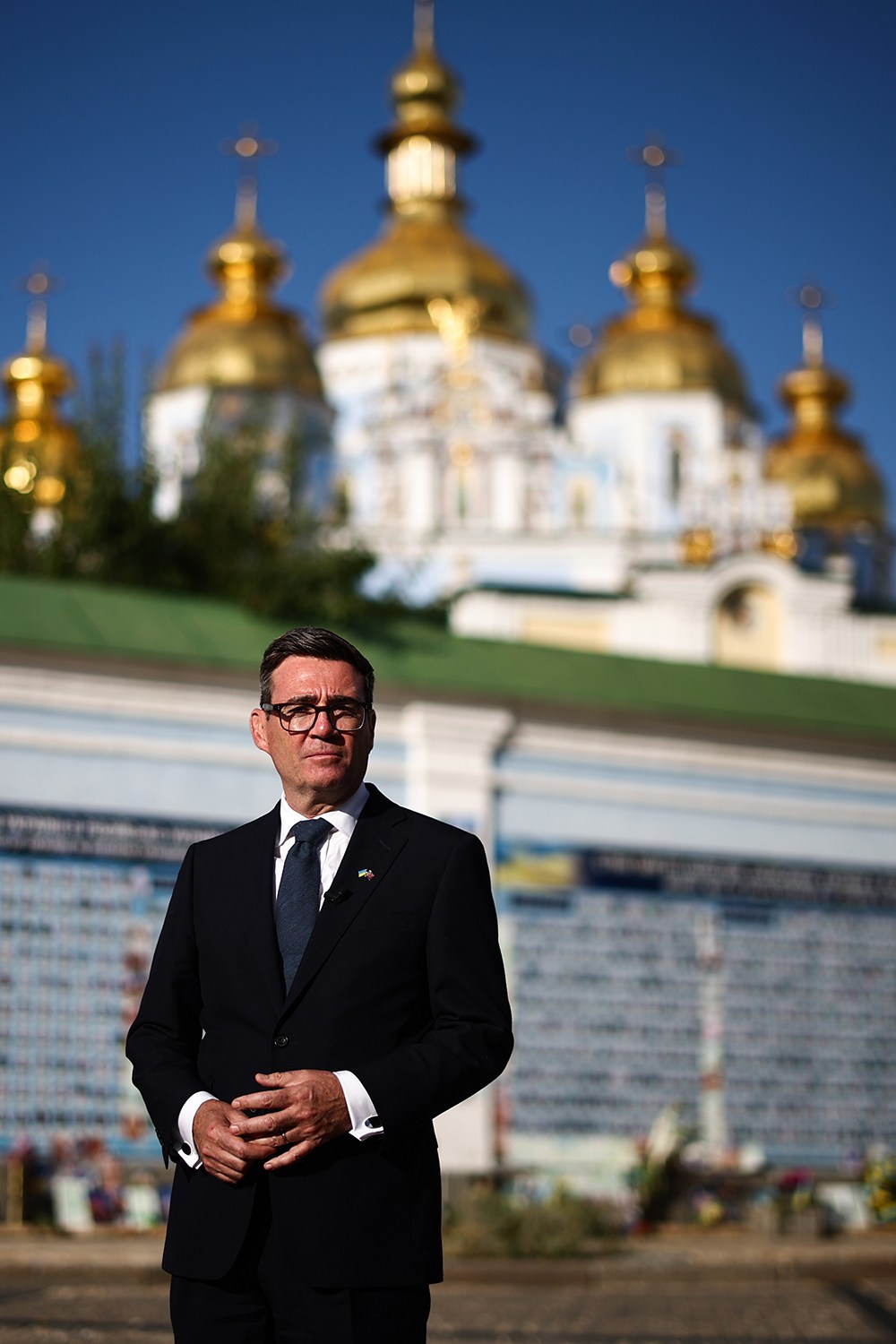
Burnham’s visit to Ukraine this week offered yet another example. While it took Starmer four days to make his first overseas visit as prime minister, Burnham waited four weeks. Both men are keen supporters of Kyiv – yet the new Labour leader clearly wants to do foreign policy differently. ‘I’d rather do my trips with a real reason behind them,’ he said. ‘I’m here for a reason.’
Much of Burnham’s political economy does not translate naturally into the international arena
Within Team Burnham, there are plenty who believe that too much of Starmer’s time was spent clocking up miles attending a cavalcade of summits, rather than driving through an agenda at home. At one point, a sixth of Starmer’s time was spent abroad, as he totted up 49 trips in just two years. ‘It was done to a good end,’ remarks one Labour MP, ‘but while Keir was travelling, he was losing the dressing room in Westminster.’
Burnham’s schedule reflects a focus on domestic affairs. His conference speech on 29 September and then the Budget on 28 October are the two big dates in his diary. Next month’s UN General Assembly, though, offers a chance for him to meet world leaders.
The Prime Minister resents talk that he is uninterested in foreign affairs, yet it is true that much of his political economy – devolution, civic pride and public control – does not translate naturally into the international arena. While Aukus, Britain’s defence deal with Australia and America, fits a ‘Burnhamite’ strategy, with submarines being built in the north of England, Chinese-made cars is a trickier topic for the ‘Makerfield Test’. Voters might like cheap electric vehicles today yet resent de–industrialised areas tomorrow.
Two ‘big beasts’ are currently filling the foreign policy vacuum. Jonathan Powell, Starmer’s National Security Adviser, remains in post. Ed Miliband meanwhile is enjoying the ‘Palace of Dreams’ on King Charles Street, revelling in his new status as Foreign Secretary. The two men’s respective books give some indication of how they see diplomacy. Powell’s The New Machiavelli is a clear-eyed account of how power is wielded in the modern world; Miliband’s Go Big: How to Fix Our World is a more cheery call to arms for progressives everywhere. The likely model for this government’s approach, then, is half-cynic, half-romantic.
On conference calls with staff, Miliband has talked of his desire to champion centre-left governments across the world. His early interventions have been on climate change and international aid: the kind of politics which enthused his mentor Gordon Brown. The Foreign Office is preparing to announce robust sanctions on Israeli settlements in the West Bank. ‘There is a real desire from Andy to do more on this,’ says one Miliband ally, ‘which Ed, with his story, is in quite a good place to do.’ Miliband argues our interests are served by our values, seeing himself as a hard-headed realist when it comes to emissions negotiations. Both he and Powell believe that Britain’s future relies on multilateralism: outside the EU, the country must work through the institutions which uphold the rules-based order. In a world of might, the two see themselves as fighting for right.
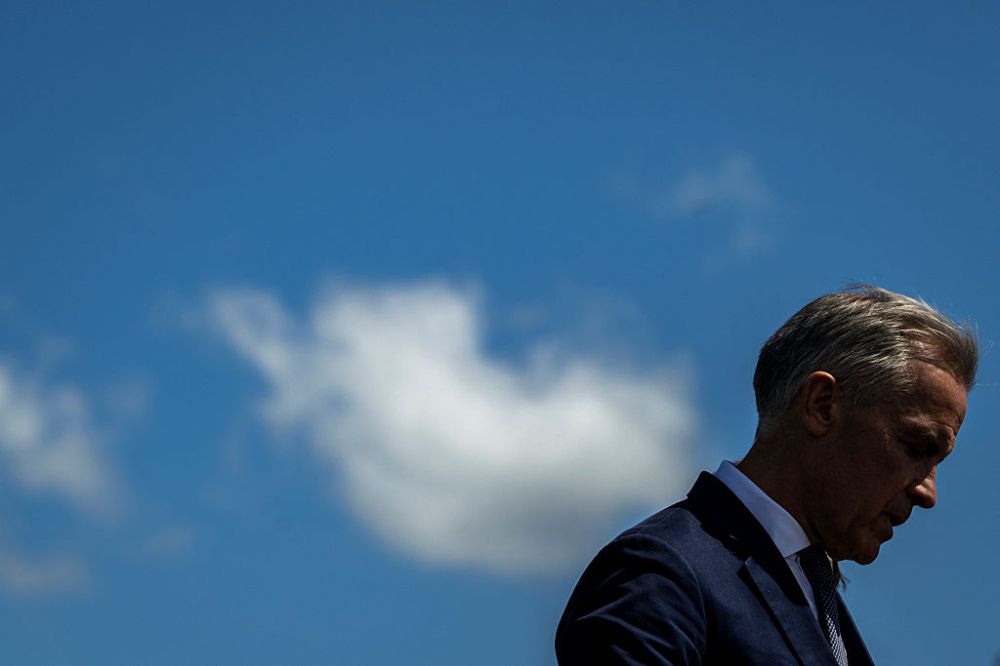
To do this, Miliband has assembled one of the better teams in Whitehall. His ministerial aides include Lord Wood, one of Brown’s bright young thinkers, Kirsty McNeill, a Brownite who worked on ‘Make Poverty History’, and Hamish Falconer, who has impressed staff with tales of his days negotiating with the Taliban.
They inherit an institution reeling from both cuts and scandal: restoring morale is an obvious priority. Next week will see the final interviews for the post of Permanent Secretary, to replace Olly Robbins. The final two candidates are Dame Karen Pierce and Lindy Cameron, who embody different strands of their department’s ethos. Pierce was ‘our woman in Washington’, a no-nonsense Foreign Office lifer; Cameron has a background in security and development, reflecting the 2020 merger with the aid department.
The next 12 months offer a series of tests for this team. Iran is the most pressing. ‘Clusterfuck’ is one aide’s word to describe the economic consequences of the closure of the Strait of Hormuz. ‘You know that ship that got stuck in the Suez Canal?’ says another. ‘It’s going to be like that but on steroids.’ Britain will try to serve as a broker and defender of international waterways, amid fears that Iranian control will embolden piracy. Wes Streeting, the new Defence Secretary, has had a crash-course in diplomacy, after his US counterpart, Pete Hegseth, pressed him to join an American-led effort to secure the Strait. Talk of a Sandhurst summit between the two is yet to materialise.
Elsewhere, there is Chinese dominance in Europe’s strategic industries. Officials are particularly worried about a looming trade war between Beijing and Brussels, as the government is trying to cultivate relations with both. Defence investment will be a theme throughout this parliament, with Burnham keen to see more ‘British-based’ procurement. Then there are the perennial headaches of summitry. Britain is due to host the G20 in Manchester next year and the G7 in London the year after, with the former offering the potential spectacle of Putin and Xi and their lackeys walking the streets of Salford.
For all the problems, though, there are opportunities too. Plenty of new alliances and trade deals are still there to be won. The past six years have seen seven foreign secretaries and five national security advisers. If Powell’s services can be retained, a period of stability would likely do the government the world of good. ‘All foreign secretaries have to balance their proactive themes and the live files,’ remarks an aide. ‘We are in an era where Iran and Ukraine are so dominant.’
Already, Miliband’s enemies are salivating at the chance to do battle. The Tories will portray his solar programme as tainted by Chinese forced labour and hammer Powell as the ‘real foreign secretary’, hell-bent on handing over the Chagos Islands. Reform, meanwhile, offers a different kind of critique, as it highlights Nigel Farage’s personal ties to right-wing leaders, including J.D. Vance in America and Jordan Bardella in France.
For many in Labour, this government feels like the last chance to prove social democracy can work. It might be the last chance for a certain kind of internationalism, too.





Comments