We first saw Sybylla, the heroine (in every sense) of My Brilliant Career, at a society gathering in 1900 Australia reciting a poem she’d written. After much racy talk of ‘forbidden fruit’ and ‘secret places’, it went on to describe a man as ‘a whisky breath seeking to possess something that will never be his’. We next saw her a month earlier when she was living with her family on their small, failing farm. ‘Women should swear,’ she told her sister. ‘They should eat like a man, ride like a man, decide their fate like a man.’
Sybylla, then, it seemed safe to deduce, is a feminist. Which, as it transpires, is pretty much the entire plot.
The reason for her social elevation is that she’d been invited to move to Caddagat, a large estate owned by her aptly named grandmother Mrs Bossier (Anna Chancellor), so that she could bag a rich husband. Sybylla, naturally, wasn’t keen on the husband part but decided that she needed to experience the world before she could fulfil her dream of becoming a writer.
On her arrival in Caddagat, her effect was the traditional one for a free-spirited young woman on a bunch of stuffy adults: their initial shock turned to puzzlement, reluctant admiration, frank admiration and finally imitation. Admittedly, Mrs B. is proving a tough nut to crack – and only towards the end of the three episodes I’ve seen so far did she reach the reluctant admiration stage. Already converted, though, are the formerly uptight Englishman Frank, the formerly timid Aunt Helen and the continuingly hunky Harry, whose habit of changing his shirt outdoors hasn’t escaped Sybylla’s eye. All three therefore joined in lustily with her jumping around the dancefloor after she got the band at a posh party to strike up Rod Stewart’s ‘Young Turks’.
The series is based on Miles Franklin’s 1901 novel (also made into a celebrated 1979 film). But only up to a point – because its taste for updating goes beyond merely a band playing songs that didn’t appear for another 81 years.
Inevitably, the new version comes with added racism and homophobia. Harry is made half-Chinese so that he can be abused by larrikins. Caddagat has acquired two Aboriginal workers, Nell and Betty, who show unfailing resilience in the face of prejudice. When Sybylla’s uncle Julius turned up, it was with his secret male lover – allowing Sybylla, when she spotted them kissing, to further burnish her 21st-century credentials by lamenting that their love ‘has to live in the shadows’.
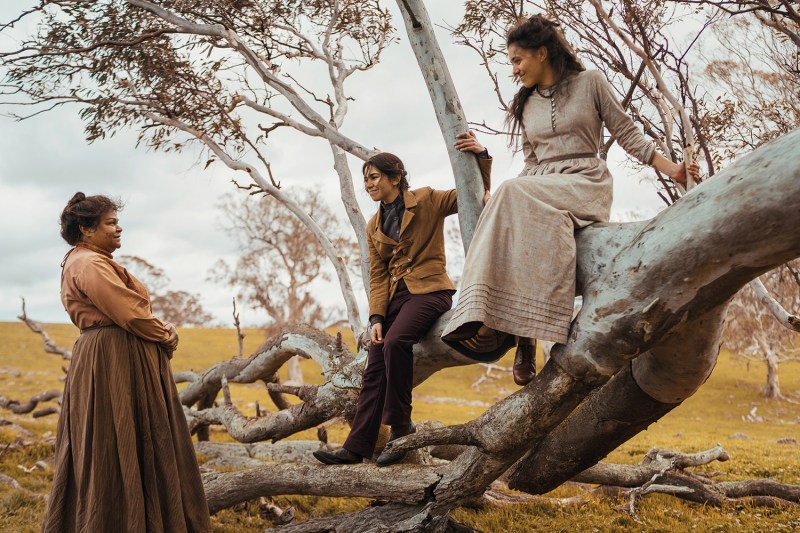
In fact, these nods to contemporary concerns, while somewhat dutiful, work fine – and, in the case of Nell and Betty, rather touchingly. More inexplicable are the dialogue’s intermittent lurches into anachronism. Sybylla describes Nell’s trousers as her ‘signature look’ and another woman’s dress as ‘quite the outfit’. When she performs an autobiographical poem about a girl who ‘always lives her truth’, one spectator notes approvingly that she’d ‘owned the stage’. The result of such moments is, unsurprisingly, to break the spell, by reminding us that we’re not in Australia in 1900 after all, but watching Netflix in 2026.
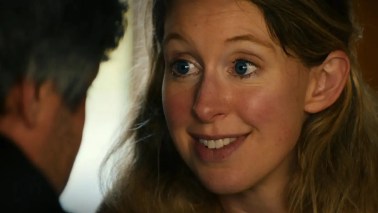
And this is a shame – because when it’s left unbroken, the programme’s spell can be genuinely enchanting. In theory, a show that loves its protagonist so unreservedly could have been grating. Yet, thanks not least to Philippa Northeast’s beguiling central performance, Sybylla here feels not only worthy of that love, but also well able to rise above the (still regrettable) moments of modern clumsiness.
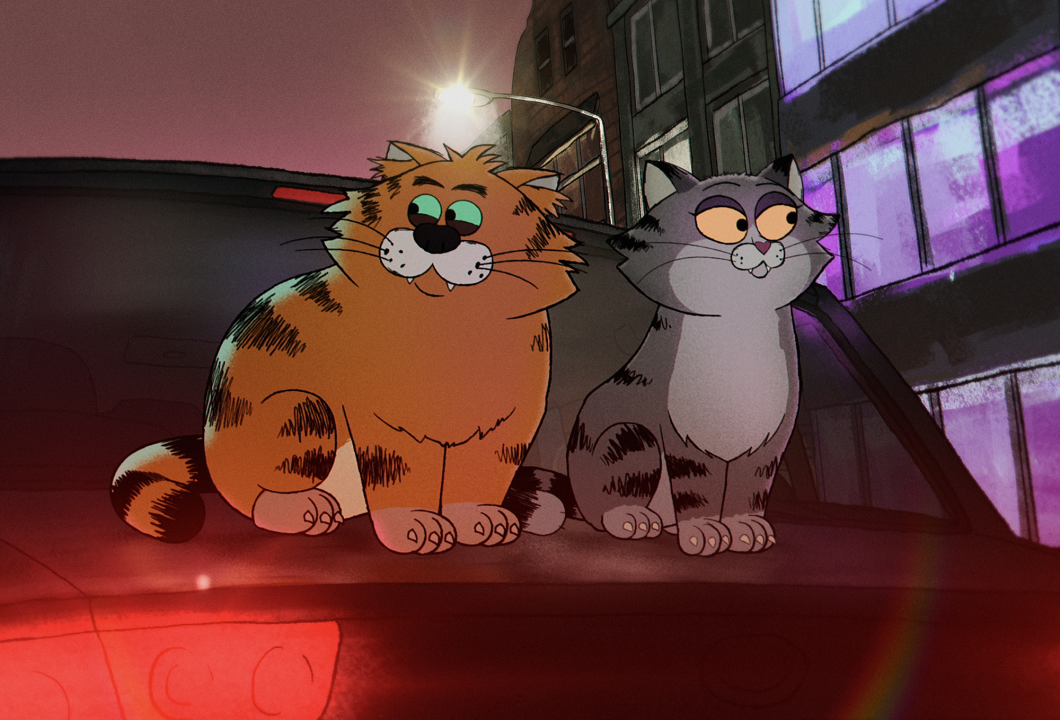
And so to the big TV question of the month: is Ricky Gervais’s animated series Alley Cats really as bad as the critics have been saying? For my money, the answer might just about be no – but mainly because nothing could be. Nonetheless, it’s a dispiriting watch, with all of Gervais’s weaknesses on display (sentimentality, cod philosophy, smugness) and only the occasional sighting of a mildly funny joke.
Is Ricky Gervais’s animated series Alley Cats really as bad as the critics have been saying?
Gervais himself voices Gus, the leader of a feline band who exchange sweary conversations about how rubbish humans are, try to find a cute little kitten her way back home, tell tales about sex with other animals (including ‘anal with a hedgehog’) and reflect mournfully on old age and death.
The trouble, or one of them, is that Alley Cats does all this with no attempt to move smoothly from one element to another – rather than say, completely randomly. As a result, the script doesn’t even feel like a first draft, so much as a series of jotted notes that Gervais might have got round to turning into a proper show if only a) he hadn’t been so lazy; and b) Netflix wouldn’t take anything that he gave it.
As an animation, each 17-minute episode comes with around two minutes of closing credits. Significantly, none of them is for ‘script editor’.





Comments